
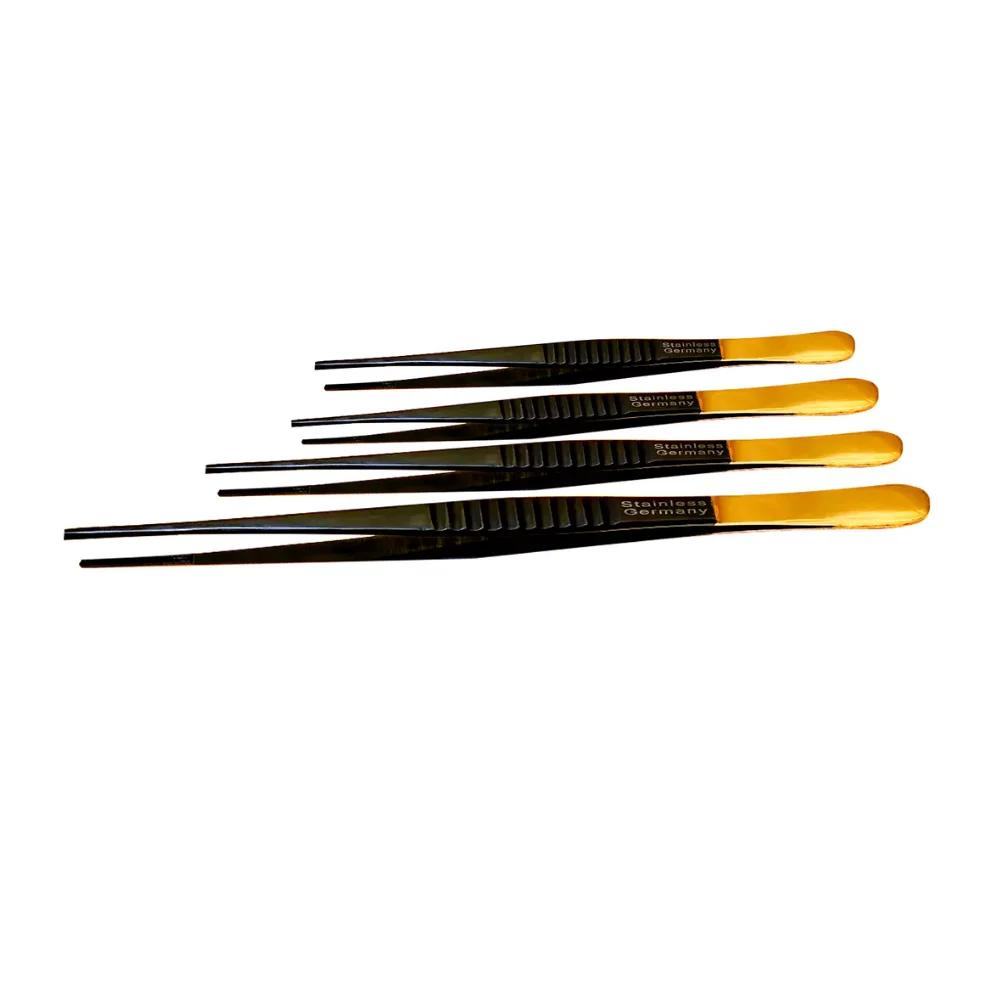
Atraumatic Vascular Tissue Forceps – 6″, 7″, 8″, 9.5″ Black Coated
Direct Manufacturer Pricing • Tax Exclusive
All import duties, tariffs & taxes are 100% pre-paid for USA, UK, Canada, EUROPE & Australia (AUS). Zero surprise customs bills at delivery.
Hospital & Volume Procurement Pricing
Atraumatic Vascular Tissue Forceps are specialized surgical instruments intended for delicate tissue handling during appropriate vascular procedures. Their design is intended to support controlled grasping while helping limit unnecessary tissue compression when used correctly.
Key Features
Atraumatic design: Intended for handling delicate vascular tissue.
Four length options: Available in 6, 7, 8, and 9.5 inches.
Black-coated finish: Features a black coating as specified in the product name.
Multiple size choices: Allows selection according to procedural requirements and professional preference.
Vascular application: Intended for appropriate vascular surgical settings.
Intended Application
Vascular tissue forceps are used by trained surgical professionals to grasp and manipulate tissue during suitable procedures. The appropriate forceps design depends on the tissue, required level of control, and specific surgical application.
Material and Care
The base material and coating composition are not specified. Confirm these details with the manufacturer, including whether the coating is compatible with the intended cleaning and sterilization methods. Inspect the jaws and coating for damage before use and follow the manufacturer's validated reprocessing instructions.
8. Technical Specifications
Product Type: Atraumatic Vascular Tissue Forceps
Available Lengths: 6, 7, 8, and 9.5 inches
Length in Centimeters: 15.24, 17.78, 20.32, and 24.13 cm
Finish: Black coated
Jaw Design: Atraumatic; exact pattern not specified
Base Material: Not specified
Coating Material: Not specified
Intended Application: Vascular tissue handling
Sterilization Compatibility: Confirm with the manufacturer
Manufacturer / Model: Not specified
9. Frequently Asked Questions
Q1. What sizes are available? The stated lengths are 6, 7, 8, and 9.5 inches.
Q2. What does atraumatic mean? It describes an instrument design intended to help minimize unnecessary tissue trauma during appropriate handling.
Q3. Are the forceps black coated? Yes, the product name specifies a black-coated finish.
Q4. What material are the forceps made from? The base material is not specified and should be confirmed with the supplier.
Q5. Is the black coating suitable for sterilization? Coating compatibility depends on its composition and the manufacturer's validated reprocessing instructions. Confirm before use.
Q6. How should I choose the appropriate length? Selection should depend on the intended procedure, access requirements, and the preferences of the qualified surgical professional.