

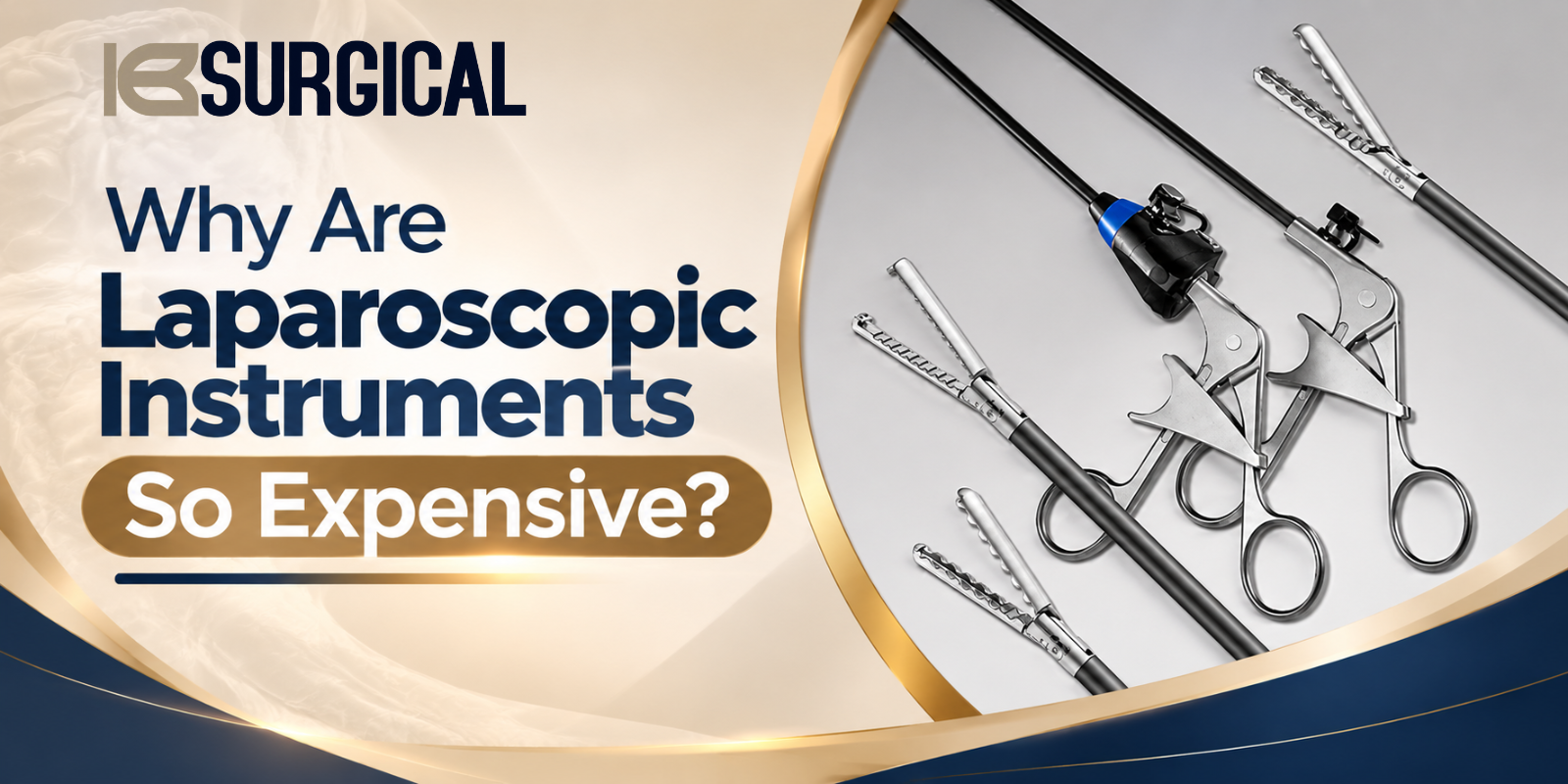
Laparoscopic instruments are widely used in minimally invasive surgery, where precision, safety, and reliability are absolutely critical. Many hospitals, clinics, and surgical buyers often notice that laparoscopic instruments cost significantly more than standard surgical tools. This raises a common question: why are laparoscopic instruments so expensive?
The answer lies in their advanced design, specialized manufacturing, precision engineering, durable materials, insulation requirements, and strict quality standards. Unlike conventional hand instruments, laparoscopic tools must perform delicate surgical tasks inside the body through small trocar ports, often in limited spaces and under high visual magnification. Because of this, they require a much higher level of technical accuracy and performance.
In this article, we’ll explain why laparoscopic instruments are expensive, what factors influence their pricing, and why high-quality instruments are often worth the investment for surgical professionals.
What Makes Laparoscopic Instruments Different from Standard Surgical Instruments?
Before understanding the cost, it is important to know how laparoscopic instruments differ from regular surgical tools.
Traditional instruments such as scissors, forceps, or clamps are used directly in open surgery, where the surgeon has hands-on access to the operative area. Laparoscopic instruments, however, are designed to work through small incisions using long shafts, specialized handles, insulated components, rotating mechanisms, and fine distal jaws.
These tools must allow the surgeon to:
- Reach deep inside the body
- Work through narrow access ports
- Perform precise movements in confined spaces
- Cut, grasp, dissect, coagulate, and suture remotely
- Maintain smooth control without direct hand contact with tissue
This increased complexity is one of the main reasons why laparoscopic instruments cost more than standard instruments.
Why Are Laparoscopic Instruments So Expensive?
There is no single reason for the high cost of laparoscopic instruments. Their price is usually the result of multiple factors, including specialized engineering, material quality, precision manufacturing, safety features, and reusability.
1. Complex and Specialized Design
One of the biggest reasons laparoscopic instruments are expensive is their complex design.
Unlike simple open-surgery tools, laparoscopic instruments often include:
- Long slender shafts
- Distal working jaws
- Internal moving rods or linkages
- Rotating handles
- Locking systems
- Fine articulation mechanisms
- Insulated outer layers
- Modular or detachable components
All of these features must work smoothly together while the surgeon operates from outside the body. Even a small mechanical flaw can affect precision or safety during surgery.
Because of this, the design and assembly process is much more advanced and time-consuming than standard instruments.
2. Precision Engineering for Delicate Surgery
Laparoscopic surgery requires extremely precise movements. The instrument tip may be working near blood vessels, organs, ducts, or delicate tissues where even minor errors can cause complications.
That is why laparoscopic instruments must be manufactured with:
- Exact jaw alignment
- Smooth opening and closing action
- Reliable grip strength
- Minimal play in moving parts
- Fine cutting edges
- Controlled rotation
- Stable shaft-to-handle mechanics
This level of precision requires skilled manufacturing, tight tolerances, and extensive testing, all of which increase production cost.
3. High-Quality Stainless Steel and Premium Materials
Laparoscopic instruments are usually made from high-grade stainless steel and other specialized materials that can withstand repeated use, cleaning, and sterilization.
Common material-related cost factors include:
- Surgical-grade stainless steel for strength and corrosion resistance
- Heat-resistant components
- Non-corrosive internal mechanisms
- High-durability handle materials
- Insulation coatings for electrosurgical instruments
- Specialized polymers or ceramics in certain models
These materials are more expensive than those used in lower-end or basic instruments, but they are essential for long-term reliability and patient safety.
4. Insulation and Electrosurgical Safety Requirements
Many laparoscopic instruments are used with electrosurgical energy, such as monopolar or bipolar cautery. This means they must be properly insulated to prevent accidental burns or unintended energy transfer.
This adds cost because manufacturers must ensure:
- High-quality insulation along the shaft
- Safe conductive pathways
- Insulation integrity after repeated sterilization
- Compatibility with electrosurgical units
- Reduced risk of insulation failure
Instruments with poor insulation can be dangerous in surgery, so high-quality insulation systems are a major part of the price.
5. Small-Batch, High-Skill Manufacturing
Standard surgical instruments can often be produced more easily and in larger quantities. Laparoscopic instruments, however, frequently require:
- Skilled hand assembly
- Fine machining
- Careful component fitting
- Specialized finishing
- Functional testing
- Calibration of moving parts
In many cases, these instruments are not mass-produced in the same way as simpler tools. Because they require more labor, more expertise, and more inspection, the cost per instrument becomes higher.
6. Reusable Design with Long-Term Durability
High-quality laparoscopic instruments are built to be reusable and must withstand repeated:
- Cleaning
- Disinfection
- Autoclaving
- Handling
- Mechanical stress during surgery
This means they need to be stronger, more durable, and more resistant to wear than disposable tools.
A reusable laparoscopic instrument may cost more upfront, but it is designed to provide long-term value over many surgical cases. The higher price often reflects its durability and lifespan.
7. Modular and Detachable Components
Many laparoscopic instruments come with modular designs, allowing surgeons or sterile processing teams to disassemble them for better cleaning and maintenance.
For example, a single instrument may have:
- A detachable handle
- A separate shaft
- Interchangeable inserts
- Replaceable working tips
While this improves cleaning, sterilization, and versatility, it also makes the instrument more complex to manufacture and assemble. Modular construction often increases both engineering cost and price.
8. Strict Quality Control and Testing
Because laparoscopic instruments are used in critical surgical procedures, manufacturers must maintain strict quality control.
This often includes:
- Mechanical function testing
- Jaw alignment inspection
- Shaft straightness checks
- Insulation testing
- Locking mechanism verification
- Rotational performance testing
- Sterilization compatibility checks
- Surface finishing and corrosion resistance evaluation
Quality control is essential, but it adds time and cost to the production process. High-end laparoscopic instruments are expensive partly because they are tested to perform reliably under demanding surgical conditions.
9. Specialized Use in Advanced Surgical Procedures
Laparoscopic instruments are used in advanced and delicate procedures such as:
- Gallbladder removal
- Hernia repair
- Appendectomy
- Bariatric surgery
- Colorectal surgery
- Gynecologic laparoscopy
- Urologic procedures
- Diagnostic laparoscopy
Because these surgeries require a high degree of control, surgeons often prefer instruments that offer consistent performance, ergonomic handling, and dependable precision. Instruments made for these specialties are often more refined and therefore more expensive.
10. Brand Reputation and Manufacturing Standards
Well-known manufacturers often charge more because they offer:
- Proven quality standards
- Better finishing
- Stronger material consistency
- Reliable jaw mechanics
- Better insulation quality
- Longer service life
- Better clinical trust
In the surgical instrument industry, buyers are not just paying for a name—they are often paying for consistency, reliability, and reduced risk.
For hospitals and surgical professionals, this can justify the higher cost.
Are Expensive Laparoscopic Instruments Worth It?
In many cases, yes—especially when the instrument is used frequently or in delicate procedures.
A higher-quality laparoscopic instrument can offer:
- Better precision during surgery
- Improved control and surgeon comfort
- Lower risk of malfunction
- Longer lifespan
- Better resistance to corrosion and wear
- Safer insulation performance
- More reliable sterilization compatibility
Cheaper instruments may save money at first, but they can lead to:
- Poor alignment
- Weak grip
- Stiff movement
- Faster wear
- Insulation breakdown
- Reduced performance over time
For surgical settings, instrument quality directly affects workflow and confidence in the operating room.
How to Identify High-Quality Laparoscopic Instruments
If you are buying laparoscopic instruments, look for these quality indicators:
- Smooth and precise jaw movement
- Proper shaft insulation
- Strong but lightweight construction
- Ergonomic handle design
- Modular or easy-to-clean structure
- Corrosion-resistant stainless steel
- Reliable locking and rotation mechanism
- Good finishing with no rough edges
- Compatibility with sterilization protocols
High-quality instruments may cost more, but they usually provide better performance and better long-term value.
Common Buyer Mistake: Choosing Price Over Performance
One common mistake among new buyers is selecting laparoscopic instruments based only on price. In surgical practice, the cheapest option is not always the best option.
Low-cost instruments may look similar, but often differ in:
- Steel quality
- Internal mechanism reliability
- Tip precision
- Insulation durability
- Ease of cleaning
- Overall lifespan
For professional use, it is better to focus on quality, function, safety, and durability rather than price alone.
Frequently Asked Questions
Why do laparoscopic instruments cost more than regular surgical instruments?
They are more expensive because they have a more complex design, require higher precision, use advanced materials, and often include insulation and modular parts for minimally invasive surgery.
Are reusable laparoscopic instruments expensive because they last longer?
Yes. Reusable laparoscopic instruments are built to withstand repeated cleaning and sterilization, which increases their upfront cost but offers better long-term value.
Do all laparoscopic instruments have insulation?
Not all, but many laparoscopic instruments used with electrosurgery require insulation to prevent accidental tissue burns and ensure safety.
Are cheaper laparoscopic instruments a bad choice?
Not always, but lower-cost instruments can sometimes have weaker materials, poor finishing, reduced precision, or shorter lifespan. Quality should always be carefully evaluated.
Conclusion
Laparoscopic instruments are expensive because they are highly specialized surgical tools designed for precision, safety, and durability in minimally invasive procedures. Their cost reflects the complexity of their design, the quality of their materials, the accuracy of their manufacturing, the importance of insulation safety, and the strict quality control required for reliable surgical performance.
While the upfront price may seem high, well-made laparoscopic instruments often provide better long-term value, better surgeon control, improved safety, and more dependable results in the operating room.
For hospitals, clinics, and surgical professionals, investing in premium-quality laparoscopic instruments is not just about buying a tool—it is about supporting better surgical outcomes and consistent performance where it matters most.