

Surgical forceps are among the most commonly used instruments in the operating room, yet many people including new medical students, surgical assistants, and even first-time instrument buyers often wonder why they come in so many different shapes. At first glance, forceps may all seem similar.
They are designed to hold, grasp, lift, or manipulate tissue. But in real surgical practice, the shape of a forceps is never random. Every curve, tip design, jaw pattern, handle length, and tooth configuration is made for a specific clinical purpose.
From a practical surgical perspective, forceps must match the anatomy being treated, the delicacy of the tissue, the visibility of the operative field, and the level of control required by the surgeon. A forceps used to hold skin during suturing is very different from one used in eye surgery, laparoscopic surgery, or deep ENT procedures. That is why surgical forceps come in so many different forms. The shape directly affects precision, safety, grip strength, tissue protection, and overall surgical efficiency.
Understanding the Basic Role of Surgical Forceps
Surgical forceps are handheld instruments used to grasp or manipulate tissues, dressings, sutures, vessels, or small structures during a procedure. Some are tweezer-style instruments, while others have ring handles and locking mechanisms similar to clamps. Although they all fall under the same broad category, they are not meant to perform the same task.
In surgery, even a small difference in instrument shape can change how well the surgeon can access a structure, how safely tissue can be handled, and how much trauma is caused. This is especially important in delicate specialties such as ophthalmic surgery, neurosurgery, plastic surgery, ENT, and laparoscopic procedures, where millimeters matter.
The Main Reason that Different Tissues Need Different Handling
One of the biggest reasons forceps come in different shapes is that not all tissues behave the same way. Skin, fascia, blood vessels, bowel, nerves, muscle, cornea, mucosa, and bone-associated soft tissue all require different levels of grip and pressure.
A forceps that works well on tough tissue may damage fragile tissue. Likewise, a fine atraumatic forceps used on delicate vessels may not provide enough grip for dense fascia. This is why surgeons choose forceps based on the type of tissue they are handling.
For example:
- Toothed forceps are often used when a firmer grip is needed, such as with skin or tougher tissue.
- Non-toothed or atraumatic forceps are preferred when the goal is to reduce tissue trauma.
- Fenestrated or rounded jaws may be used for tubular structures like bowel or fallopian tubes.
- Micro-forceps are designed for fine structures in microsurgery where even slight crushing can be harmful.
In simple terms, forceps are shaped differently because the body is made of many different tissues, and each tissue must be handled correctly.
Shape Improves Access to Different Surgical Areas
Another major reason forceps vary in shape is surgical access. Not every procedure takes place on a flat, open surface. Some surgeries involve deep cavities, narrow spaces, angled approaches, or areas where visibility is limited.
A straight forceps may work well in open general surgery, but it may be impractical in the nose, ear, throat, pelvis, or abdomen during minimally invasive procedures. That is where specialized shapes become important.
Common examples:
- Bayonet forceps are designed so the surgeon’s hand stays out of the line of sight, which is especially useful in ENT and neurosurgery.
- Angled forceps help reach around structures or work in awkward anatomical spaces.
- Long forceps are useful for deep cavities or laparoscopic access.
- Fine-tip forceps are essential where visibility is limited and precision is critical.
In real operating room use, better access means better control—and better control often means safer surgery.
Tip Design Determines Precision and Tissue Safety
The tip of a forceps is one of its most important design features. Two forceps may look similar overall, but the tip design can make them suitable for completely different procedures.
Some forceps have:
- Fine pointed tips for microsurgery
- Broad tips for gentle tissue spreading
- Serrated jaws for improved grip
- 1×2 teeth or multiple teeth for secure tissue hold
- Smooth atraumatic jaws for delicate organs
- Cup or biopsy-style ends for tissue sampling
The purpose of tip design is to balance grip and protection. If the tip is too aggressive, tissue damage can occur. If the tip is too delicate, the surgeon may lose control of the structure being handled.
This is why experienced surgeons often prefer a specific forceps pattern for a specific step in a procedure. The right tip can reduce slipping, improve precision, and help avoid unnecessary trauma.
Straight vs Curved Forceps
One of the most common variations in forceps design is whether they are straight or curved. This is not just a style preference. It directly affects how the instrument performs.
Straight forceps are commonly used when?
- The surgical field is open and direct
- The target tissue is easily visible
- The surgeon needs straightforward grasping or clamping
Curved forceps are often preferred when?
- Working around structures
- Reaching deeper tissues
- Improving hand position and visibility
- Following natural anatomical contours
Curved designs can make a procedure more ergonomic and can reduce awkward wrist angles. In longer operations, this matters more than many beginners realize.
Specialized Shapes Support Different Surgical Specialties
Surgical forceps are also shaped differently because each medical specialty has unique demands. A general surgery forceps cannot always replace an ophthalmic, dental, ENT, or laparoscopic forceps.
General Surgery
General surgery often uses forceps such as Adson,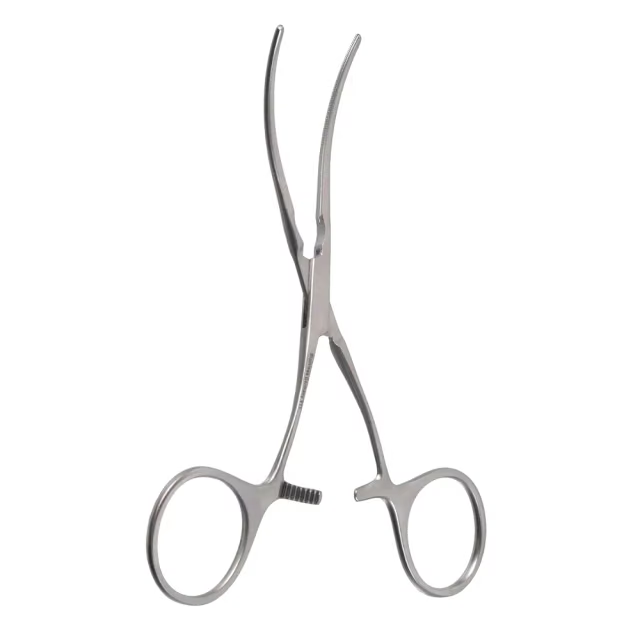 Allis, Babcock, and dressing forceps. These are shaped for tissue handling, vessel support, wound closure, and routine operative tasks.
Ophthalmic Surgery
Eye surgery requires extremely fine, lightweight, and highly precise forceps. Instruments such as McPherson, Bonn, Colibri, and capsulorhexis forceps are designed for delicate ocular tissues where even slight excess pressure can be harmful.
ENT Surgery
ENT procedures often involve narrow passages and limited visibility. Bayonet and alligator-style forceps help maintain sight lines while reaching deep into the ear or nasal cavity.
Dental and Oral Surgery
Dental forceps are shaped specifically for different tooth positions, root anatomy, and extraction angles. Upper and lower teeth require different beak shapes and handle designs for proper leverage.
Laparoscopic Surgery
Laparoscopic forceps must be long, slim, and designed to work through trocar ports. Their shaft length, jaw angle, and handle mechanism are very different from open surgery instruments.
Neurosurgery
Neurosurgical forceps often emphasize fine control, minimal tissue trauma, and access in deep or highly sensitive spaces. Bayonet and micro-forceps are especially common.
This specialty-based variation is one of the strongest reasons there are so many forceps patterns on the market.
Better Grip Means Better Surgical Control
Forceps shape also affects how securely a surgeon can hold tissue or material. Grip matters because slipping can delay the procedure, damage tissue, or reduce precision.
Design features that improve grip include:
- Jaw serrations
- Toothed tips
- Fenestrated ends
- Spring tension
- Ergonomic handle balance
- Ratcheted locking systems (in ring-handle forceps)
For example:
- Allis forceps grip tissue firmly but can be more traumatic.
- Babcock forceps hold delicate tubular tissue more gently.
- Debakey forceps are designed for atraumatic vascular or soft tissue handling.
The shape is always linked to function. Better grip does not always mean more pressure it means the right kind of control for the tissue being handled.
Ergonomics Matter More Than People Think
Another reason forceps come in many shapes is surgeon comfort and hand control. During surgery, especially longer procedures, ergonomics can affect performance significantly.
A well-designed forceps can:
- Reduce hand fatigue
- Improve finger positioning
- Increase tactile feedback
- Allow more stable movements
- Improve precision in repetitive tasks
This is especially important in:
- Microsurgery
- Plastic surgery
- Ophthalmology
- Neurosurgery
- Laparoscopic procedures
In these fields, surgeons may prefer certain forceps not only because of the tip design, but because the handle balance and spring tension feel more natural in the hand.
Why One Forceps Cannot Do Everything
Many beginners assume one “good” forceps should work for most tasks. In reality, that approach is not ideal in surgery. Using the wrong shape can lead to:
- Poor tissue grip
- Slipping during delicate steps
- Excess tissue trauma
- Reduced visibility
- Slower instrument handling
- Surgeon fatigue
- Less efficient procedures
That is why hospitals, clinics, and instrument sets include multiple forceps patterns. The goal is not to collect more tools unnecessarily. The goal is to match the instrument to the exact clinical need.
In professional surgical practice, the right forceps can make a small but meaningful difference in the outcome of a procedure.
Common Examples of Why Forceps Shapes Differ
To make it easier to understand, here are a few simple examples:
- Adson Tissue Forceps: Short and precise, often used for skin and superficial tissue during suturing
- Brown Adson Forceps: Multiple fine teeth for secure but controlled tissue grip
- Debakey Forceps: Atraumatic design for delicate soft tissue or vascular handling
- Allis Tissue Forceps: Strong toothed grip for holding tougher tissue
- Babcock Forceps: Rounded jaws for atraumatic grasping of bowel or tubular structures
- Bayonet Forceps: Offset shape improves visibility in deep or narrow fields
- McPherson Forceps: Fine ophthalmic forceps for precise eye procedures
- Laparoscopic Graspers: Long shaft design for minimally invasive access through ports
Tips for Medical Students and Instrument Buyers
If you are a medical student, beginner surgical assistant, or someone selling surgical instruments, the easiest way to understand forceps shapes is to ask three questions:
1. What tissue is it designed to hold?
Is it skin, fascia, bowel, vessel, eye tissue, or dressing material?
2. How delicate is the tissue?
Will the tissue tolerate teeth, or does it need an atraumatic grip?
3. Where is the surgery happening?
Is it an open field, a deep cavity, a narrow ENT space, or a laparoscopic port?
Once you understand these three points, forceps design starts to make much more sense.
Final Thoughts
Surgical forceps come in so many different shapes because surgery is not a one-size-fits-all field. Different tissues, different anatomical spaces, different specialties, and different surgical goals all require different types of control. The shape of a forceps is carefully designed to improve access, protect tissue, enhance grip, support visibility, and help the surgeon work with greater precision.
From a real surgical instrument perspective, these variations are not just about appearance they are about performance. Whether it is a fine atraumatic forceps for delicate tissue, a toothed forceps for secure skin handling, or a bayonet design for deep visibility, each pattern exists for a reason. Understanding this helps not only surgeons and students, but also anyone involved in buying, selling, or organizing surgical instruments professionally.