
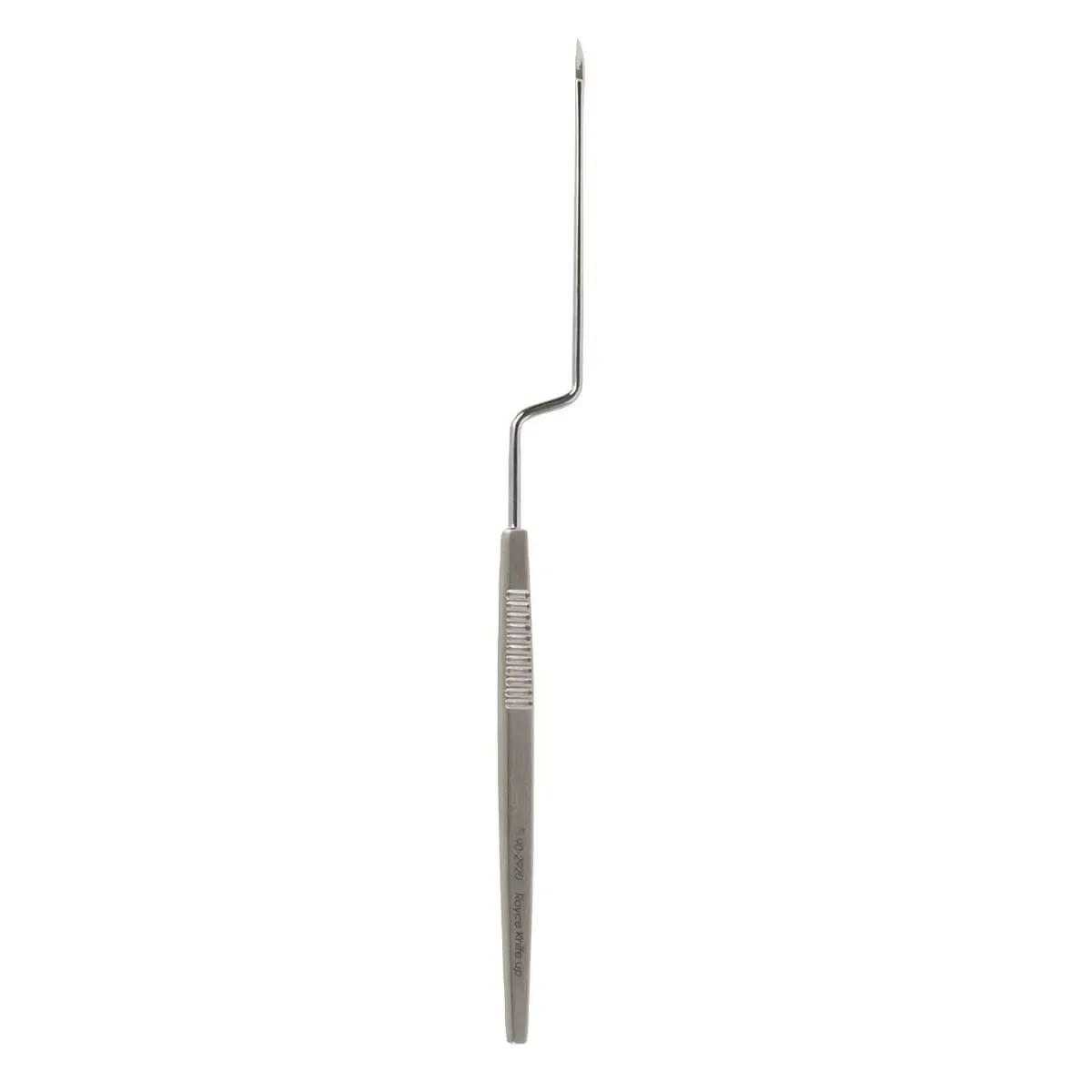
8mm Bayonet Shaft Upcutting Blade
Direct Manufacturer Pricing • Tax Exclusive
- 8mm Bayonet Shaft Upcutting Blade designed with a bayonet configuration for precise elevation and removal of tissue or bone.
- 8 mm upcutting blade provides a defined cutting profile for ENT procedures.
- Bayonet design supports a specialized working orientation within the operative field.
- Suitable for ENT and otologic surgery applications requiring a bayonet instrument type.
All import duties, tariffs & taxes are 100% pre-paid for USA, UK, Canada, EUROPE & Australia (AUS). Zero surprise customs bills at delivery.
Hospital & Volume Procurement Pricing
The 8mm Bayonet Shaft Upcutting Blade is a specialized ENT instrument designed for precise elevation, removal, and shaping of tissue or bone in middle-ear and otologic microsurgery. Its upcutting blade allows controlled, atraumatic removal of material while preserving surrounding delicate structures.
With an overall length of and an 8mm blade width, this Bayonet Shaft provides a defined cutting profile for ENT applications. The bayonet-shaped design enhances ergonomic access, improving visibility and clearance over anatomical obstructions in the narrow ear canal.
Key Features
- for controlled manual handling.
- 8 mm blade width provides a defined cutting profile.
- Bayonet configuration for specialized working orientation.
- Designed for precise elevation and removal of tissue or bone.
- Suitable for ENT and otologic microsurgery applications.
- Supports positioning of the working end within the operative field.
- Specialized Bayonet pattern for professional ENT instrument sets.
- Corrosion-resistant surgical-grade German AISI 420 stainless steel construction.
- Autoclavable and reusable (Steam autoclave up to 134°C / 273°F).
Technical Specifications
| Specification | Details |
|---|---|
| Instrument Type | Bayonet Shaft Upcutting Blade |
| Overall Length | |
| Working End / Blade / Jaw | 8 mm Upcutting Blade |
| Configuration | Bayonet |
| Primary Function | Tissue and Bone Elevation and Removal |
| Material | German Stainless Steel (AISI 420) |
| Sterilization | Steam Autoclavable (up to 134°C / 273°F) |
| Application Type | ENT / Otologic Surgery |
The 8mm Bayonet Shaft Upcutting Blade combines a overall length with an 8 mm blade width and bayonet configuration.
Its defined working profile is intended for precise elevation and removal of tissue or bone in ENT applications.
Design & Function
The Bayonet Shaft Upcutting Blade features a bayonet working configuration designed to provide a specialized orientation during otologic microsurgery. The upcutting blade can assist in positioning the working end according to the requirements of the operative field.
The 8 mm blade profile provides a defined cutting profile, while the allows controlled manual positioning. Together, these dimensions provide a practical configuration for ENT procedures requiring a bayonet instrument type.
Surgical Applications
The 8mm Bayonet Shaft Upcutting Blade may be used for ENT and otologic surgery applications involving precise elevation, removal, and shaping of tissue or bone. Specific use depends on the surgical procedure, technique, anatomical site, and preference of the clinical team.
Handling & Instrument Care
Inspect the Bayonet Shaft Upcutting Blade before use, paying particular attention to the working end, jaw alignment, and cutting edges. Ensure the instrument is properly aligned and free from visible damage or wear before use.
After use, clean and process the instrument according to the manufacturer's validated instructions and the healthcare facility's established instrument-processing protocols. Store the Bayonet Shaft Upcutting Blade appropriately to protect its working end and prevent unnecessary contact with other instruments.
Frequently Asked Questions
1. What is the overall length of this Bayonet Shaft Upcutting Blade?
The overall length is .
2. What is the working end / blade or tip design of the instrument?
It features 8 mm upcutting blade.
3. Is this Bayonet Shaft Upcutting Blade curved or straight?
It features a bayonet configuration.
4. What is a Bayonet Shaft Upcutting Blade used for?
It is designed for controlled tissue and bone elevation and removal in ENT applications.
5. What clinical advantage does the bayonet design provide?
The bayonet design provides a specialized working orientation for positioning the working end within the operative field.
6. Is this instrument suitable for ENT surgery?
It may be used in ENT and otologic surgery applications where a bayonet configuration instrument type is appropriate.
7. Does the specification refer to the working end?
Yes. The supplied specification refers to the working profile and functional geometry of the instrument.
8. How should the Bayonet Shaft Upcutting Blade be cleaned and maintained?
It should be inspected, cleaned, steam autoclaved (up to 134°C / 273°F), and stored according to manufacturer instructions and healthcare facility protocols.