
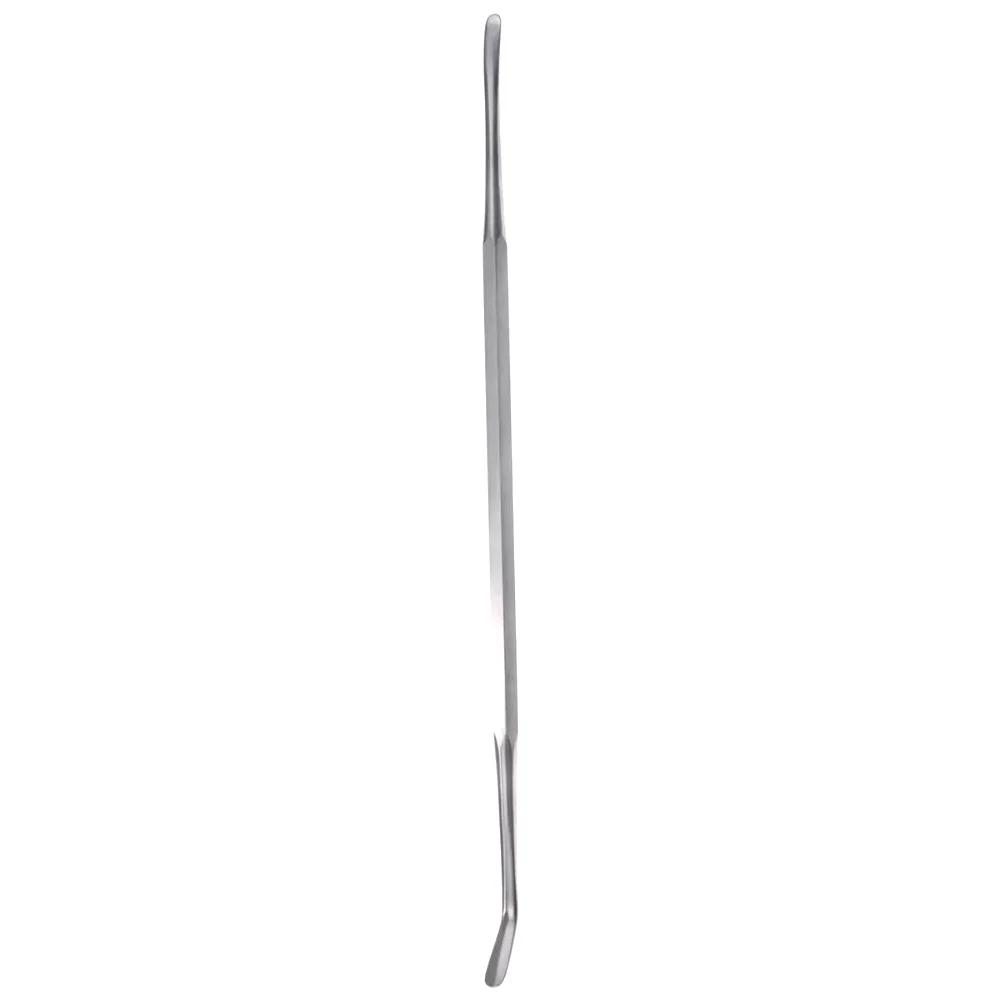
Crile Gasserian Ganglion Knife Dissector 8 1/2″
Direct Manufacturer Pricing • Tax Exclusive
The Crile Gasserian Ganglion Knife Dissector 8 1/2″ is a specialized neurosurgical instrument associated with delicate dissection around the Gasserian ganglion. Its 8.5-inch length provides an extended instrument profile for access in selected neurosurgical procedures.
All import duties, tariffs & taxes are 100% pre-paid for USA, UK, Canada, EUROPE & Australia (AUS). Zero surprise customs bills at delivery.
Hospital & Volume Procurement Pricing
The Crile Gasserian Ganglion Knife Dissector is a specialized instrument designed for neurosurgical applications involving delicate dissection. The Gasserian ganglion, also known as the trigeminal ganglion, is a sensory nerve structure associated with the trigeminal nerve. Instruments designed for this anatomical region are used in highly specialized procedures requiring precise access and controlled handling.
This model has a specified overall length of 8.5 inches, approximately 21.6 cm. Its length helps identify the instrument when comparing neurosurgical tools for particular operative requirements.
Specialized Neurosurgical Design
Knife dissectors combine features intended to support controlled tissue separation or dissection. The exact working-end geometry is important because it determines how an instrument can be positioned and used in a particular surgical setting.
The product title identifies this instrument as a Crile Gasserian ganglion knife dissector, but it does not specify the blade shape, tip dimensions, shaft configuration, or handle design. These details should be confirmed with the manufacturer or supplier before purchase.
Intended Surgical Applications
Gasserian ganglion instruments are associated with specialized procedures involving the trigeminal ganglion and surrounding anatomical structures. The exact role of this instrument depends on its design and the surgical technique being performed.
Because procedures in this region involve delicate neural anatomy, instrument selection and use should be determined by qualified neurosurgical professionals. The product description alone should not be treated as confirmation of suitability for a specific procedure.
Length and Instrument Selection
The 8.5-inch length provides a defined measurement for catalog identification and purchasing. When selecting a neurosurgical dissector, clinicians and purchasing teams should also consider the working-end profile, shaft length, instrument balance, and access requirements.
Confirm the manufacturer's complete dimensional specifications to determine whether the instrument matches the intended application. Do not rely on overall length alone when comparing instruments with different working-end designs.
Material and Instrument Care
The product title does not specify the material or grade. Confirm the construction material, reusable status, and approved reprocessing method with the supplier.
Before use, inspect the instrument for damage, corrosion, surface irregularities, and defects at the working end. Follow the manufacturer's validated instructions for cleaning, disinfection, sterilization, and storage. Do not use the instrument if it fails inspection or if its condition could compromise safe use.
Professional Use
The Crile Gasserian Ganglion Knife Dissector is intended for specialized clinical environments. Selection should be based on the requirements of the procedure, the surgeon's training, and the manufacturer's stated intended use. Verify the instrument's specifications and applicable documentation before ordering.
Key Features
Crile Gasserian ganglion knife dissector
Specialized neurosurgical instrument
Overall length: 8.5 inches
Approximate metric length: 21.6 cm
Associated with procedures involving the Gasserian ganglion
Intended for professional surgical use
Working-end and blade specifications require confirmation
Material and grade not specified
Reusable status should be verified
Follow manufacturer instructions for cleaning and sterilization
Product Specifications
| Specification | Details |
|---|---|
| Product Name | Crile Gasserian Ganglion Knife Dissector |
| Instrument Type | Neurosurgical Knife Dissector |
| Specialty | Neurosurgery |
| Overall Length | 8.5 inches |
| Metric Length | Approximately 21.6 cm |
| Working-End Design | Confirm with manufacturer |
| Blade / Tip Dimensions | Not specified |
| Material | Confirm with manufacturer |
| Handle Configuration | Not specified |
| Reusable Status | Confirm with manufacturer |
| Sterilization Compatibility | Confirm with manufacturer |
| Intended Application | Specialized neurosurgical dissection; confirm intended use |
Frequently Asked Questions
1. What is a Crile Gasserian Ganglion Knife Dissector?
It is a specialized neurosurgical instrument associated with dissection in procedures involving the Gasserian ganglion region.
2. What is the length of this instrument?
The specified length is 8.5 inches, approximately 21.6 cm.
3. What is the Gasserian ganglion?
The Gasserian ganglion, also called the trigeminal ganglion, is a sensory nerve structure associated with the trigeminal nerve.
4. What is this instrument used for?
Its intended use relates to specialized neurosurgical dissection. The exact application depends on the instrument's working-end design and the procedure.
5. What type of tip does this dissector have?
The exact tip or blade configuration is not provided in the product title. Confirm the design with the manufacturer.
6. Is this instrument made from stainless steel?
The material is not specified. Contact the supplier to confirm the material and grade.
7. Is the instrument reusable?
Reusable status is not specified. Follow the manufacturer's labeling and instructions before reprocessing or reuse.
8. How should this instrument be sterilized?
Use only the cleaning and sterilization methods validated by the manufacturer for this specific model.
9. Who should use this instrument?
It is intended for use by appropriately trained healthcare professionals in specialized surgical settings.
10. What should I verify before purchasing?
Confirm the working-end design, overall dimensions, material, intended use, reusable status, and approved reprocessing instructions.