
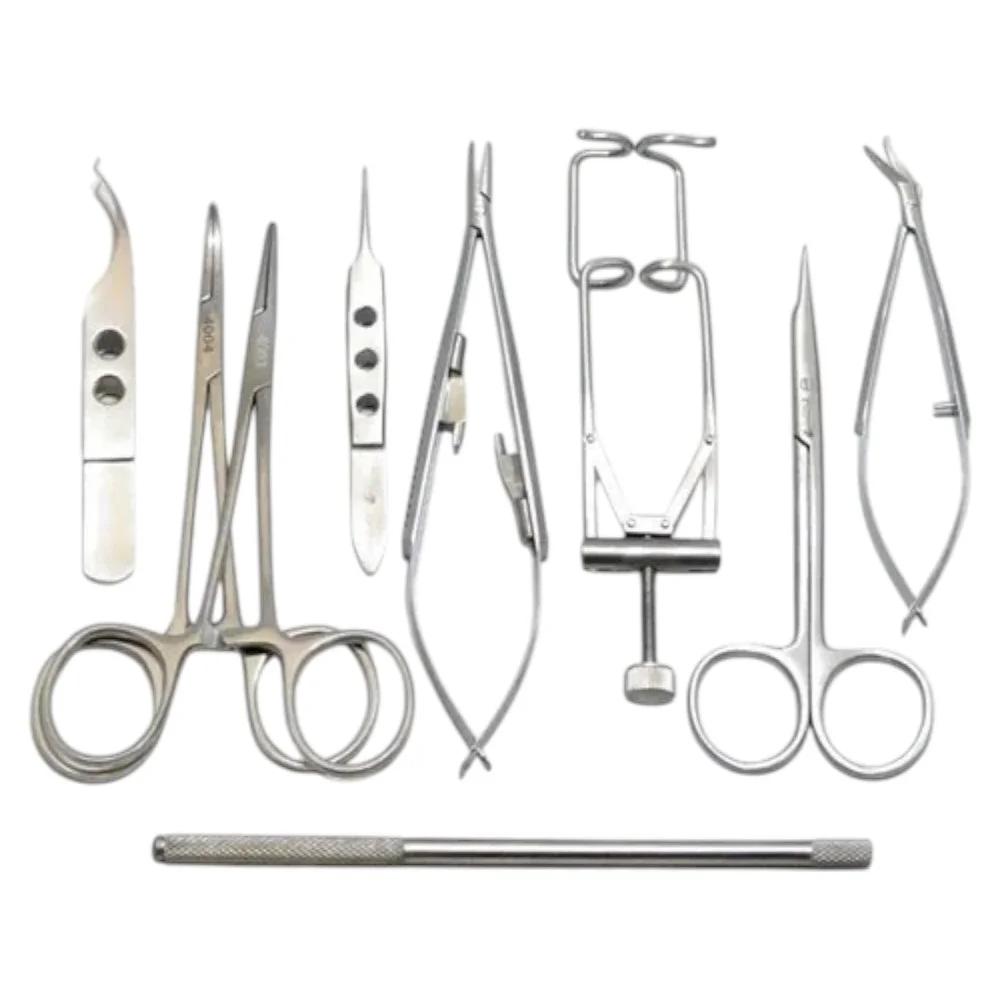
Cutting Instruments Set
Direct Manufacturer Pricing • Tax Exclusive
The Cutting Instruments Set is intended for professional surgical environments requiring instruments for cutting, incision, and tissue preparation. The exact instruments, quantities, and specifications depend on the set configuration and should be confirmed with the manufacturer before purchase.
All import duties, tariffs & taxes are 100% pre-paid for USA, UK, Canada, EUROPE & Australia (AUS). Zero surprise customs bills at delivery.
Hospital & Volume Procurement Pricing
The Cutting Instruments Set is a collection of surgical tools designed to support cutting-related tasks in clinical and operative settings. Depending on its configuration, a cutting instrument set may include instruments used for making incisions, cutting tissue, trimming sutures, or performing other controlled cutting tasks during medical procedures.
The term “Cutting Instruments Set” does not identify a specific instrument list or surgical specialty. Buyers should review the manufacturer's product details to determine whether the set is intended for general surgery, orthopedic procedures, dental applications, or another clinical field.
Instrument Types and Functions
Surgical cutting instruments are available in several designs, each intended for a particular task. Depending on the set configuration, examples may include surgical scissors, scalpels or compatible handles, and other specialized cutting tools. These are general examples only; their inclusion in this particular set has not been confirmed.
Different blade and jaw configurations support different cutting requirements. Straight and curved instruments, for example, may provide different access and handling characteristics. Selecting the correct instrument depends on the procedure, tissue type, and clinical technique.
Design and Handling
Cutting instruments should provide appropriate handling, controlled movement, and a working edge suitable for their intended use. Factors such as instrument length, blade geometry, handle design, and overall balance can influence suitability for a particular surgical task.
The exact design features of this set are not specified in the product title. Confirm the instrument list, dimensions, and working-end configurations with the supplier before ordering.
Material and Construction
The material used in surgical cutting instruments affects their durability, maintenance requirements, and compatibility with approved reprocessing methods. The product title does not identify the material or grade of the instruments in this set.
Before purchase, ask the manufacturer to confirm the material composition, any surface coatings, and the intended use of each component. Do not assume that every instrument in the set has the same material or finish.
Cleaning and Maintenance
Cutting instruments require careful inspection and appropriate handling. Before use, check for damaged edges, loose components, corrosion, alignment issues, or other visible defects. Instruments that are damaged or do not function as intended should be removed from service.
Follow the manufacturer's validated instructions for cleaning, disinfection, sterilization, lubrication where applicable, and storage. Confirm whether the set is reusable and which reprocessing methods are approved for its specific components.
Selecting the Right Set
When purchasing a cutting instruments set, consider the clinical specialty, intended procedures, required instrument types, total piece count, and dimensional requirements. A complete contents list helps confirm that the set meets the needs of the healthcare facility.
The number of pieces, included instruments, material, storage case, and sterilization compatibility are not specified in the supplied product title. Verify these details with the manufacturer or supplier before purchase.
Key Features
Surgical cutting instrument set
Intended for professional medical environments
Designed for cutting-related tasks, depending on configuration
Individual instrument types must be confirmed
Suitable surgical specialty requires verification
Instrument dimensions and piece count not specified
Material and construction details require confirmation
Storage case inclusion should be verified
Reusable status must be confirmed
Follow manufacturer instructions for cleaning and sterilization
Product Specifications
| Specification | Details |
|---|---|
| Product Name | Cutting Instruments Set |
| Product Type | Surgical Instrument Set |
| Specialty | Confirm with manufacturer |
| Total Piece Count | Not specified |
| Included Instruments | Confirm with manufacturer |
| Instrument Dimensions | Not specified |
| Cutting Edge / Blade Types | Confirm with manufacturer |
| Material | Confirm with manufacturer |
| Surface Finish | Not specified |
| Storage Case | Confirm with manufacturer |
| Reusable Status | Confirm with manufacturer |
| Sterilization Compatibility | Confirm with manufacturer |
| Intended Application | Cutting-related surgical tasks, according to set configuration |
Frequently Asked Questions
1. What is a Cutting Instruments Set?
It is a set of instruments intended for cutting-related tasks in medical or surgical environments. The exact functions depend on the instruments included.
2. Which instruments are included in this set?
The product title does not specify the contents. Request the manufacturer's detailed instrument list before ordering.
3. Is this set intended for general surgery?
The surgical specialty is not specified. Confirm the manufacturer's intended use and included instruments to determine whether it suits general surgery.
4. How many pieces are included?
The total piece count is not provided in the product title. Verify the quantity with the supplier.
5. What material are the instruments made from?
The material is not specified. Ask the manufacturer to confirm the material and grade of each component.
6. Does the set include a storage case?
The product title does not confirm whether a case or tray is included. Check the supplier's contents list.
7. Are the instruments reusable?
Reusable status depends on the individual components and their labeling. Follow the manufacturer's instructions before reprocessing or reuse.
8. How should the cutting instruments be sterilized?
Use only the cleaning and sterilization methods validated by the manufacturer for the specific instruments.
9. What should I inspect before use?
Check cutting edges, instrument alignment, handles, joints, and any locking mechanisms for damage or defects.
10. What should I confirm before purchasing?
Verify the complete instrument list, piece count, dimensions, material, intended specialty, case inclusion, and approved reprocessing requirements.