
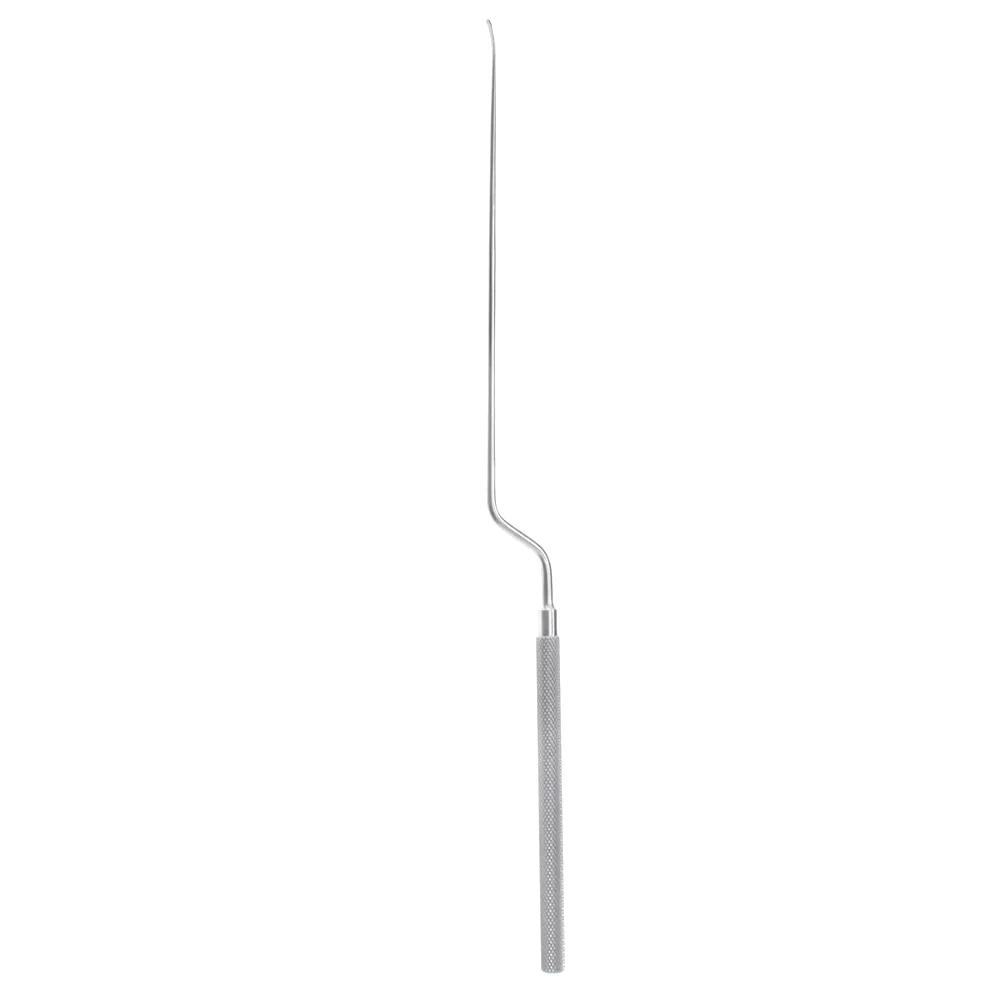
Dissector Up
Direct Manufacturer Pricing • Tax Exclusive
The Dissector Up is a surgical instrument intended to assist with tissue dissection and separation during appropriate procedures. Confirm the working-end orientation, dimensions, and intended application with the manufacturer to ensure the instrument meets specific surgical requirements.
All import duties, tariffs & taxes are 100% pre-paid for USA, UK, Canada, EUROPE & Australia (AUS). Zero surprise customs bills at delivery.
Hospital & Volume Procurement Pricing
The Dissector Up is a surgical instrument designed to support tissue dissection and separation in appropriate clinical settings. Dissecting instruments help trained healthcare professionals separate tissue planes and manipulate anatomical structures during selected surgical procedures. The instrument's exact function depends on its working-end design, orientation, dimensions, and intended use.
The term “Up” may refer to an upward-facing or upward-angled working end within a manufacturer's instrument range. However, the precise configuration cannot be confirmed from the product name alone. Buyers should review the manufacturer's catalogue, product images, and technical specifications before selecting this instrument.
Purpose and Surgical Applications
Surgical dissectors are used to assist with tissue separation, tissue mobilization, and access to selected anatomical areas. Depending on the specific model, the working-end orientation may help the operator approach tissue from a particular angle.
The intended specialty and applications of this Dissector Up are not specified in the supplied title. It should not be assumed to be designed for a particular procedure or anatomical region without manufacturer confirmation.
Choosing an appropriate dissector requires consideration of the tissue involved, the available surgical access, and the level of control required. The instrument should be used only by trained professionals and according to its instructions for use.
Working-End Orientation and Design
The main distinguishing feature suggested by the name is an upward-oriented working end. This configuration may provide an alternative approach angle compared with straight or downward-oriented dissectors. Its actual function depends on the degree of angulation, tip shape, shaft design, and overall construction.
The product title does not establish whether the tip is blunt, sharp, rounded, or otherwise shaped. It also does not confirm the degree of angulation or whether the instrument has a straight or curved shaft. These details should be checked against the manufacturer's technical information.
The handle and shaft contribute to instrument control and reach. Confirm the overall length and working-end dimensions before ordering to ensure compatibility with the intended application.
Material and Construction
The material of this specific Dissector Up is not identified in the supplied title. Surgical instruments of this type may be manufactured from stainless steel or other materials, depending on their intended use and design. Confirm the exact material grade, finish, and construction details with the supplier.
Do not assume a particular regulatory certification, coating, or sterilization compatibility unless the manufacturer provides supporting information.
Handling and Selection Considerations
Selecting the correct dissector involves matching its design to the intended procedure. The working-end orientation should provide the required access while allowing appropriate control and visibility.
Before purchasing, consider the following:
Tip orientation: Confirm that the working end is angled upward as required.
Tip shape: Verify whether the end is blunt, sharp, rounded, or another configuration.
Dimensions: Check the overall length and working-end measurements.
Intended application: Review the manufacturer's description of suitable procedures.
Material: Confirm the construction material and surface finish.
Care requirements: Verify whether the instrument is reusable and follow the manufacturer's reprocessing instructions.
These checks help distinguish the Dissector Up from similarly named instruments with different working-end designs.
Cleaning, Sterilization, and Maintenance
Cleaning and sterilization requirements depend on the exact model and the manufacturer's instructions. If the instrument is reusable, follow the validated procedures for cleaning, inspection, packaging, and sterilization. Inspect the working end and any angled sections carefully for residue, damage, or irregularities.
Do not use the instrument if the tip is damaged, the shaft is bent, corrosion is present, or the instrument does not function as intended. Store and maintain it according to the manufacturer's recommendations.
Choosing the Correct Dissector Up
Before ordering, confirm the model reference, tip orientation, working-end dimensions, overall length, material, intended applications, and reusable status. Product images and manufacturer documentation are especially important when selecting between upward-, downward-, and curved-design dissectors.
The Dissector Up should be selected using verified product specifications rather than its name alone. Accurate information helps healthcare professionals choose an instrument suited to the procedure and follow the correct handling and maintenance requirements.
Key Features
Surgical instrument intended for tissue dissection and separation
Product name indicates an upward-oriented design
Working-end orientation requires manufacturer confirmation
Intended to support controlled tissue manipulation
Tip shape and angulation not specified
Overall length and dimensions require verification
Material and surface finish not provided
Intended surgical applications require confirmation
Reprocessing must follow manufacturer instructions
Inspect the tip and shaft before use
Product Specifications
| Specification | Details |
|---|---|
| Product Name | Dissector Up |
| Instrument Type | Surgical dissector |
| Primary Function | Tissue dissection and separation |
| Design | Up-oriented configuration indicated by product name |
| Tip Shape | Confirm with manufacturer |
| Tip Angulation | Not specified |
| Overall Length | Not specified |
| Working-End Dimensions | Not specified |
| Material | Confirm with supplier |
| Surface Finish | Not specified |
| Intended Surgical Specialty | Confirm with manufacturer |
| Reusable Status | Confirm with manufacturer |
| Cleaning and Sterilization | Follow manufacturer instructions |
FAQs
1. What is a Dissector Up used for?
It is described as a surgical instrument for tissue dissection and separation. Its precise intended use depends on the specific model and manufacturer's instructions.
2. What does “Up” mean in the product name?
It may indicate an upward-oriented working end. Confirm the exact tip orientation and design with the manufacturer.
3. How is a Dissector Up different from a Dissector Down?
The names may indicate different working-end orientations. The exact differences should be verified using product images and technical specifications.
4. Is the tip blunt or sharp?
The supplied product title does not specify the tip type. Check the manufacturer's description before ordering.
5. What material is the Dissector Up made from?
The material is not identified in the title. Contact the supplier to confirm the material grade and finish.
6. What is the overall length of this instrument?
The overall length is not provided. Refer to the manufacturer's product specifications for the exact measurement.
7. Which procedures is the Dissector Up designed for?
The intended surgical applications are not specified. Confirm suitability with the manufacturer and the clinical team.
8. Is this instrument reusable?
Reusable status is not provided. Verify whether the instrument is reusable or single-use before use.
9. How should the Dissector Up be sterilized?
Follow the validated cleaning and sterilization instructions for the exact model. Do not assume compatibility with a particular method.
10. What should I verify before purchasing?
Confirm the tip orientation, shape, dimensions, overall length, material, intended applications, and reprocessing requirements.