
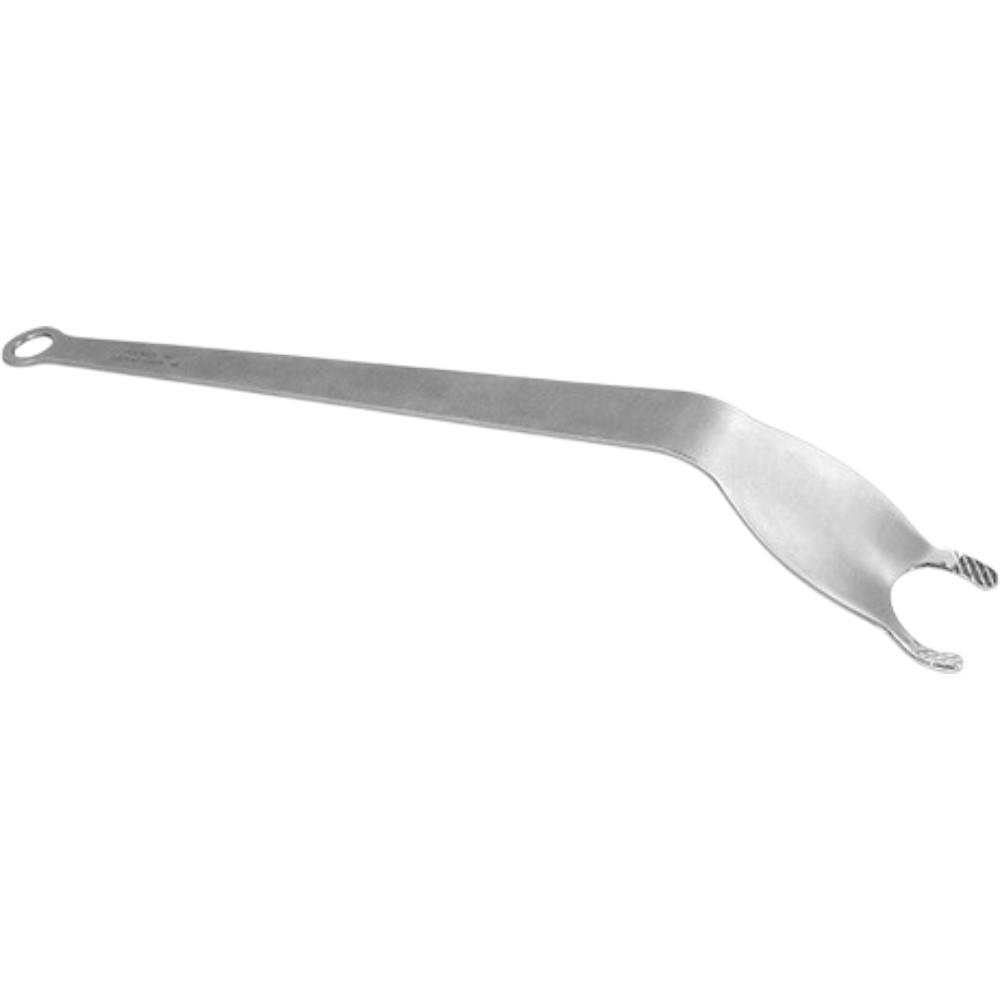
Extra Leverage Proximal Femoral Elevator
Direct Manufacturer Pricing • Tax Exclusive
All import duties, tariffs & taxes are 100% pre-paid for USA, UK, Canada, EUROPE & Australia (AUS). Zero surprise customs bills at delivery.
Hospital & Volume Procurement Pricing
The Extra Leverage Proximal Femoral Elevator is a specialized orthopedic surgical instrument designed to assist surgeons with controlled elevation and manipulation of the proximal femur during selected orthopedic procedures. The instrument provides additional leverage to help position the femur and improve access to the operative area when working around the hip and proximal femoral region.
Proximal femoral elevators are commonly used during orthopedic procedures where controlled bone positioning is required. Depending on the surgical technique, the instrument may assist with elevating the proximal femur, maintaining exposure, positioning bone fragments, or supporting access during hip and femoral procedures. The exact application depends on the instrument's dimensions, working-end design, patient anatomy, and surgical approach.
The extra-leverage configuration provides an extended handle or mechanical advantage compared with shorter bone elevators. This design can allow the surgeon to apply controlled force while maintaining a secure grip on the instrument. Proper positioning of the working end is important to avoid unnecessary pressure on surrounding soft tissue or damage to the bone.
The instrument may be useful during procedures involving the proximal femur, including selected fracture fixation, hip reconstruction, arthroplasty-related procedures, and other orthopedic interventions where femoral manipulation is required. It should be selected according to the patient's anatomy and the requirements of the specific surgical technique.
A properly designed working end allows the instrument to engage the intended portion of the proximal femur while the handle provides controlled manipulation. Surgeons should use the instrument only for its intended purpose and avoid excessive force beyond the instrument's design capacity.
The Extra Leverage Proximal Femoral Elevator is typically suited to professional orthopedic surgical environments, including hospitals, orthopedic operating rooms, trauma centers, and surgical training facilities. Its durable construction is intended to withstand appropriate handling and reprocessing when the instrument is designated as reusable.
After use, the instrument should be thoroughly cleaned to remove blood, tissue, and other biological material. It should then be rinsed, dried, and inspected for deformation, surface damage, corrosion, or other signs of wear. If the instrument contains joints or other functional components, these should also be checked for proper movement.
Reusable instruments should be sterilized using a validated method appropriate for their material and construction. Manufacturer instructions and healthcare-facility reprocessing protocols should always be followed.
The Extra Leverage Proximal Femoral Elevator provides orthopedic surgical teams with a practical tool for controlled proximal femoral manipulation. Its extended leverage design can support stable handling and access during selected hip, femoral, trauma, and reconstructive orthopedic procedures.
Key Features
- Designed for proximal femoral manipulation
- Extra-leverage configuration for controlled handling
- Suitable for selected orthopedic procedures
- Useful for hip and proximal femur surgery
- Supports controlled elevation and positioning of bone
- Helps provide access to the operative field
- Extended handle provides mechanical leverage
- Suitable for selected fracture fixation procedures
- Useful in orthopedic trauma and reconstructive surgery
- Durable surgical instrument construction
- Manual operation
- Reusable when designated for reusable surgical use
Product Specifications
| Specification | Details |
|---|---|
| Product Name | Extra Leverage Proximal Femoral Elevator |
| Instrument Type | Orthopedic Bone Elevator |
| Primary Application | Proximal Femur and Hip Surgery |
| Function | Bone elevation and manipulation |
| Design | Extra Leverage |
| Operation | Manual |
| Surgical Specialty | Orthopedic / Trauma |
| Material | Surgical-grade material, configuration dependent |
| Working End | Proximal femoral elevator configuration |
| Reusable | Depending on manufacturer designation |
| Sterilization | Follow validated manufacturer/facility protocol |
| Intended Use | Professional surgical environment |
FAQs
What is an Extra Leverage Proximal Femoral Elevator used for?
It is used to assist with controlled elevation, positioning, and manipulation of the proximal femur during selected orthopedic procedures.
What does extra leverage mean on a femoral elevator?
Extra leverage refers to the instrument's design providing increased mechanical advantage through its handle and working configuration, helping with controlled femoral manipulation.
Can this instrument be used during hip surgery?
Yes. It may be used during selected hip and proximal femoral procedures where controlled elevation or positioning of the femur is required.
Can it be used for femoral fracture fixation?
It may assist with selected fracture fixation procedures by helping position or manipulate the proximal femur or fracture fragments according to the surgical technique.
Is the proximal femoral elevator reusable?
It may be reusable when specifically designated for reusable surgical use. Proper cleaning, inspection, maintenance, and sterilization are required between procedures.
What material is the elevator made from?
The exact material depends on the product configuration. Surgical-grade stainless steel is commonly used for reusable orthopedic elevators, but the supplied specification should be verified.
How should the femoral elevator be sterilized?
The instrument should be cleaned and inspected before processing through a validated sterilization method appropriate for its material and construction. Manufacturer instructions should take precedence.
Is this instrument suitable for veterinary orthopedic surgery?
Veterinary suitability depends on the instrument's dimensions, intended labeling, and the animal's anatomy. It should only be used for veterinary procedures when appropriately specified and selected by a qualified veterinary professional.