
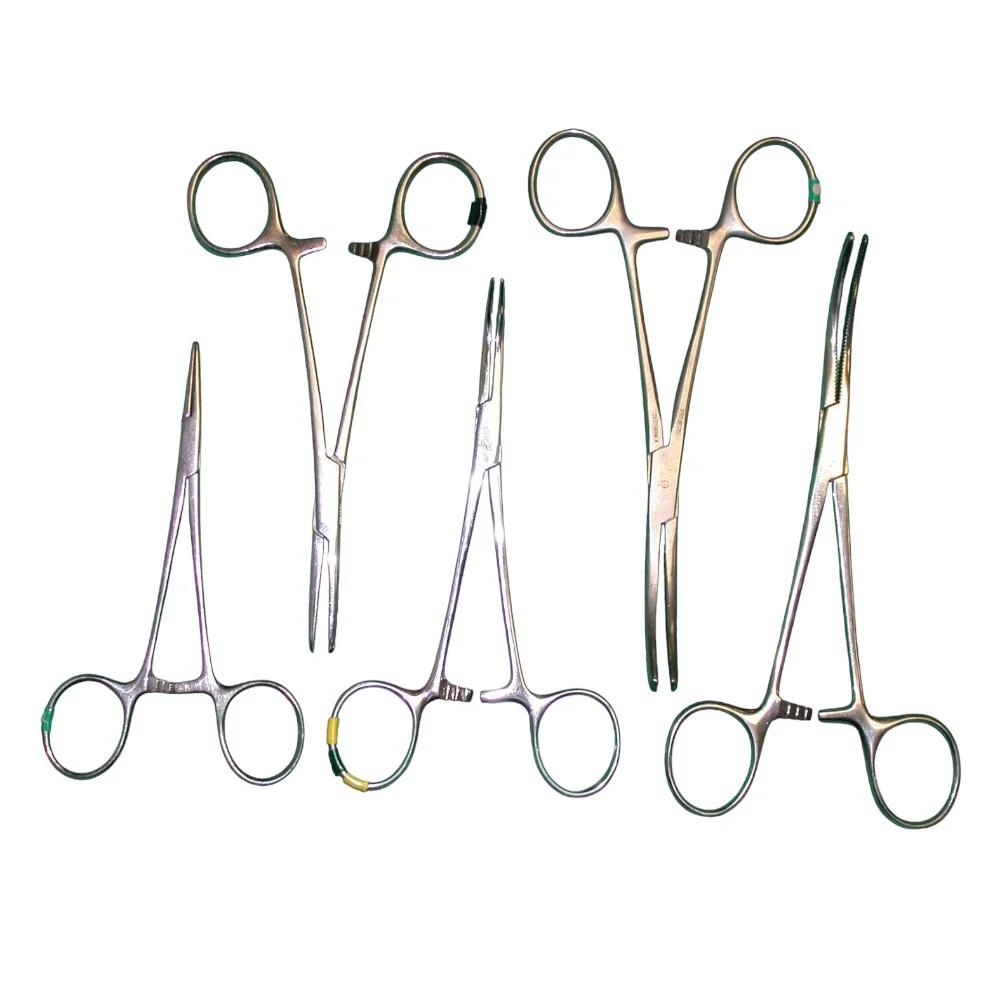
Grasping Holding Instruments Set
Direct Manufacturer Pricing • Tax Exclusive
The Grasping and Holding Instruments Set brings together surgical instruments designed to grasp, hold, and manipulate tissue or other surgical materials during appropriate procedures. Intended for professional medical environments, the set configuration should be confirmed to ensure it meets the requirements of the surgical team.
All import duties, tariffs & taxes are 100% pre-paid for USA, UK, Canada, EUROPE & Australia (AUS). Zero surprise customs bills at delivery.
Hospital & Volume Procurement Pricing
The Grasping Holding Instruments Set is a collection of surgical instruments intended to support controlled grasping, holding, and manipulation during medical procedures. Grasping and holding instruments are used across various surgical specialties to help clinicians position tissue, maintain control of selected structures, and handle surgical materials according to the requirements of a procedure.
The exact instruments included in this set are not specified in the product title. Buyers should request a complete component list from the supplier before ordering to verify that the set contains the instruments needed for the intended clinical application.
Purpose and Surgical Applications
Grasping and holding instruments serve an important role in surgical workflows. Depending on their design, they may be used to hold tissue, manipulate surgical materials, or maintain the position of selected structures during a procedure. Different jaw shapes, tip configurations, and locking mechanisms are designed for different handling requirements.
The appropriate instrument selection depends on the surgical specialty, tissue characteristics, procedure, and clinician preference. The specific applications of this set should be confirmed with the manufacturer or supplier rather than assumed from the general product name.
Instrument Design and Handling
Grasping instruments may feature straight or curved jaws, smooth or serrated gripping surfaces, and different tip profiles. Holding instruments may also include locking mechanisms that help maintain a selected grip when appropriate. These design features affect how an instrument contacts the material being handled and how much control the operator can maintain.
Because the product title does not identify the individual instruments, jaw styles, or locking features, these specifications should be verified before purchase. Healthcare professionals should use each instrument according to its intended purpose and the manufacturer's instructions.
Construction and Material Quality
The material composition and surface finish of the set are not specified in the product title. Surgical instruments are manufactured using materials selected for their intended clinical function, mechanical strength, and compatibility with approved cleaning and sterilization methods. However, the exact material grade and construction of this set must be confirmed with the supplier.
Before use, inspect each instrument for jaw alignment, gripping function, structural damage, corrosion, and wear. Instruments with defective tips, loose joints, or impaired locking mechanisms should be removed from service for evaluation.
Set Configuration and Selection
The number and types of instruments included can vary between sets. Before ordering, request an itemized inventory identifying each instrument, its dimensions, jaw design, and intended application. Confirm whether the set includes a storage case or accessories, as these details cannot be established from the product title alone.
A clearly documented component list helps healthcare facilities assess suitability for their procedures, standardize instrument inventories, and avoid ordering an incomplete or incompatible set.
Cleaning, Sterilization, and Maintenance
Reprocessing requirements depend on the construction of each instrument and the manufacturer's validated instructions. Confirm whether the set is reusable or single-use and obtain the appropriate instructions for cleaning, disinfection, sterilization, inspection, and storage before clinical use.
Pay particular attention to jaws, joints, ratchets, and other areas where debris may accumulate. Follow the manufacturer's approved procedures and the healthcare facility's infection-control protocols. Routine inspection and appropriate maintenance can help preserve instrument function over time.
Choosing the Right Grasping and Holding Instruments Set
When selecting a Grasping Holding Instruments Set, verify the included instrument types, quantities, dimensions, jaw configurations, locking features, materials, and intended applications. The set should match the clinical requirements of the surgical team and the facility's instrument-processing capabilities.
This set provides a general category of instruments for grasping and holding tasks in professional surgical settings. Confirming the exact contents and technical specifications with the supplier helps ensure the selected configuration is suitable for its intended use.
Key Features
Collection of grasping and holding surgical instruments
Designed for controlled tissue or material handling
Suitable for professional medical environments
Individual instrument designs may vary by set configuration
Jaw style and tip configuration require supplier confirmation
Locking mechanisms should be verified where applicable
Exact instrument quantity and component list should be confirmed
Material composition and finish require confirmation
Inspect gripping surfaces, joints, and ratchets before use
Cleaning and sterilization must follow manufacturer-validated instructions
Product Specifications
| Specification | Details |
|---|---|
| Product Name | Grasping Holding Instruments Set |
| Instrument Category | Surgical Instruments |
| Set Type | Grasping and Holding Instrument Set |
| Primary Function | Grasping, holding, and manipulation |
| Number of Pieces | Confirm with supplier |
| Included Instruments | Request complete component list |
| Jaw Configuration | Confirm with supplier |
| Locking Mechanism | Confirm individual instrument specifications |
| Instrument Dimensions | Confirm with supplier |
| Material | Confirm with supplier |
| Reusable or Single-Use | Confirm with manufacturer |
| Cleaning and Sterilization | Follow manufacturer-validated instructions |
| Intended Users | Qualified healthcare professionals |
Frequently Asked Questions
1. What is a Grasping Holding Instruments Set used for?
It is a collection of surgical instruments designed to grasp, hold, or manipulate tissue and surgical materials during appropriate procedures. The exact applications depend on the instruments included.
2. Which instruments are included in this set?
The product title does not specify the individual instruments or total quantity. Request an itemized component list from the supplier before ordering.
3. Can this set be used for different surgical specialties?
Grasping and holding instruments are used across multiple specialties, but the suitability of this particular set depends on its components and intended applications.
4. What jaw configurations are available?
Jaw designs may vary by instrument and manufacturer. Confirm whether the set includes straight, curved, smooth, serrated, or other jaw configurations.
5. What material are the instruments made from?
The material grade is not specified in the product title. Contact the supplier for the exact material composition and technical documentation.
6. Is the Grasping Holding Instruments Set reusable?
Reusable or single-use status must be confirmed with the manufacturer. If reusable, follow the validated cleaning and sterilization instructions.
7. How should grasping and holding instruments be maintained?
Inspect the jaws, joints, handles, and locking mechanisms for damage or impaired function. Follow the manufacturer's approved cleaning, sterilization, and maintenance procedures.
8. What should buyers confirm before purchasing?
Verify the instrument list, number of pieces, dimensions, jaw configurations, materials, intended applications, and reprocessing requirements.
9. Who should use this surgical instrument set?
It should be used by qualified healthcare professionals trained in the relevant procedures and familiar with the manufacturer's instructions.