
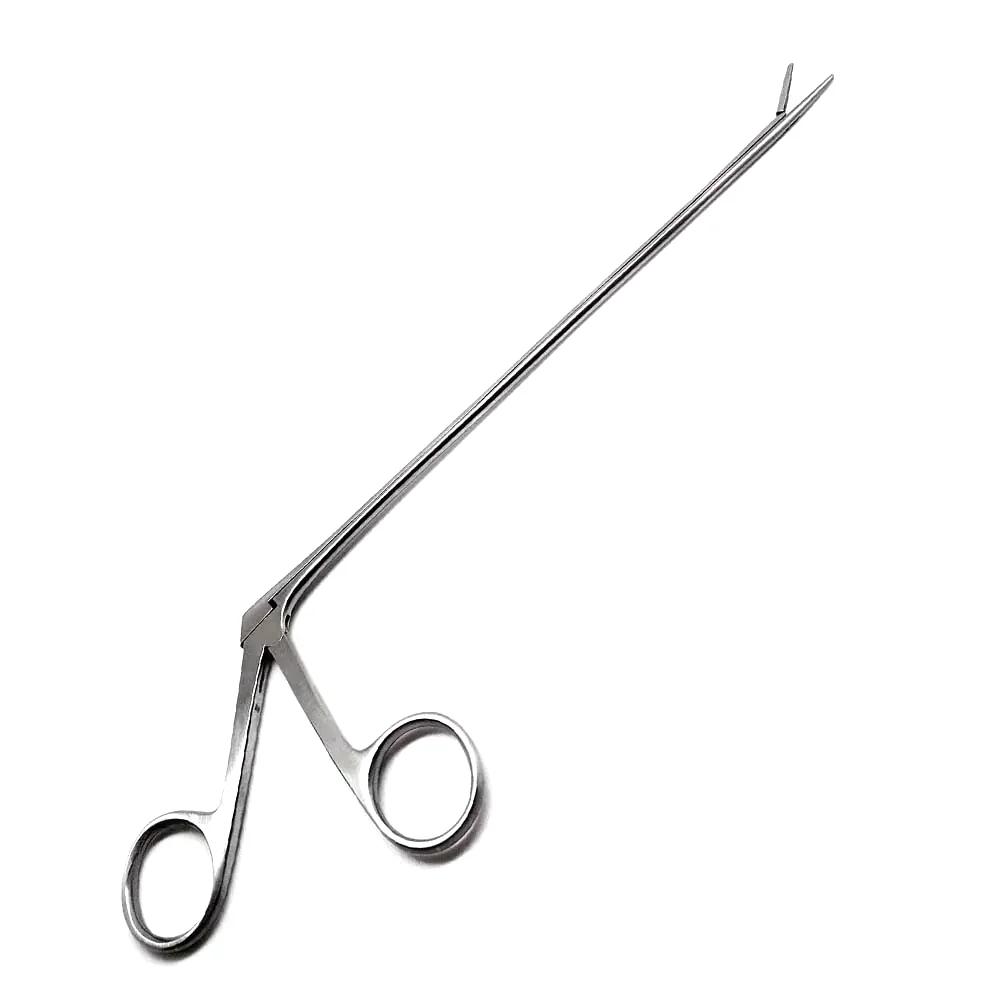
Hartman Noyes Ear Forceps
Direct Manufacturer Pricing • Tax Exclusive
Hartman Noyes Ear Forceps are specialized ENT instruments designed for controlled handling of small materials or tissue during appropriate ear procedures. Their precise working ends support delicate instrument manipulation in confined areas. Confirm the tip configuration, dimensions, and intended application before ordering.
All import duties, tariffs & taxes are 100% pre-paid for USA, UK, Canada, EUROPE & Australia (AUS). Zero surprise customs bills at delivery.
Hospital & Volume Procurement Pricing
Hartman Noyes Ear Forceps are specialized instruments associated with ear, nose, and throat (ENT) practice. Ear forceps are used by trained healthcare professionals to handle selected materials or tissue during ear examinations and procedures, depending on the instrument's specific design.
The Hartman Noyes designation identifies the instrument pattern, but the exact tip shape, jaw configuration, and intended use may vary by manufacturer. Reviewing the supplier's specifications helps ensure that the selected forceps meet the requirements of the intended clinical application.
Design and Functional Features
Ear forceps are generally designed with a narrow working profile to support controlled manipulation in small anatomical areas. The tips may differ in shape, width, and gripping pattern according to the intended function. These differences influence how the instrument interacts with the material or tissue being handled.
The exact tip design and overall length of this Hartman Noyes model have not been provided. Before purchasing, verify whether the instrument has straight or angled tips, the jaw pattern, and any additional design features listed by the manufacturer.
Applications in ENT Practice
Ear forceps may be used in selected ENT procedures for handling small materials or tissue under appropriate visualization. Their use depends on the instrument's documented intended purpose and the clinical requirements of the procedure.
The specific applications of Hartman Noyes Ear Forceps should be confirmed with the manufacturer or supplier. They should only be used by qualified professionals who have selected the appropriate instrument for the intended task.
Material and Construction
The material composition of this particular model has not been specified. ENT forceps may be manufactured from different instrument-grade materials depending on their intended use, construction, and reusable status.
Before ordering, confirm the material, surface finish, tip alignment, overall length, and whether the instrument is intended for single use or repeated use. These details help ensure compatibility with clinical requirements and instrument-processing procedures.
Handling, Cleaning, and Sterilization
Inspect the forceps before use for bent tips, misalignment, damage, corrosion, or irregular movement. The working ends should align and function as specified by the manufacturer.
If the instrument is reusable, follow the validated instructions for cleaning, inspection, packaging, and sterilization. If it is labeled for single use, do not reuse or reprocess it. Processing requirements should be confirmed for the exact model rather than assumed from its instrument category.
Choosing the Right Ear Forceps
When selecting Hartman Noyes Ear Forceps, consider the intended ENT application, tip shape, gripping pattern, overall length, and material. Confirm the product specifications with the supplier to ensure the instrument is appropriate for the procedure and clinical setting.
Accurate specifications help healthcare facilities select suitable ENT instruments and maintain consistent purchasing and inventory records.
Key Features
Hartman Noyes pattern ear forceps
Specialized ENT instrument design
Intended for controlled handling in appropriate ear procedures
Narrow working profile, depending on the model
Tip shape and gripping pattern require verification
Overall length not specified
Material composition should be confirmed with the supplier
Reusable or single-use status must be verified
Requires inspection before clinical use
Cleaning and sterilization must follow manufacturer instructions
Product Specifications
| Specification | Details |
|---|---|
| Product Name | Hartman Noyes Ear Forceps |
| Instrument Type | Ear forceps |
| Specialty | Ear, Nose, and Throat (ENT) |
| Pattern | Hartman Noyes |
| Tip Configuration | Confirm with supplier |
| Jaw or Gripping Pattern | Confirm with supplier |
| Overall Length | Not specified |
| Primary Function | Controlled handling during appropriate ENT procedures |
| Material | Not specified |
| Reusable or Single-Use | Confirm with supplier |
| Cleaning Requirements | Follow manufacturer instructions |
| Sterilization Method | Confirm validated method for the exact model |
| Packaging | Confirm with supplier |
Frequently Asked Questions
1. What are Hartman Noyes Ear Forceps used for?
They are specialized ENT instruments intended for handling selected materials or tissue during appropriate ear procedures, depending on the model's design.
2. Are Hartman Noyes Ear Forceps suitable for ENT procedures?
They are categorized as ENT instruments. Suitability for a specific procedure should be confirmed through the manufacturer's intended-use information.
3. What tip design do these ear forceps have?
The tip configuration is not specified in the product title. Check the supplier's description or product image to confirm whether the tips are straight, angled, or otherwise shaped.
4. What material are Hartman Noyes Ear Forceps made from?
The material has not been provided. Ask the supplier to confirm the construction material and surface finish.
5. Are these ear forceps reusable?
Their reusable or single-use status has not been confirmed. Follow the manufacturer's labeling and instructions.
6. How should Hartman Noyes Ear Forceps be cleaned and sterilized?
Use only the validated cleaning and sterilization instructions for the exact model. Confirm its material and reusable status before reprocessing.
7. What should I verify before ordering?
Check the overall length, tip shape, gripping pattern, material, intended application, and reusable status to ensure the forceps meet your clinical requirements.