
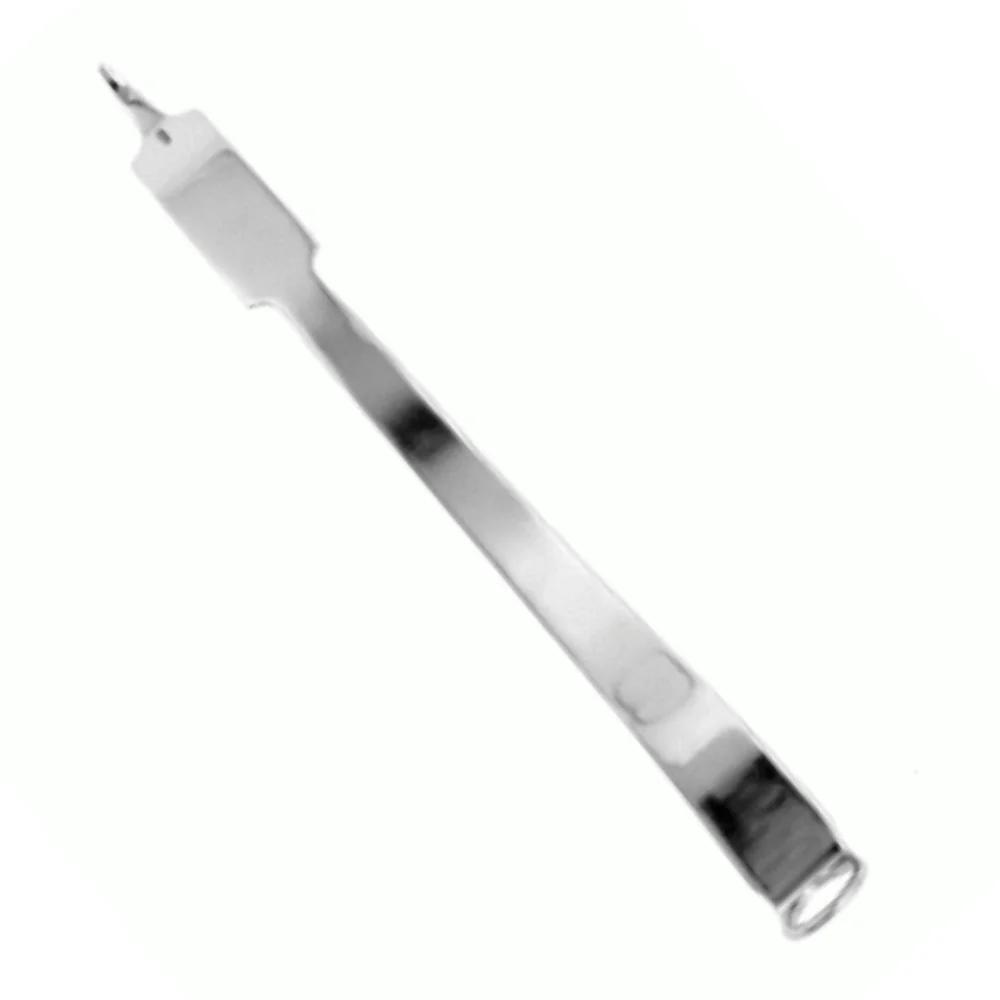
Hohmann Retractor Right Angled
Direct Manufacturer Pricing • Tax Exclusive
The Right Angled Hohmann Retractor is an orthopedic surgical instrument designed to help retract soft tissue and improve access to the operative site. Its angled working end supports positioning around suitable anatomical structures during orthopedic procedures, depending on the instrument's dimensions and design.
All import duties, tariffs & taxes are 100% pre-paid for USA, UK, Canada, EUROPE & Australia (AUS). Zero surprise customs bills at delivery.
Hospital & Volume Procurement Pricing
The Right Angled Hohmann Retractor is a specialized orthopedic instrument used to assist with soft tissue retraction and surgical exposure. Hohmann retractors are commonly used in orthopedic procedures to help move surrounding tissue away from the operative area, allowing the surgical team to maintain access to the intended site.
The right angled design provides a working-end orientation that differs from straight-pattern retractors. This configuration may help clinicians position the blade around suitable anatomical structures when the surgical approach requires an angled profile. The exact blade shape, width, length, and intended application of this model should be confirmed with the manufacturer before purchase.
Right Angled Design for Surgical Access
The angled working end is intended to provide an alternative approach to tissue retraction compared with straight retractors. Depending on its precise geometry, it may help the surgeon position the blade in locations where a straight instrument is less convenient.
Suitable retractor selection depends on the anatomical area, surgical approach, required exposure, and surgeon preference. The right angled configuration should only be used in applications supported by the manufacturer's specifications and established clinical practice.
Supporting Tissue Retraction
Hohmann retractors are designed to help hold tissue away from the operative field during selected orthopedic procedures. Proper retraction can improve access and visibility while allowing the surgical team to work within the planned surgical area.
The instrument should be positioned carefully, using an appropriate technique to avoid unnecessary pressure on soft tissue or nearby anatomical structures. The amount of force applied should be controlled by the qualified healthcare professional performing the procedure. Retractor size and blade geometry are important considerations when selecting an instrument for a particular application.
Applications in Orthopedic Surgery
Hohmann retractors are used in a range of orthopedic procedures where tissue retraction and surgical exposure are required. Depending on the model's dimensions and working-end design, a right angled retractor may be suitable for selected approaches involving bones, joints, or surrounding soft tissue.
The product title does not specify a particular anatomical site or procedure. Buyers should therefore confirm the manufacturer's recommended applications rather than assume compatibility with every orthopedic operation. Hospitals, orthopedic departments, and surgical centers should select retractors according to their procedural requirements and instrument standards.
Construction and Instrument Quality
The product title does not identify the material grade, surface finish, overall length, or blade dimensions. Orthopedic retractors are commonly manufactured from surgical-grade stainless steel, but the material used for this particular instrument should be verified with the supplier.
Instrument quality depends on appropriate construction, a smooth working surface, suitable blade geometry, and resistance to wear under the conditions specified by the manufacturer. Before use, inspect the blade and handle for bending, cracks, corrosion, sharp irregularities, or other damage that could affect performance.
Cleaning, Sterilization, and Maintenance
If designated as reusable, the Hohmann retractor must be cleaned, inspected, and sterilized according to the manufacturer's validated instructions and the healthcare facility's infection prevention procedures. Residual material should be removed from all surfaces before sterilization.
The product title does not confirm whether this instrument is supplied sterile or intended for repeated use. Confirm its material, reuse status, and reprocessing requirements with the supplier before purchase. Proper handling and storage help preserve instrument condition and support dependable performance throughout its service life.
The Hohmann Retractor Right Angled is a practical option for orthopedic instrument inventories requiring an angled retraction tool. Confirming the blade dimensions, overall length, material, and intended applications helps ensure that the instrument meets the needs of the surgical team.
Key Features
Hohmann-style orthopedic retractor
Right angled working-end design
Intended to assist with soft tissue retraction
Supports surgical exposure during appropriate orthopedic procedures
Angled profile for selected surgical approaches
Designed for use by qualified healthcare professionals
Blade dimensions and overall length should be confirmed
Material grade should be verified with the supplier
Requires inspection before clinical use
Cleaning and sterilization must follow manufacturer instructions
Product Specifications
| Specification | Details |
|---|---|
| Product Name | Hohmann Retractor |
| Instrument Category | Orthopedic Surgical Instrument |
| Instrument Type | Retractor |
| Working-End Design | Right Angled |
| Primary Function | Soft Tissue Retraction and Surgical Exposure |
| Intended Specialty | Orthopedic Surgery |
| Overall Length | Not specified |
| Blade Width | Not specified |
| Material | Not specified; confirm with supplier |
| Surface Finish | Not specified |
| Sterility | Confirm with supplier |
| Reusable Status | Confirm manufacturer instructions |
| Country of Manufacture | Not specified |
Frequently Asked Questions
1. What is a right angled Hohmann retractor used for?
A right angled Hohmann retractor is used to assist with tissue retraction and surgical exposure during appropriate orthopedic procedures. Its angled working end may help with positioning around suitable anatomical structures.
2. What is the difference between a straight and right angled Hohmann retractor?
A straight Hohmann retractor has a more direct working-end profile, while a right angled model has an angled blade orientation. The appropriate design depends on surgical access requirements and the intended application.
3. Is a Hohmann retractor used in orthopedic surgery?
Yes. Hohmann retractors are commonly used in orthopedic procedures to help retract surrounding tissue and maintain access to the operative site. The specific instrument must match the procedure and manufacturer's intended use.
4. What material is this right angled Hohmann retractor made from?
The product title does not specify the material grade. Contact the supplier to confirm the construction material and any relevant technical documentation.
5. What size is this Hohmann retractor?
The product title does not provide the overall length or blade dimensions. Request the manufacturer's specifications to confirm the measurements before ordering.
6. Can a right angled Hohmann retractor be reused?
Reusability depends on the manufacturer's instructions and the instrument's designated use. If reusable, it must be cleaned, inspected, and sterilized according to validated procedures before subsequent use.
7. How should an orthopedic Hohmann retractor be maintained?
Follow the manufacturer's instructions for cleaning, inspection, sterilization, and storage. Check the blade and handle for bending, corrosion, cracks, or other defects before each use.
8. What should I verify before purchasing a right angled Hohmann retractor?
Confirm the overall length, blade width, working-end angle, material grade, intended applications, supplied condition, and reprocessing requirements to ensure the instrument meets your surgical needs.