
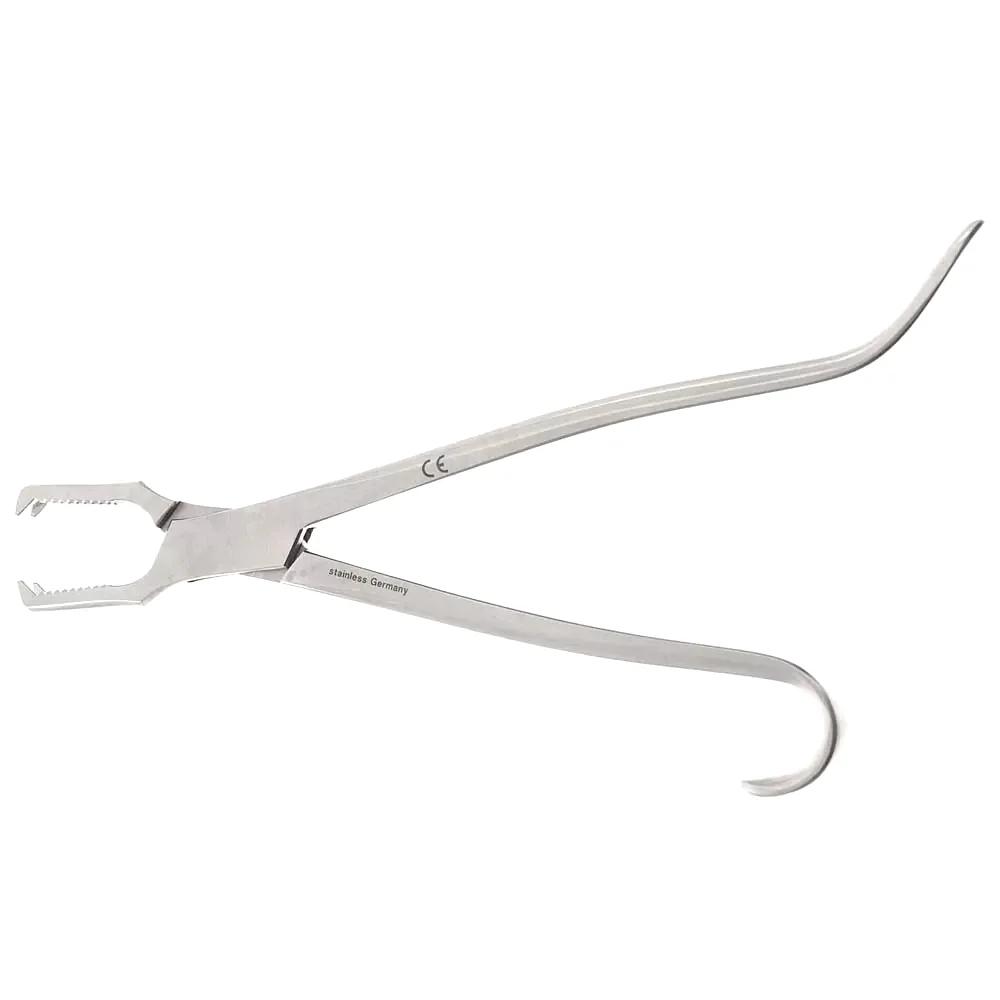
Kern Bone Forceps Without Ratchet | Orthopedic Instrument
Direct Manufacturer Pricing • Tax Exclusive
Kern Bone Forceps Without Ratchet are orthopedic surgical instruments designed to grasp, stabilize, and hold bone fragments during selected orthopedic procedures. Their non-ratcheted design allows the surgeon to adjust or release gripping pressure manually without operating a locking mechanism. These forceps are suitable for professional surgical settings where controlled bone handling is required.
All import duties, tariffs & taxes are 100% pre-paid for USA, UK, Canada, EUROPE & Australia (AUS). Zero surprise customs bills at delivery.
Hospital & Volume Procurement Pricing
Kern Bone Forceps Without Ratchet are specialized orthopedic instruments used to grasp and stabilize bone during surgical procedures. Bone-holding forceps are important components of orthopedic instrument sets, particularly during fracture reduction, bone alignment, and selected fixation procedures. By maintaining a controlled grip on bone fragments, these instruments can help surgeons position the bone appropriately while performing the required surgical steps.
The defining characteristic of this Kern bone forceps design is the absence of a ratchet locking mechanism. Unlike locking bone-holding forceps, the non-ratcheted configuration allows the user to adjust the gripping force directly through manual pressure on the handles. This provides immediate control when repositioning or releasing the instrument.
Non-Ratcheted Design and Manual Control
The Kern Bone Forceps Without Ratchet feature a manually operated handle mechanism without a locking rack. This design allows the surgeon to maintain or modify the grip according to the requirements of the procedure.
The absence of a ratchet can be beneficial when frequent adjustments are necessary, as the operator does not need to disengage a locking mechanism before releasing the forceps. Appropriate gripping pressure remains essential to avoid damaging bone or compromising the intended positioning.
The jaw configuration is designed to engage bone securely. Exact jaw geometry, tooth pattern, and dimensions may vary by model and size, so these specifications should be confirmed before purchasing.
Applications in Orthopedic Procedures
Kern bone-holding forceps may be used in selected orthopedic procedures where temporary stabilization and manipulation of bone are required. Their suitability depends on the patient's anatomy, the size and condition of the bone, and the surgical technique.
Common application areas for appropriately selected bone-holding forceps include:
Fracture reduction and bone fragment alignment
Temporary stabilization during orthopedic procedures
Bone positioning before fixation
Selected trauma and reconstructive surgery procedures
Use in orthopedic instrument trays and surgical sets
These forceps are intended for temporary bone handling rather than replacing definitive fixation devices such as plates, screws, or intramedullary implants. The surgeon determines the appropriate instrument based on the operative requirements.
Construction and Material
The exact material composition of this particular product is not specified in the supplied title. Surgical bone forceps are commonly manufactured from stainless steel selected for strength, corrosion resistance, and suitability for repeated clinical use when properly maintained.
The instrument's construction should provide appropriate structural stability during gripping and manipulation. The handles, joint, and jaws should be inspected for alignment, deformation, wear, and other damage that could affect performance.
Buyers should verify the material grade, overall length, jaw dimensions, and manufacturer specifications before ordering. These details are especially important when matching a bone forceps model to a specific orthopedic procedure.
Benefits for Surgical Instrumentation
The non-ratcheted design offers direct manual control over gripping and release. This can support efficient instrument handling during procedures that require repeated repositioning or adjustments to bone alignment.
Kern bone forceps are also useful for organizing procedure-specific orthopedic instrument inventories. Selecting the appropriate size and jaw configuration helps surgical teams match the instrument to the bone being handled and the intended surgical approach.
Instrument performance depends on correct selection, appropriate handling, and regular maintenance. The forceps should only be used by trained healthcare professionals according to their intended purpose.
Cleaning, Sterilization, and Maintenance
If supplied as a reusable instrument, Kern Bone Forceps Without Ratchet must be cleaned, inspected, and sterilized according to the manufacturer's validated instructions. Reprocessing personnel should follow the approved procedures for cleaning agents, rinsing, drying, packaging, and sterilization.
Inspect the jaws, joint, and handles for corrosion, cracks, deformation, or restricted movement before use. Damaged instruments should be removed from service for evaluation.
Proper storage helps prevent damage caused by contact with other metal instruments. Following the manufacturer's maintenance and reprocessing recommendations supports instrument condition and helps maintain reliable function throughout its intended service life.
Selecting the Correct Kern Bone Forceps
When purchasing Kern Bone Forceps Without Ratchet, confirm the overall length, jaw design, material, and intended application. Available catalog configurations may include different lengths, so the exact model should be verified rather than assuming a particular size from the product name alone.
Choosing the correct bone-holding forceps supports appropriate surgical handling, accurate inventory management, and compatibility with the requirements of the orthopedic team.
Key Features
Instrument Type: Kern bone-holding forceps.
Locking Mechanism: Without ratchet.
Primary Function: Grasping and stabilizing bone.
Surgical Specialty: Orthopedic and trauma surgery.
Manual Operation: Allows direct adjustment and release of gripping pressure.
Clinical Applications: Selected fracture reduction and bone-positioning procedures.
Jaw Configuration: Confirm exact design with the supplier.
Material: Verify the material grade with the manufacturer.
Construction: Designed for orthopedic bone handling.
Maintenance: Inspect the jaws, joint, and handles regularly.
Sterilization: Follow manufacturer-approved reprocessing instructions.
Product Selection: Confirm dimensions and intended use before ordering.
Product Specifications
| Specification | Details |
|---|---|
| Product Name | Kern Bone Forceps Without Ratchet |
| Instrument Category | Orthopedic bone-holding forceps |
| Ratchet Mechanism | None |
| Primary Function | Bone grasping and stabilization |
| Medical Specialty | Orthopedics and trauma surgery |
| Jaw Design | Confirm with supplier |
| Overall Length | Not specified |
| Material | Not specified |
| Reusability | Confirm manufacturer specifications |
| Sterilization Method | Follow manufacturer instructions |
| Intended Use | Temporary bone handling during appropriate surgical procedures |
| Packaging | Confirm with supplier |
Frequently Asked Questions
1. What are Kern Bone Forceps Without Ratchet used for?
Kern Bone Forceps Without Ratchet are designed to grasp, stabilize, and position bone during selected orthopedic procedures, including fracture reduction and temporary bone alignment.
2. What does without ratchet mean in bone forceps?
Without ratchet means the instrument has no locking mechanism to hold the handles in a fixed position. The user adjusts and releases the grip manually.
3. What is the advantage of non-ratcheted bone-holding forceps?
The non-ratcheted design allows immediate manual adjustment of gripping pressure without disengaging a lock. This can be useful when frequent repositioning is required during a procedure.
4. Are Kern Bone Forceps used in fracture reduction?
They may be used during appropriate fracture reduction procedures to help grasp and align bone fragments. The correct instrument depends on the fracture pattern, bone anatomy, and surgical technique.
5. What material are Kern Bone Forceps made from?
The supplied product title does not identify the exact material. Stainless steel is commonly used for orthopedic forceps, but the material grade of the specific instrument should be confirmed with the supplier.
6. Are Kern Bone Forceps Without Ratchet reusable?
Reusability depends on the specific model and manufacturer instructions. If the instrument is reusable, it must be cleaned and sterilized according to validated reprocessing procedures.
7. What is the difference between Kern bone forceps with and without ratchet?
The non-ratcheted version requires continuous manual control of the grip, while the ratcheted version can lock at selected handle positions. The appropriate design depends on the surgeon's technique and procedural requirements.
8. What should I check before buying Kern Bone Forceps Without Ratchet?
Verify the instrument length, jaw configuration, material, manufacturer specifications, and approved reprocessing requirements. Confirming these details helps ensure the instrument is appropriate for the intended orthopedic application.