
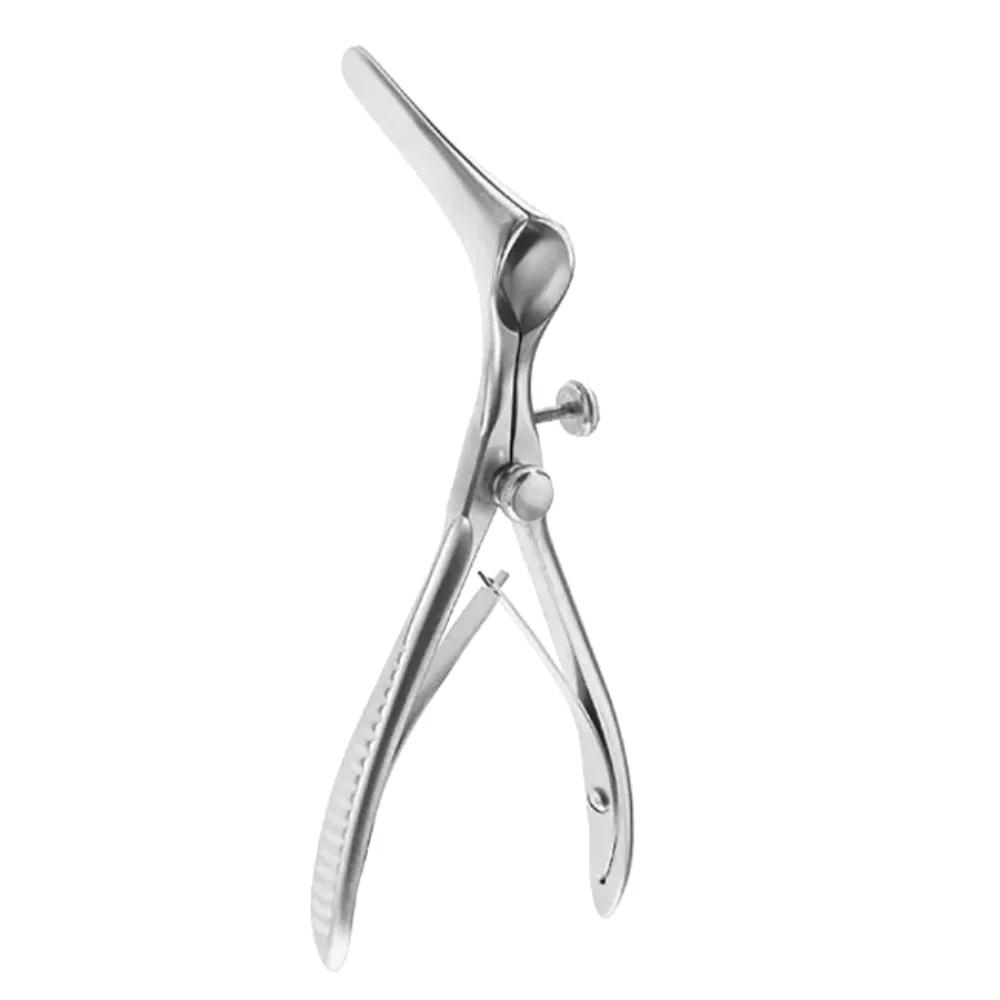
Killian Septum Speculum 76mm Blades
Direct Manufacturer Pricing • Tax Exclusive
The Killian Septum Speculum with 76mm blades is a specialized ENT surgical instrument designed to retract nasal tissues and improve visualization of the nasal septum and nasal cavity. Its extended blade configuration supports access during nasal examinations and selected procedures performed by qualified medical professionals.
All import duties, tariffs & taxes are 100% pre-paid for USA, UK, Canada, EUROPE & Australia (AUS). Zero surprise customs bills at delivery.
Hospital & Volume Procurement Pricing
The Killian Septum Speculum with 76mm blades is a specialized otolaryngology instrument used for nasal examinations and selected procedures involving the nasal septum. Its elongated blades help separate nasal tissues, allowing qualified healthcare professionals to visualize accessible internal structures during clinical assessment and surgical interventions. The 76mm blade length distinguishes this model from shorter-bladed variations and provides an option for practitioners selecting an instrument according to their procedural requirements.
Clinical Applications of the Killian Septum Speculum
The Killian Septum Speculum is commonly associated with ear, nose, and throat (ENT) practice. It may be used during anterior rhinoscopy, examination of the nasal septum, and selected nasal procedures requiring controlled tissue retraction. By helping maintain separation between nasal tissues, the instrument supports visualization of the septum and surrounding structures.
In appropriate clinical settings, this speculum may assist with access during selected septal procedures, including procedures involving septal abnormalities. Its suitability depends on the instrument's complete design, patient anatomy, and the clinician's preferred technique. It should be used by trained medical professionals who understand nasal anatomy and safe tissue-handling principles.
76mm Blade Design and Function
The defining specification of this Killian Septum Speculum is its 76mm blade length. The elongated blade configuration is intended to facilitate access into the nasal passage and support visualization during appropriate examinations and procedures. Actual working depth and access depend on the overall instrument dimensions, blade geometry, and clinical technique.
The blades are designed to separate nasal tissues in a controlled manner, helping expose accessible areas of the nasal cavity. Depending on the model, a handle and opening mechanism allow the practitioner to control blade separation during use. Proper positioning and careful handling are essential to avoid unnecessary pressure on delicate nasal tissues.
Material and Construction
Reusable Killian Septum Specula are commonly manufactured from medical-grade stainless steel because of its strength, corrosion resistance, and suitability for repeated reprocessing when the instrument is designed for reuse. However, the exact material and finish of this 76mm blade model should be confirmed using the supplier's specifications.
Reliable construction supports consistent handling in clinical environments. Smooth surfaces, properly finished blades, and a functional opening mechanism are important characteristics for routine inspection and maintenance. Before use, the instrument should be checked for damage, corrosion, irregular blade alignment, or mechanical problems that could affect its function.
Benefits for ENT Professionals
The Killian Septum Speculum with 76mm blades offers an extended-blade configuration for professionals whose clinical requirements call for a longer nasal speculum. Its blade dimensions may support access and visualization of the nasal septum and accessible nasal structures during appropriate examinations and selected procedures.
For ENT clinics, hospitals, and surgical departments, selecting the appropriate blade length helps match the instrument to the intended clinical application. The 76mm specification also helps purchasing teams distinguish this model from alternative sizes when managing instrument inventories and procurement.
Cleaning, Sterilization, and Maintenance
Reusable Killian Septum Specula must be cleaned and reprocessed according to the manufacturer's instructions and the healthcare facility's validated infection-control procedures. Visible contamination should be removed using the recommended cleaning process before sterilization. The blades, surfaces, and operating mechanism should be inspected regularly for damage, corrosion, and impaired function.
Steam sterilization may be suitable for compatible stainless-steel models when supported by the manufacturer's validated instructions. The appropriate reprocessing method depends on the instrument's materials and construction. After processing, the instrument should be dried thoroughly and stored in a clean, dry environment.
With appropriate handling, inspection, and maintenance, a well-manufactured Killian Septum Speculum can remain a useful part of an ENT instrument inventory. Always follow the manufacturer's guidance and applicable clinical protocols to support safe and appropriate use.
Key Features
Specialized Killian septum speculum for ENT applications.
76mm blade length for an extended-blade configuration.
Designed to retract nasal tissues for improved visualization.
Supports examination of the nasal septum and nasal cavity.
Suitable for anterior rhinoscopy and selected nasal procedures.
Helps provide access to accessible nasal structures.
Intended for use by qualified ENT and medical professionals.
Stainless-steel construction is common in reusable models; confirm the supplied material.
Reprocessing requirements depend on the manufacturer's instructions.
Suitable for ENT clinics, hospitals, and surgical departments.
Requires appropriate inspection, cleaning, and maintenance.
Product Specifications
| Specification | Details |
|---|---|
| Product Name | Killian Septum Speculum |
| Blade Length | 76mm |
| Instrument Category | ENT Surgical Instrument |
| Specialty | Otolaryngology |
| Primary Function | Nasal tissue retraction and visualization |
| Clinical Applications | Nasal examination and selected septal procedures |
| Blade Configuration | Killian-style elongated blades |
| Material | Confirm with supplier |
| Instrument Type | Nasal septum speculum |
| Reusable Status | Confirm with supplier |
| Sterilization | Follow manufacturer-validated instructions |
| Overall Length | Not specified |
| Packaging | Confirm with supplier |
Frequently Asked Questions
1. What is a Killian Septum Speculum used for?
A Killian Septum Speculum is used to separate nasal tissues and improve visualization of the nasal septum and nasal cavity during examinations and selected ENT procedures.
2. What is the blade length of this Killian Septum Speculum?
This model features 76mm blades. The blade length is an important specification when selecting an instrument for particular clinical and anatomical requirements.
3. Can a Killian Septum Speculum be used during septoplasty?
It may assist with nasal access and visualization during selected septal procedures, including septoplasty, depending on the instrument design and the surgeon's technique.
4. What material is a Killian Septum Speculum made from?
Reusable models are commonly manufactured from medical-grade stainless steel. The exact material of this 76mm blade model should be verified with the supplier.
5. Can the Killian Septum Speculum be sterilized?
Reusable models must be cleaned and sterilized using methods validated by the manufacturer for their materials and construction. Always follow the supplied reprocessing instructions.
6. Why choose a Killian Septum Speculum with 76mm blades?
The 76mm blade configuration provides an extended option for practitioners who require a longer-bladed nasal speculum. Selection should depend on patient anatomy, the intended procedure, and the clinician's requirements.
7. How should a Killian Septum Speculum be maintained?
Clean and reprocess the instrument according to manufacturer instructions. Inspect the blades, surfaces, and operating mechanism regularly, and remove damaged instruments from service when their condition may affect safe use.