
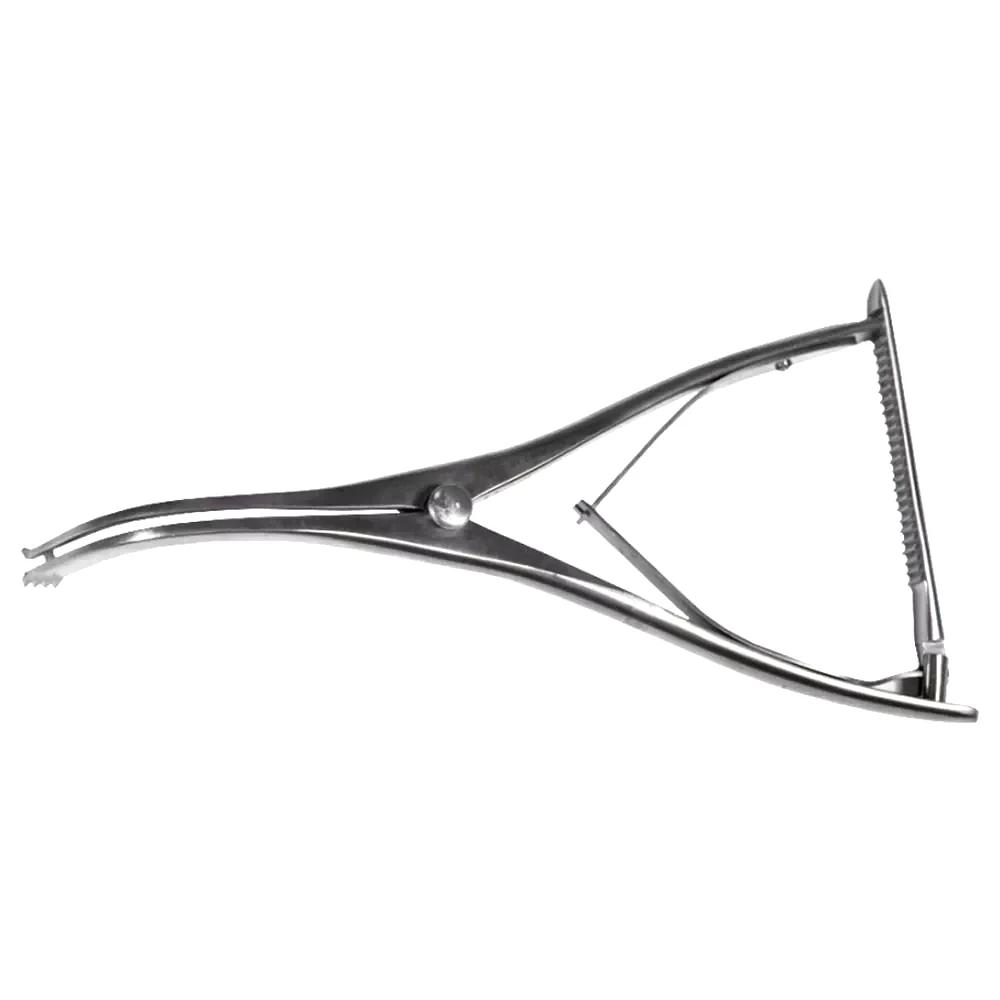
Lamina Retractor
Direct Manufacturer Pricing • Tax Exclusive
The Lamina Retractor is a specialized orthopedic spine surgery instrument designed to help retract soft tissues and maintain access to the spinal operative field. It supports surgical exposure during appropriate spinal procedures, allowing surgeons to work within the intended surgical corridor.
All import duties, tariffs & taxes are 100% pre-paid for USA, UK, Canada, EUROPE & Australia (AUS). Zero surprise customs bills at delivery.
Hospital & Volume Procurement Pricing
The Lamina Retractor is a specialized surgical instrument used in spinal procedures where controlled soft tissue retraction and access to the vertebral lamina are required. In orthopedic spine surgery and neurosurgery, retractors help move surrounding tissues away from the operative site to improve visibility and provide working space for the surgical team.
The lamina is the portion of a vertebra that forms part of the posterior vertebral arch. Depending on its specific design, a lamina retractor may help maintain exposure around posterior spinal structures during selected procedures. The exact applications, blade configuration, and intended surgical approach should be confirmed using the manufacturer's product documentation.
Applications in Spine Surgery
Lamina retractors may be used in selected spinal procedures that require access to posterior vertebral structures. These procedures can include lumbar decompression, laminectomy, and other operations involving the posterior spine, depending on the retractor's design and intended use.
By helping hold soft tissues away from the operative area, a suitable retractor can provide the surgeon with improved access to the target anatomy. The appropriate instrument should be selected according to the patient's anatomy, the surgical approach, and the requirements of the procedure.
Design and Retraction Function
Lamina retractors are available in different designs, with variations in blade shape, width, depth, and handle configuration. Some designs provide a broad working surface, while others are intended for more localized retraction around the spinal operative site.
The blade geometry influences how the instrument contacts and retracts tissue. Proper selection and positioning are important to maintain surgical exposure while minimizing unnecessary pressure on surrounding structures. The exact blade dimensions and retraction mechanism of this product have not been specified and should be verified with the supplier.
Benefits in Orthopedic and Neurosurgical Procedures
A suitable lamina retractor can help maintain access to the operative field without requiring continuous manual retraction. This may support an organized surgical workflow and allow the surgeon to manipulate compatible instruments within the exposed area.
Stable retraction can be useful during procedures requiring careful visualization of posterior spinal anatomy. However, the instrument's effectiveness depends on its design, correct positioning, and appropriate use by trained surgical professionals. Retraction must be monitored to avoid excessive pressure on soft tissues and nearby anatomical structures.
Material and Construction
Spinal retractors are commonly manufactured from medical-grade stainless steel because of its strength, corrosion resistance, and suitability for validated cleaning and sterilization procedures. The material grade and construction of this specific lamina retractor should be confirmed with the manufacturer or supplier.
The instrument should be inspected for surface damage, corrosion, blade deformation, and other defects before use. Proper handling and storage help maintain its functional condition and support reliable performance throughout its service life.
Cleaning, Sterilization, and Maintenance
Reusable lamina retractors must be cleaned, inspected, and sterilized according to the manufacturer's validated instructions. All accessible surfaces should be cleaned thoroughly, with particular attention to joints or complex features if present.
Follow the product-specific instructions for cleaning agents, sterilization cycles, packaging, and reuse. Before each procedure, verify that the blade and handle are intact and that the instrument is suitable for the intended surgical application.
The Lamina Retractor is a useful instrument category for orthopedic and neurosurgical facilities seeking specialized spinal retraction equipment. Before purchasing, confirm the exact design, dimensions, material, intended applications, and reprocessing requirements to ensure that the instrument matches the needs of the surgical team.
Key Features
Specialized retractor for spinal surgical applications
Designed to support soft tissue retraction
Intended to help maintain access to the spinal operative field
Suitable for evaluation in orthopedic spine surgery instrument sets
May support selected procedures involving posterior spinal structures
Blade design influences retraction depth and tissue contact
Exact dimensions and configuration should be confirmed
Material grade should be verified with the supplier
Requires routine inspection for deformation and surface damage
Cleaning and sterilization must follow manufacturer instructions
Product Specifications
Specification | Details |
|---|---|
Product Name | Lamina Retractor |
Instrument Type | Surgical retractor |
Category | Orthopedic spine surgery instruments |
Specialty | Spine surgery and neurosurgery |
Primary Function | Soft tissue retraction and surgical exposure |
Anatomical Region | Spine |
Blade Configuration | Not specified |
Blade Width and Depth | Not specified |
Overall Length | Not specified |
Handle Design | Confirm with supplier |
Material | Confirm with supplier |
Sterilization | Follow manufacturer instructions |
Reusability | Confirm from product documentation |
Frequently Asked Questions
1. What is a lamina retractor used for?
A lamina retractor is used to help retract soft tissues and maintain access to the spinal operative field during compatible spinal procedures.
2. Which surgical procedures may use a lamina retractor?
Depending on its design, a lamina retractor may be used during selected posterior spinal procedures, including laminectomy and lumbar decompression.
3. Is a lamina retractor used in orthopedic spine surgery?
Yes, lamina retractors are part of the broader range of instruments used in orthopedic spine surgery and neurosurgery. The specific model must be appropriate for the intended procedure.
4. What material is used to manufacture a lamina retractor?
Medical-grade stainless steel is commonly used for reusable surgical retractors. The exact material grade of this product should be confirmed with the supplier.
5. What blade sizes are available for lamina retractors?
Blade widths, depths, and shapes vary by manufacturer and model. Confirm the available dimensions before purchasing.
6. How should a lamina retractor be sterilized?
Follow the manufacturer's validated cleaning and sterilization instructions for the exact model. Inspect the instrument for damage before use and reprocessing.
7. What should buyers check before purchasing a lamina retractor?
Verify the blade configuration, dimensions, overall length, material, intended surgical applications, and reprocessing requirements to ensure suitability for the intended clinical setting.