
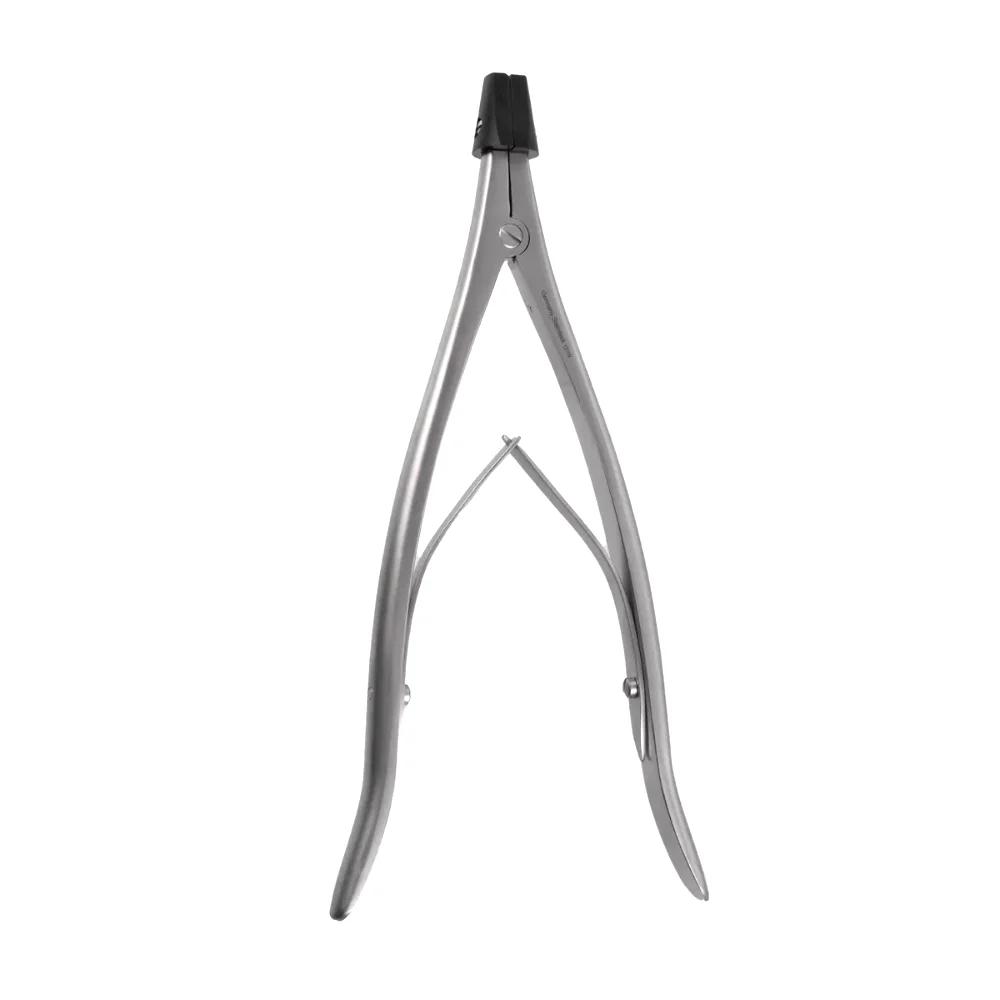
Landolt Spreader with Protected Tips
Direct Manufacturer Pricing • Tax Exclusive
The Landolt Spreader with Protected Tips is a specialized surgical instrument designed to assist with controlled separation of tissue or anatomical structures during selected procedures. Its protected-tip configuration is intended to support careful instrument handling and reduce the risk of unintended contact with adjacent tissues when used appropriately.
All import duties, tariffs & taxes are 100% pre-paid for USA, UK, Canada, EUROPE & Australia (AUS). Zero surprise customs bills at delivery.
Hospital & Volume Procurement Pricing
The Landolt Spreader with Protected Tips is a specialized surgical instrument intended for applications that require controlled spreading or separation within a surgical field. Its protected-tip design distinguishes it from conventional spreading instruments by incorporating tip features intended to help minimize unintended contact with surrounding structures. The exact application depends on the instrument's dimensions, working-end configuration, and the surgical specialty for which it is designed.
Purpose and Surgical Applications
Spreaders are used in various surgical disciplines to create or maintain space between tissues and anatomical structures. Depending on its specific design, the Landolt Spreader may be suitable for selected procedures in which controlled separation and careful access are required. Instrument selection should be based on the intended procedure, anatomical site, and the surgeon's established technique.
The protected tips are an important consideration when working in confined surgical areas. However, the level of protection and suitability for delicate anatomical structures depend on the actual tip geometry and manufacturer specifications. The instrument should only be used for applications supported by its intended design and instructions for use.
Protected-Tip Design
The defining feature of the Landolt Spreader is its protected-tip configuration. Protective features at the working end are intended to help reduce the likelihood of unintended puncture, scratching, or direct contact with adjacent structures during appropriate handling. These features may also assist the user in positioning the instrument with greater control in procedures where working space is limited.
Protected tips should not be considered a guarantee against tissue injury. Appropriate placement, controlled spreading force, direct visualization where required, and familiarity with the instrument remain essential. Healthcare professionals should inspect the working ends before use to confirm that the protective components are intact and that no deformation or damage is present.
Construction and Material
Surgical spreaders are commonly manufactured from medical-grade stainless steel because of its strength, corrosion resistance, and suitability for repeated cleaning and sterilization when designed for reuse. However, the precise material grade and construction of this Landolt Spreader should be confirmed with the supplier before purchase.
The quality of the working ends, joint or handle construction, and overall alignment can affect instrument handling. Smooth surfaces and a well-maintained spreading mechanism, where applicable, support consistent operation. Any protective tip components should remain securely fitted and free from damage throughout the instrument's service life.
Handling and Clinical Benefits
The Landolt Spreader with Protected Tips provides an option for surgical teams that require a spreading instrument with a protective working-end design. Its configuration may support careful manipulation in procedures where controlled separation is needed, provided the instrument is appropriate for the specific anatomy and surgical technique.
To support safe use, clinicians should apply only the force required for the intended task and avoid excessive spreading or prolonged pressure on tissues. The instrument should be handled by trained healthcare professionals familiar with its design. Protected tips can contribute to controlled handling, but they do not replace appropriate surgical judgment or established tissue-protection practices.
Cleaning, Sterilization, and Maintenance
If supplied as a reusable instrument, the Landolt Spreader must be cleaned, inspected, and sterilized according to the manufacturer's validated instructions. Cleaning should remove visible soil and biological residue from all accessible surfaces, including areas around the tips, joints, and moving components where present.
Following cleaning, the instrument should be rinsed and dried as directed, then inspected for corrosion, cracks, loose components, misalignment, or damage to the protected tips. Sterilization must use a validated method compatible with the instrument's materials and construction. Single-use instruments must not be reprocessed unless the manufacturer and applicable regulations explicitly permit it.
Durability and Selection Considerations
Proper care helps preserve the function and condition of reusable surgical instruments. Avoid dropping the spreader, using it beyond its intended purpose, or applying excessive force that could deform the working ends or compromise protective features. Instruments showing damage or impaired function should be removed from service for assessment.
Before ordering, confirm the Landolt Spreader's overall length, tip design, material, intended specialty, and reusable or single-use status. These details help ensure that the instrument meets the requirements of the intended clinical application.
Key Features
Landolt surgical spreader with protected tips
Designed for controlled spreading and separation
Protective working-end configuration
Intended for selected surgical applications
Supports careful instrument positioning when appropriately used
Suitable for use by trained healthcare professionals
Material and construction to be confirmed with the supplier
Tip integrity should be checked before each use
Reprocessing must follow manufacturer instructions
Designed for applications consistent with its specified purpose
Product Specifications
Specification | Details |
|---|---|
Product Name | Landolt Spreader Protected Tips |
Instrument Type | Surgical spreader |
Tip Design | Protected tips |
Primary Function | Controlled spreading or separation |
Surgical Specialty | Confirm with supplier |
Material | Not specified; verify with supplier |
Overall Length | Not specified |
Tip Dimensions | Not specified |
Handle Design | Confirm product configuration |
Reusability | Confirm manufacturer specifications |
Sterilization | Follow validated manufacturer instructions |
Packaging | Confirm with supplier |
Frequently Asked Questions
1. What is a Landolt Spreader with Protected Tips used for?
The Landolt Spreader with Protected Tips is designed to assist with controlled spreading or separation in selected surgical applications. Its precise use depends on the manufacturer's intended purpose and instrument configuration.
2. What are the benefits of protected tips on a surgical spreader?
Protected tips are intended to help minimize unintended contact with adjacent tissues during appropriate use. Their actual protective function depends on the tip design, placement, and clinical technique.
3. Is the Landolt Spreader suitable for delicate surgical procedures?
It may be suitable for procedures requiring controlled spreading if the instrument is specifically intended for that application. Clinicians should verify its design and compatibility before use.
4. What material is used to manufacture the Landolt Spreader?
Medical-grade stainless steel is common in reusable surgical spreaders, but the exact material of this model has not been confirmed. Buyers should request material specifications from the supplier.
5. How should the Landolt Spreader be cleaned and sterilized?
Reusable models should be cleaned and sterilized according to the manufacturer's validated instructions. The protected tips and any joints or moving parts should be inspected for residue or damage during reprocessing.
6. What should be checked before purchasing a Landolt Spreader?
Confirm its intended application, overall length, tip dimensions, material, construction, and reusable or single-use status. These specifications help determine whether it is appropriate for the intended procedure.
7. Do protected tips completely prevent tissue injury?
No. Protected tips may help reduce certain risks, but they cannot eliminate the possibility of tissue injury. Proper technique, controlled force, and appropriate instrument selection remain essential