
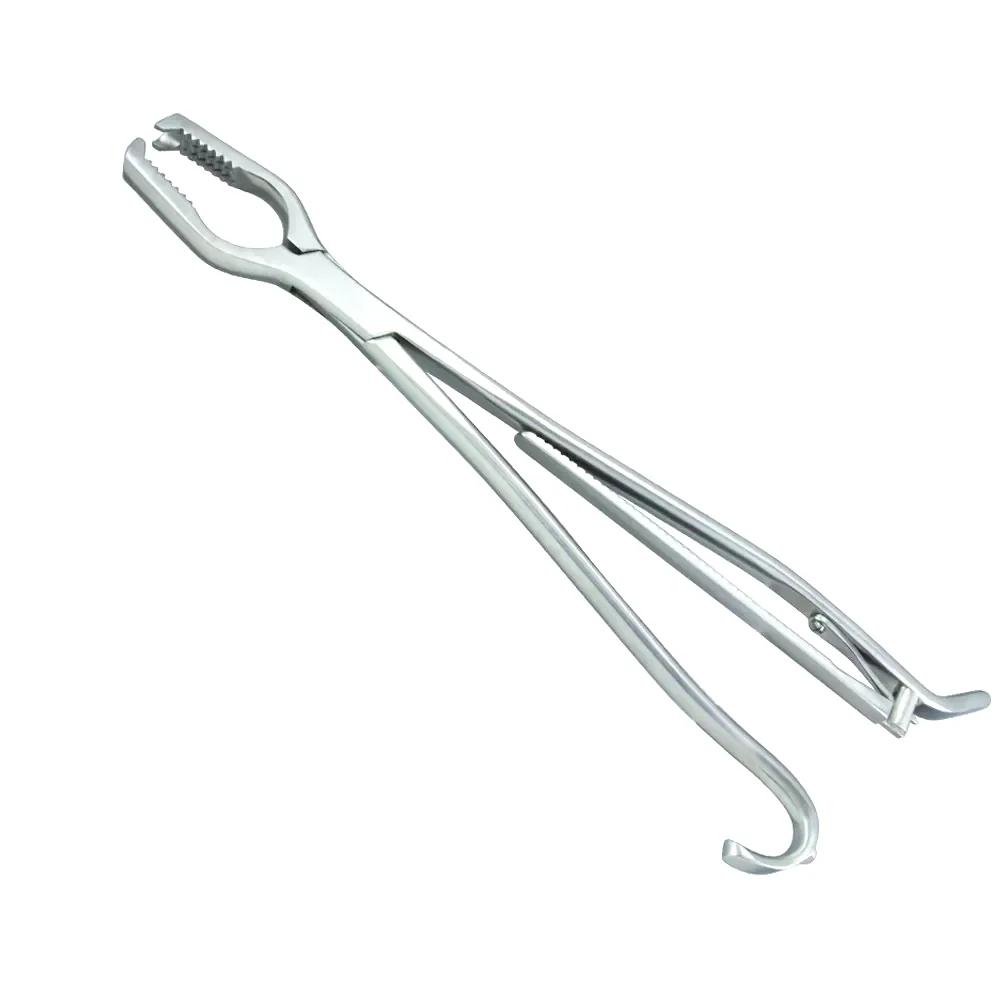
Lane Bone Forceps With Ratchet
Direct Manufacturer Pricing • Tax Exclusive
Lane Bone Forceps With Ratchet are orthopedic surgical instruments designed to grasp, manipulate, and stabilize bone fragments during fracture reduction and fixation procedures. Featuring serrated jaws, interlocking teeth, and a ratchet locking mechanism, these bone-holding forceps help maintain a secure grip while surgeons perform bone alignment and prepare for fixation.
All import duties, tariffs & taxes are 100% pre-paid for USA, UK, Canada, EUROPE & Australia (AUS). Zero surprise customs bills at delivery.
Hospital & Volume Procurement Pricing
Lane Bone Forceps With Ratchet are specialized orthopedic instruments used to hold and manipulate bone during fracture management and reconstructive surgery. Designed for controlled gripping and stabilization, these forceps help surgeons maintain the position of bone fragments while performing reduction, assessing alignment, or applying orthopedic fixation devices. Their locking mechanism allows the selected jaw position to be maintained without continuous manual pressure on the handles.
Purpose and Orthopedic Applications
Lane bone-holding forceps are commonly used in orthopedic trauma surgery and procedures involving the reduction and stabilization of fractured bones. They can assist with holding bone fragments in alignment during open reduction and internal fixation, including procedures in which plates, screws, or other fixation devices are applied.
Depending on the instrument size and jaw configuration, Lane Bone Forceps With Ratchet may be suitable for selected long-bone procedures involving the femur, tibia, or humerus. They may also be used in reconstructive orthopedic procedures where temporary stabilization of exposed bone is required.
The forceps provide temporary mechanical holding rather than permanent fixation. The surgeon must assess bone quality, fragment size, and the required holding force to avoid excessive compression or damage to the bone surface.
Serrated Jaws and Interlocking Teeth
A defining feature of Lane bone forceps is the jaw design, which commonly incorporates serrations and a 2 × 2 tooth configuration. These features help the instrument engage suitable bone surfaces and resist unintended slipping during controlled manipulation.
The opposed jaws are designed to provide a firm grip on the selected bone segment. Correct positioning is important to ensure that the teeth engage appropriately and that the applied force remains suitable for the bone being held. Exact jaw dimensions and maximum opening depend on the selected model and should be confirmed before purchase.
Ratchet Locking Mechanism
The integrated ratchet mechanism allows the handles to close progressively and remain at a selected locking position. This helps maintain the grip on bone fragments while the surgical team carries out related steps, such as checking alignment or positioning fixation hardware.
The ratchet should be engaged only as much as required for stable holding. Excessive compression may damage fragile bone, particularly in osteoporotic or comminuted fractures. The release mechanism should also be checked before use to confirm that the forceps can be opened and disengaged correctly.
Construction and Material
Reusable Lane Bone Forceps are commonly manufactured from surgical stainless steel, selected for its strength, corrosion resistance, and suitability for repeated reprocessing when the instrument is designed for reuse. The exact steel grade, surface finish, and manufacturing specifications of this product should be verified with the supplier.
The handles, ratchet, joint, and jaws should be inspected for alignment, smooth movement, secure engagement, and visible damage. Proper construction supports controlled handling during orthopedic procedures and helps maintain the instrument's serviceability.
Handling and Clinical Benefits
The combination of serrated jaws and a ratchet mechanism provides a practical solution for temporary bone stabilization during orthopedic surgery. The locking feature reduces the need to maintain continuous hand pressure, while the jaw design supports controlled gripping when correctly positioned.
The appropriate Lane forceps model should be selected according to the size and location of the bone, the surgical approach, and the required jaw opening. Proper technique and careful force application remain essential for preventing bone damage and maintaining the intended reduction.
Cleaning, Sterilization, and Maintenance
If supplied as a reusable instrument, Lane Bone Forceps With Ratchet must be cleaned, inspected, and sterilized according to the manufacturer's validated instructions. Particular attention should be given to the ratchet teeth, joint, serrated jaw surfaces, and other areas where biological residue may collect.
After cleaning, the instrument should be rinsed and dried as directed and examined for corrosion, cracks, worn teeth, loose joints, or impaired ratchet engagement. Sterilization must follow a validated method compatible with the instrument's material and construction. Instruments that are damaged or do not function correctly should be removed from service.
Durability and Instrument Selection
Proper handling, cleaning, and maintenance help preserve the performance of reusable orthopedic instruments. Before ordering, buyers should confirm the overall length, jaw opening, tooth configuration, material, and intended application. Lane bone forceps are available in different sizes and configurations, so selecting the correct model is important for compatibility with the planned procedure.
Key Features
Specialized Lane bone-holding forceps for orthopedic surgery
Integrated ratchet mechanism for maintaining jaw closure
Serrated jaws for secure engagement with suitable bone surfaces
Common 2 × 2 interlocking tooth configuration
Designed for grasping and manipulating bone fragments
Supports temporary stabilization during fracture reduction
Useful during selected orthopedic fixation procedures
Available in different lengths and jaw configurations
Reusable construction and material must be verified with the supplier
Requires appropriate cleaning, inspection, and sterilization when reusable
Product Specifications
Specification | Details |
|---|---|
Product Name | Lane Bone Forceps With Ratchet |
Instrument Category | Orthopedic bone-holding forceps |
Primary Function | Grasping, holding, and stabilizing bone |
Specialty | Orthopedics and trauma surgery |
Jaw Design | Serrated jaws |
Tooth Configuration | Commonly 2 × 2 teeth; verify model |
Locking Mechanism | Ratchet |
Overall Length | Model-dependent; confirm with supplier |
Maximum Jaw Opening | Model-dependent |
Material | Surgical stainless steel commonly used; confirm exact grade |
Applications | Fracture reduction and temporary bone stabilization |
Reusability | Confirm manufacturer specifications |
Sterilization | Follow validated manufacturer instructions |
Packaging | Confirm with supplier |
Frequently Asked Questions
1. What are Lane Bone Forceps With Ratchet used for?
Lane Bone Forceps With Ratchet are used to grasp, manipulate, and temporarily stabilize bone fragments during fracture reduction, orthopedic fixation, and selected reconstructive procedures.
2. How does the ratchet mechanism work on Lane bone forceps?
The ratchet engages as the handles close, maintaining the selected jaw position. This allows the instrument to hold bone without requiring continuous manual pressure until the mechanism is released.
3. What is the purpose of serrated jaws on Lane bone-holding forceps?
Serrated jaws help the forceps grip suitable bone surfaces and resist slipping during controlled manipulation. Correct placement and appropriate compression are necessary to avoid damaging bone.
4. Are Lane Bone Forceps With Ratchet used for fracture reduction?
Yes. They can assist with positioning and temporarily holding bone fragments during fracture reduction. The surgeon determines the appropriate instrument size and technique for the specific fracture.
5. What sizes are available for Lane Bone Forceps With Ratchet?
Common configurations include approximately 13-inch (33 cm) and 17-inch (43 cm) models, although exact lengths and jaw openings vary by manufacturer. Confirm the available size before ordering.
6. What material is used to manufacture Lane bone forceps?
Reusable models are commonly made from surgical stainless steel. The exact material grade and product specifications should be confirmed with the supplier.
7. How should Lane Bone Forceps With Ratchet be sterilized?
Reusable models should be cleaned and sterilized according to the manufacturer's validated instructions. The ratchet, joint, and jaw serrations require particular attention during cleaning and inspection.
8. What should buyers check before purchasing Lane Bone Forceps?
Buyers should verify the instrument length, jaw opening, tooth configuration, ratchet function, material, and reusable status to ensure suitability for the intended orthopedic application.