
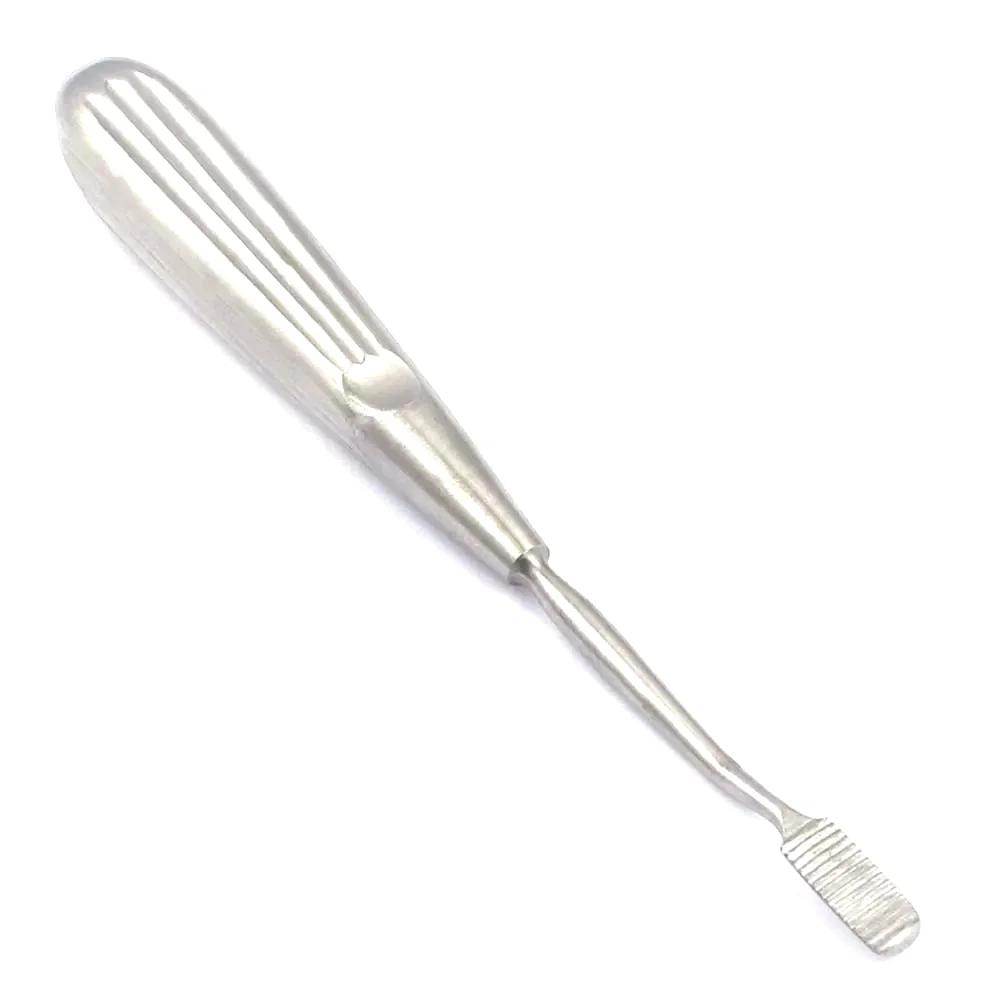
Lewis Rasp
Direct Manufacturer Pricing • Tax Exclusive
The Lewis Rasp is a surgical instrument designed to help smooth, shape, and refine bone surfaces during appropriate orthopedic and reconstructive procedures. Its rasping surface supports controlled material removal, allowing surgeons to refine bone contours according to the requirements of the procedure.
All import duties, tariffs & taxes are 100% pre-paid for USA, UK, Canada, EUROPE & Australia (AUS). Zero surprise customs bills at delivery.
Hospital & Volume Procurement Pricing
The Lewis Rasp is a specialized surgical instrument used for bone surface refinement in procedures where controlled smoothing or shaping is required. Bone rasps are commonly used in orthopedic and reconstructive surgery to refine irregular bone edges, adjust contours, and smooth surfaces after cutting or other bone preparation techniques. The exact applications of a Lewis Rasp depend on its specific design, working-end configuration, and intended surgical specialty.
Purpose and Surgical Applications
Bone rasps serve an important role in procedures that require controlled refinement of bone surfaces. Following bone cutting, resection, or reshaping, a suitable rasp may help smooth rough areas and improve the contour of the treated bone. This can be relevant in selected orthopedic, reconstructive, and other surgical procedures involving bone preparation.
The Lewis Rasp may be considered for applications where its particular working surface and shape are appropriate for the operative site. Instrument selection should always be based on the anatomical structure, required degree of refinement, surgical approach, and manufacturer's intended use.
Bone rasps may be used alongside instruments such as bone files, osteotomes, bone chisels, periosteal elevators, and orthopedic cutting instruments. Each instrument performs a different function, so the surgeon should select the correct tool for the required stage of the procedure.
Design and Functional Characteristics
A surgical rasp typically features a textured working surface designed to remove small amounts of bone during controlled strokes. Depending on the model, the working end may vary in shape, width, curvature, and surface pattern to accommodate different anatomical requirements.
The Lewis Rasp's suitability for a particular procedure depends on its exact configuration. The working surface should provide appropriate contact with the target bone while allowing the surgeon to maintain control over the direction and extent of rasping. The handle should support stable manipulation and allow the instrument to be guided accurately during use.
Because the precise dimensions and tooth pattern are not specified in the product title, these details should be verified against the supplier's product photographs and technical specifications before ordering.
Material and Construction
Surgical rasps are commonly manufactured from medical-grade stainless steel because it offers strength, corrosion resistance, and suitability for repeated reprocessing when the instrument is specifically designed for reuse. The exact material grade and finish of this Lewis Rasp should be confirmed with the manufacturer or supplier.
A durable construction helps the instrument maintain its functional characteristics during appropriate use and maintenance. The rasping surface should be inspected regularly for wear, damage, or deformation, while the handle and working end should be checked for structural integrity.
Benefits in Surgical Practice
The Lewis Rasp can support controlled bone contouring when selected for an appropriate procedure. Its intended rasping action may help refine irregular bone surfaces, complementing other bone-preparation instruments in a surgical set.
Choosing an instrument with a suitable working-end design can help improve access to the treatment area and support precise manipulation. However, clinical performance depends on the instrument configuration, bone anatomy, surgical technique, and professional judgment.
The Lewis Rasp may be included in specialized surgical instrument collections where bone smoothing and contour refinement are required. Its exact role should be determined according to the manufacturer's intended use rather than the instrument name alone.
Cleaning, Sterilization, and Maintenance
After use, clean the instrument according to the manufacturer's validated reprocessing instructions. Pay particular attention to the textured rasping surface, where biological material may become trapped. Use compatible cleaning agents and appropriate cleaning tools, then rinse and dry the instrument thoroughly.
Inspect the working surface for retained debris, corrosion, worn teeth, or other damage before packaging. Sterilization must follow the manufacturer's validated instructions and the healthcare facility's infection-prevention protocols. Do not assume that the instrument is reusable or compatible with a specific sterilization cycle unless this is confirmed by its labeling.
Appropriate cleaning, inspection, handling, and storage help preserve the instrument's condition and intended performance over its service life.
Key Features
Product Name: Lewis Rasp
Instrument Category: Surgical and bone-preparation instrument
Designed for bone surface refinement, where appropriate to the model
Supports controlled smoothing and contouring of bone
Textured working surface typical of surgical rasp instruments
Suitable for selected orthopedic or reconstructive applications, subject to intended use
Can complement bone files, osteotomes, and other bone-preparation instruments
Working-end shape and rasp pattern should be verified with the supplier
Material commonly used for this instrument category is medical-grade stainless steel; exact grade requires confirmation
Inspect the working surface for wear and damage before use
Follow manufacturer instructions for cleaning and sterilization
Intended for use by qualified healthcare professionals
Product Specifications
Specification | Details |
|---|---|
Product Name | Lewis Rasp |
Instrument Type | Surgical Rasp |
Category | Bone-Preparation Instrument |
Primary Function | Bone smoothing and contour refinement, subject to model design |
Surgical Applications | Confirm according to manufacturer specifications |
Overall Length | Not specified |
Working-End Design | Confirm with supplier |
Rasp Surface Pattern | Not specified |
Material | Commonly medical-grade stainless steel; verify exact grade |
Finish | Not specified |
Reprocessing | Follow manufacturer-validated instructions |
Reusable Status | Confirm with manufacturer |
Packaging | Confirm with supplier |
Frequently Asked Questions
1. What is a Lewis Rasp used for?
A Lewis Rasp is identified as a surgical rasp. Its precise clinical use depends on the specific instrument design and manufacturer specifications. Surgical rasps generally help refine or smooth bone surfaces in appropriate procedures.
2. Is the Lewis Rasp used in orthopedic surgery?
It may be suitable for orthopedic applications if the particular model is designed for bone preparation. Confirm the intended specialty and use with the manufacturer or supplier.
3. What is the difference between a bone rasp and a bone file?
Both instruments are used for surface refinement, but their working surfaces and intended applications may differ. The appropriate choice depends on the instrument design, bone anatomy, and the degree of refinement required.
4. What material is the Lewis Rasp made from?
Surgical rasps are commonly made from medical-grade stainless steel. The exact material grade of this model should be verified with the supplier.
5. How do you clean a surgical rasp?
Follow the manufacturer's reprocessing instructions, paying particular attention to the textured working surface. Remove retained debris using compatible cleaning methods, rinse, dry, and inspect the instrument before sterilization.
6. Is the Lewis Rasp reusable?
Reusable status must be confirmed through the manufacturer's labeling and instructions. If designated for reuse, the instrument must undergo the validated cleaning and sterilization process after each use.
7. How do I select the correct surgical rasp?
Consider the intended procedure, anatomical access, working-end shape, rasp surface pattern, overall length, and manufacturer guidance. Verify these specifications before purchasing or using the instrument.