
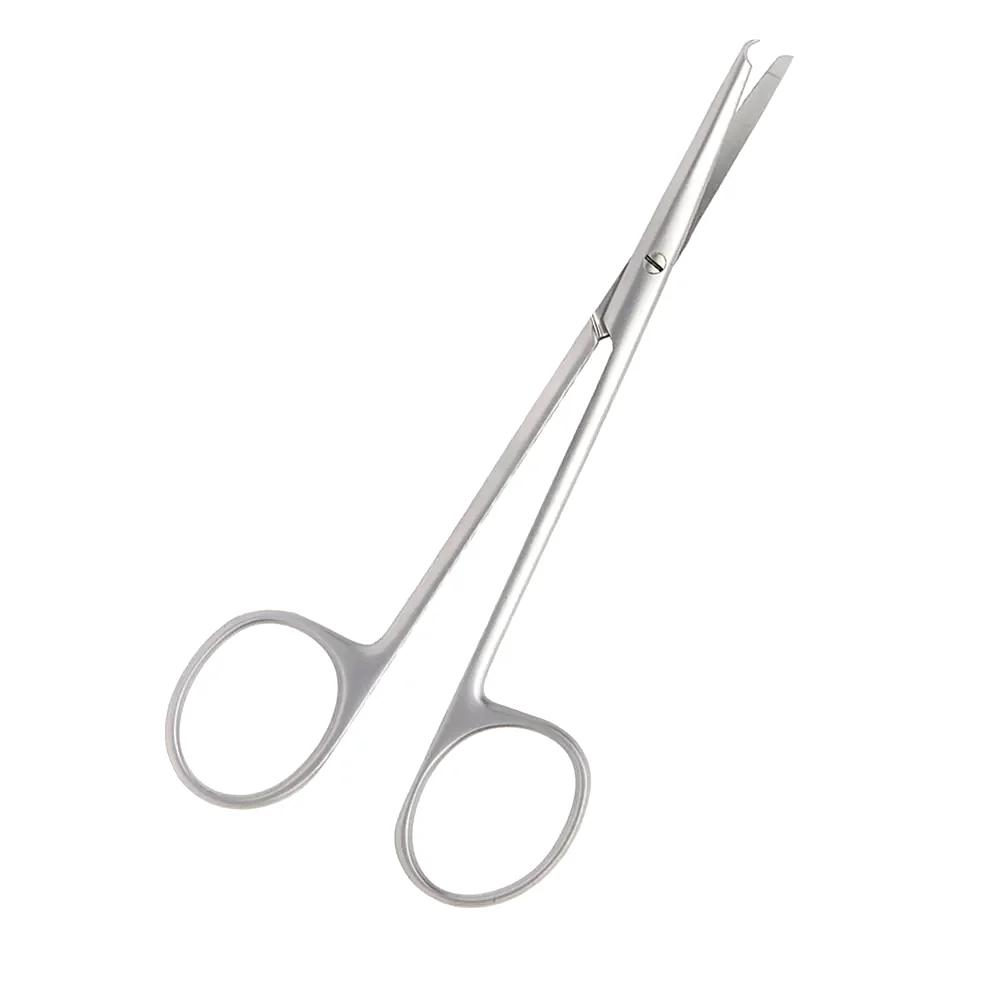
Littauer Stitch Scissors – Surgical Suture Removal Tool
Direct Manufacturer Pricing • Tax Exclusive
Littauer Stitch Scissors are specialized medical instruments designed for cutting and removing sutures during routine wound care and postoperative follow-up. Their distinctive notched blade helps engage individual stitches for controlled cutting, making them suitable for hospitals, clinics, and surgical dressing rooms.
All import duties, tariffs & taxes are 100% pre-paid for USA, UK, Canada, EUROPE & Australia (AUS). Zero surprise customs bills at delivery.
Hospital & Volume Procurement Pricing
Littauer Stitch Scissors are medical instruments designed specifically for removing sutures during postoperative care, wound assessment, and routine clinical dressing procedures. Their specialized blade configuration helps healthcare professionals position the cutting edge beneath a suture before cutting the thread. This design supports controlled stitch removal when used by trained personnel according to appropriate clinical protocols.
Suture removal is an important part of wound management after the healing process has progressed sufficiently. The timing and method of removal depend on the wound location, healing status, suture material, and clinical assessment. Littauer stitch scissors provide a dedicated instrument for this task and are commonly included in wound care supplies, minor procedure trays, and general medical instrument collections.
Specialized Notched Blade Design
A defining feature of Littauer Stitch Scissors is the small notch or hook incorporated into one blade near the tip. This feature helps the user engage and lift a suture thread so that it can be positioned for cutting. The other blade works with the notched blade to separate the thread when the scissors are closed.
The notched design is intended to help distinguish the suture from the surrounding skin and facilitate controlled cutting. However, it does not eliminate the risk of injury. Healthcare professionals should ensure that the thread is properly positioned and avoid pulling or cutting the suture in a way that could traumatize the wound.
The exact notch shape, blade curvature, and tip configuration can vary between models. Buyers should confirm these details if a particular design is required for their clinical workflow.
Clinical Applications
Littauer Stitch Scissors are used primarily for removing non-absorbable sutures from healed or appropriately assessed wounds. They may be used in hospitals, outpatient clinics, surgical follow-up departments, wound care facilities, and other medical environments where suture removal is performed.
The instrument may also be included in minor surgery sets and dressing trays. Its specialized blade makes it different from general-purpose surgical scissors, which may lack the notched feature intended to engage a stitch.
Suture removal should only be performed when clinically appropriate. Healthcare professionals must follow established wound care protocols and assess the wound before removing sutures. If a wound shows signs of infection, separation, or delayed healing, clinical evaluation is necessary before proceeding.
Handle Design and Instrument Control
Littauer Stitch Scissors typically feature finger-ring handles that allow the operator to open and close the blades using a familiar scissor grip. The handle design supports controlled movement when engaging and cutting individual suture threads.
Handling comfort depends on the overall instrument length, ring dimensions, blade balance, and joint construction. The precise dimensions of this model should be verified with the supplier because the product title does not specify an overall length or handle variation.
Material and Construction
Littauer stitch scissors are commonly manufactured from stainless steel, which offers mechanical strength and corrosion resistance when properly maintained. The exact material grade and surface finish depend on the manufacturer and should be confirmed before listing specific alloy or certification claims.
The quality of the cutting edges, alignment of the blades, and smoothness of the pivot joint affect instrument performance. Proper construction helps support consistent cutting action during routine suture removal. Regular inspection is important to identify dull blades, loose joints, corrosion, or damage to the notched tip.
Benefits for Medical and Surgical Facilities
Littauer Stitch Scissors provide a purpose-designed solution for suture removal and routine postoperative wound care. Their notched blade helps engage sutures, while the scissor mechanism allows the user to cut the thread with controlled hand movement.
These scissors are suitable for consideration in minor procedure trays, dressing stations, surgical follow-up clinics, and general medical instrument collections. Selecting a dedicated suture removal instrument can help standardize wound care supplies and reduce reliance on general-purpose scissors for tasks requiring a specialized blade.
Before purchasing, healthcare facilities should confirm the instrument length, blade pattern, material specifications, and intended reuse status to ensure compatibility with their clinical and reprocessing requirements.
Cleaning, Sterilization, and Maintenance
If the instrument is designated for reuse, it must be cleaned, inspected, and sterilized according to the manufacturer's validated instructions and the healthcare facility's infection-control procedures. Open the blades during cleaning where instructed so that the accessible surfaces and pivot area can be properly processed. Remove visible residue and dry the instrument as required by the approved reprocessing method.
Before use, inspect the cutting edges, notched tip, joint, and handles for damage or misalignment. Scissors with dull edges, a damaged notch, a loose pivot, or corrosion should be removed from service until assessed. Confirm the approved sterilization method with the manufacturer rather than assuming that every model is suitable for every sterilization cycle.
Littauer Stitch Scissors are a practical addition to professional wound care and suture removal supplies when selected, handled, and maintained according to the manufacturer's instructions.
Key Features
Littauer stitch scissors design: Intended for suture removal and postoperative wound care.
Notched blade: Helps engage and position suture threads for cutting.
Controlled cutting action: Supports removal of individual stitches when used correctly.
Finger-ring handles: Provide a familiar grip for instrument manipulation.
Clinical applications: Suitable for appropriate wound care and minor procedure settings.
Specialized function: Designed specifically for suture removal rather than general tissue dissection.
Stainless steel construction: Common for reusable surgical scissors; verify the exact material grade.
Compact instrument option: Suitable for inclusion in dressing trays and minor procedure sets, depending on model dimensions.
Inspection and maintenance: Regular checks help identify blade wear and joint problems.
Reprocessing compatibility: Follow manufacturer instructions for cleaning and sterilization.
Product Specifications
| Specification | Details |
|---|---|
| Product Name | Littauer Stitch Scissors |
| Instrument Type | Suture removal scissors |
| Primary Function | Cutting and removing sutures |
| Blade Design | Specialized notched blade |
| Tip Configuration | Confirm with manufacturer |
| Handle Type | Typically finger-ring handles |
| Overall Length | Not specified |
| Material | Confirm with manufacturer |
| Surface Finish | Confirm with manufacturer |
| Medical Specialty | General surgery and wound care |
| Reusability | Confirm manufacturer instructions |
| Sterilization Method | Follow validated manufacturer instructions |
| Intended Users | Qualified healthcare professionals |
Frequently Asked Questions
1. What are Littauer Stitch Scissors used for?
Littauer Stitch Scissors are designed for cutting and removing sutures during appropriate postoperative wound care and clinical follow-up.
2. What makes Littauer Stitch Scissors different from regular surgical scissors?
They feature a specialized notch in one blade to help engage and position a suture thread for cutting. General-purpose surgical scissors may not have this feature.
3. How does the notched blade help with suture removal?
The notch helps lift or engage the suture so the thread can be positioned for cutting. Correct technique is essential to avoid damaging the surrounding skin or wound.
4. Are Littauer Stitch Scissors suitable for removing all types of sutures?
They may be suitable for many routine suture removal tasks, but the appropriate instrument and removal technique depend on the suture type, wound location, and clinical circumstances.
5. What material are Littauer Stitch Scissors made from?
Many models are made from stainless steel. The precise material grade and surface finish should be confirmed with the manufacturer.
6. Can Littauer Stitch Scissors be sterilized?
Reusable models must be cleaned and sterilized according to the manufacturer's validated instructions. Confirm the instrument's intended reuse status and approved reprocessing method.
7. Can Littauer Stitch Scissors be used for cutting tissue?
They are designed primarily for suture removal, not tissue dissection. Use an instrument specifically designed for the intended surgical task.
8. How should Littauer Stitch Scissors be maintained?
Inspect the cutting edges, notch, pivot joint, and handles regularly. Clean and dry reusable instruments according to the manufacturer's instructions, and remove damaged scissors from service.