
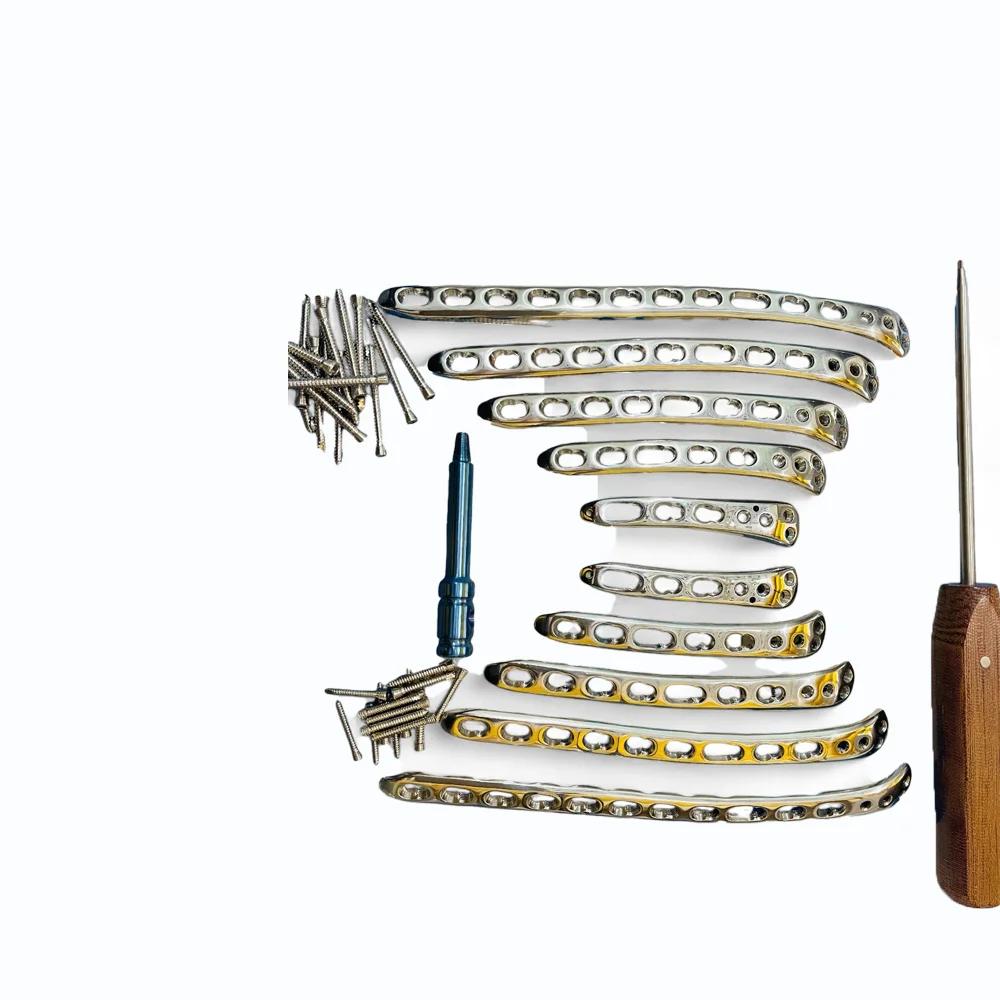
Locking Distal Humerus Plates with LCP Screws – 66 Pcs
Direct Manufacturer Pricing • Tax Exclusive
The Locking Distal Humerus Plates Set includes 3, 5, 7, 9, and 11-hole plate options with LCP screws, providing a comprehensive solution for orthopedic fracture fixation. Manufactured from SS 316L stainless steel, this 66-piece set is designed for use in distal humerus fracture management and reconstructive orthopedic procedures.
All import duties, tariffs & taxes are 100% pre-paid for USA, UK, Canada, EUROPE & Australia (AUS). Zero surprise customs bills at delivery.
Hospital & Volume Procurement Pricing
The Locking Distal Humerus Plates Set is an orthopedic fixation system designed to support the surgical management of fractures involving the distal humerus. Supplied as a 66-piece set, it includes plates in 3, 5, 7, 9, and 11-hole configurations along with locking compression plate (LCP) screws. The range of plate lengths supports the selection of an appropriate fixation construct based on fracture location, bone anatomy, and the treating surgeon's operative plan.
Distal humerus fractures can involve complex fracture patterns near the elbow joint and may require stable internal fixation to support anatomical reduction and bone healing. Locking distal humerus plates are used in orthopedic trauma surgery to stabilize suitable fractures and maintain alignment during recovery. The specific plate configuration and screw arrangement depend on the fracture pattern, bone quality, and surgical assessment.
Plate Design and Hole Configurations
This 66-piece distal humerus plate set includes 3-hole, 5-hole, 7-hole, 9-hole, and 11-hole plate options. Different hole counts provide flexibility when selecting plate length and planning screw placement. Shorter plates may be suitable for selected fracture patterns requiring a more compact fixation construct, while longer plates can provide additional fixation points when the fracture and anatomical requirements call for extended plate coverage.
The plates are intended to work with compatible LCP screws. Locking screw technology allows the screw heads to engage with the plate's threaded holes, creating a fixed-angle relationship between the plate and screws. This design can help maintain construct stability without relying exclusively on compression between the plate and underlying bone. Actual fixation performance depends on appropriate implant selection, screw placement, bone quality, and surgical technique.
SS 316L Stainless Steel Construction
The plates and screws are specified as stainless steel SS 316L, a material commonly used in surgical implant manufacturing because of its corrosion resistance and suitability for appropriate medical applications. Material selection is important for orthopedic fixation devices exposed to demanding mechanical conditions.
The exact composition, mechanical properties, surface finish, and implant suitability should be confirmed through the manufacturer's technical documentation. Implant-grade certification and compatibility must be verified before clinical use. Stainless steel fixation components should not be assumed to be interchangeable with titanium implants or components from different fixation systems.
Orthopedic Surgical Applications
Locking distal humerus plates are used in selected orthopedic trauma procedures involving fractures of the lower portion of the upper arm bone. Depending on the fracture pattern and the surgeon's assessment, applications may include distal humerus fracture fixation, fixation of certain comminuted fractures, and selected reconstructive procedures requiring internal stabilization.
The range of plate sizes in this set helps support surgical planning across different fixation requirements. The final choice of plate and screw configuration should be based on anatomical fit, fracture characteristics, implant compatibility, and the manufacturer's instructions for use.
Benefits for Orthopedic Instrument and Implant Inventory
A 66-piece set containing multiple plate lengths and compatible LCP screws can help hospitals, orthopedic departments, and medical distributors maintain a more organized selection of fixation components. Having different hole configurations available may reduce the need to source each plate length separately, subject to the set's confirmed contents.
The stainless steel construction offers material consistency within the specified system, while the locking mechanism supports fixed-angle fixation when used as intended. Correct storage, handling, inspection, and adherence to the manufacturer's instructions are essential for maintaining product integrity.
Handling, Sterilization, and Care
These components must be handled according to their intended classification and the manufacturer's instructions. Before use, verify the product's sterile status, packaging integrity, material specifications, and applicable regulatory documentation. If supplied non-sterile, the components must be processed using a validated sterilization method specified by the manufacturer before clinical use.
Reusable surgical instruments associated with the procedure should be cleaned, inspected, and sterilized according to their own instructions for use. Implant components must not be reprocessed or reused unless explicitly permitted by the manufacturer and applicable regulations. Proper inventory control and separation of compatible components help support safe orthopedic surgical practice.
Key Features
Complete 66-piece locking distal humerus plate set
Includes 3, 5, 7, 9, and 11-hole plate configurations
Supplied with LCP screws
SS 316L stainless steel material specification
Designed for distal humerus fracture fixation
Locking plate technology supports fixed-angle screw engagement
Multiple plate lengths for different fixation requirements
Suitable for orthopedic trauma surgery applications
Supports surgical planning for selected distal humerus fractures
Intended for use with compatible fixation components
Appropriate for orthopedic implant inventory management
Product Specifications
Specification | Details |
|---|---|
Product Name | Locking Distal Humerus Plates with LCP Screws |
Product Category | Orthopedic Trauma Implants |
Anatomical Application | Distal Humerus |
Plate Hole Options | 3, 5, 7, 9, and 11 holes |
Screw Type | LCP locking screws |
Material | SS 316L stainless steel, as specified |
Total Set Quantity | 66 pieces |
Fixation Type | Locking plate fixation |
Primary Application | Distal humerus fracture management |
Compatibility | Matching plates and screws must be verified |
Sterilization | Follow manufacturer instructions |
Packaging and Sterile Status | Confirm with supplier |
Intended Users | Qualified orthopedic surgical professionals |
Frequently Asked Questions
1. What are locking distal humerus plates used for?
Locking distal humerus plates are orthopedic implants used to stabilize selected fractures of the lower end of the humerus. They help maintain fracture alignment during healing when appropriate fixation is achieved.
2. What is included in the 66-piece distal humerus plate set?
The set is described as containing locking distal humerus plates in 3, 5, 7, 9, and 11-hole configurations, together with LCP screws. Confirm the detailed component breakdown with the supplier before ordering.
3. What material are these distal humerus plates made from?
The product title specifies SS 316L stainless steel. Buyers should verify the exact implant-grade material specification and supporting documentation with the manufacturer.
4. What is the purpose of LCP screws in a locking plate system?
LCP screws are designed to engage with compatible threaded plate holes, creating a fixed-angle connection. This helps form a stable fixation construct when the system is used according to its design and surgical instructions.
5. What is the difference between 3-hole and 11-hole distal humerus plates?
The primary difference is the number of available plate holes and the resulting options for plate length and screw placement. The appropriate configuration depends on the fracture pattern, anatomical requirements, and the surgeon's fixation plan.
6. Are these plates suitable for all distal humerus fractures?
No. Plate selection depends on fracture location, complexity, bone quality, patient-specific anatomy, and the intended fixation strategy. A qualified orthopedic surgeon must determine the appropriate implant configuration.
7. Can these stainless steel plates be used with titanium LCP screws?
Compatibility should not be assumed. Screws must match the plate system's design, dimensions, thread specifications, material requirements, and manufacturer guidance.
8. Are the locking distal humerus plates supplied sterile?
The product title does not specify sterile status. Confirm the packaging and sterilization status with the supplier and follow the manufacturer's instructions before clinical use.