
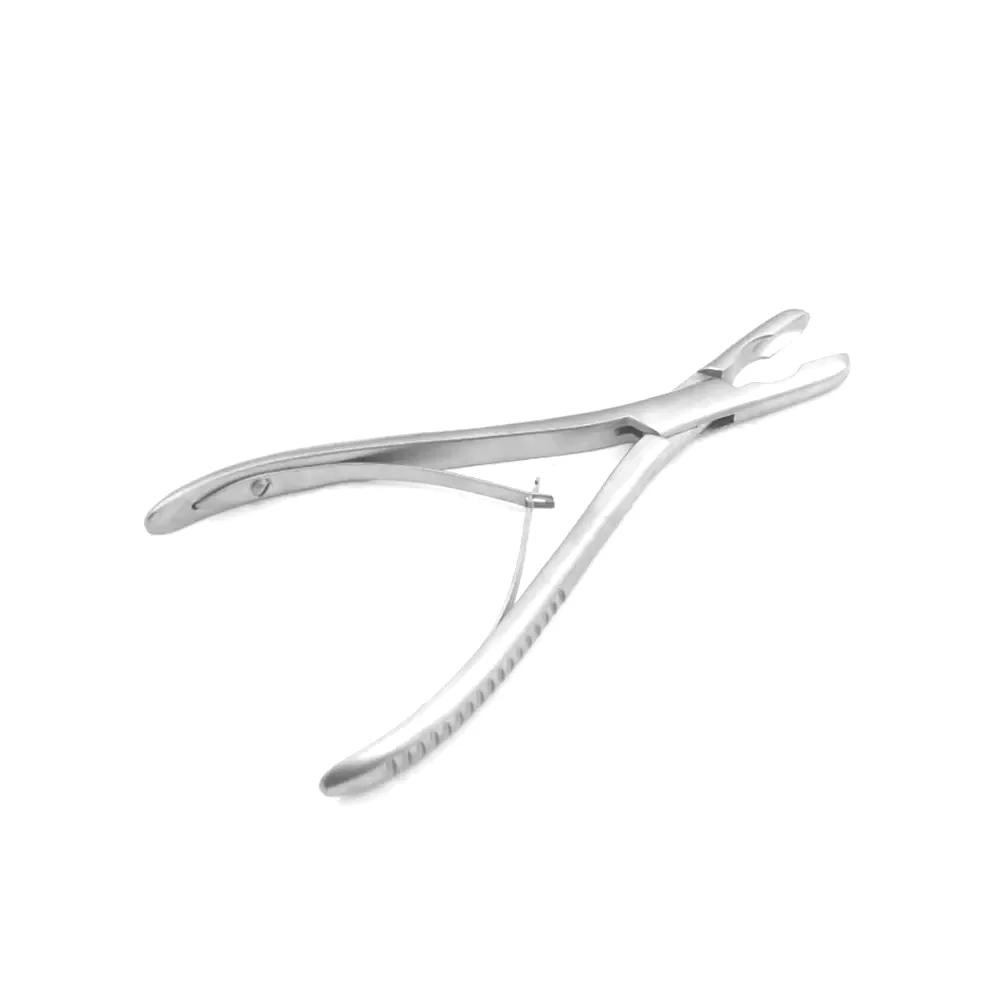
Luer Rongeur
Direct Manufacturer Pricing • Tax Exclusive
The Luer Rongeur is a surgical bone-cutting instrument designed for controlled removal of small bone fragments and trimming of bone during appropriate procedures. Its cutting jaws provide a practical option for orthopedic and other surgical settings where precise bone removal is required.
All import duties, tariffs & taxes are 100% pre-paid for USA, UK, Canada, EUROPE & Australia (AUS). Zero surprise customs bills at delivery.
Hospital & Volume Procurement Pricing
The Luer Rongeur is a specialized surgical instrument used for cutting, trimming, and removing small portions of bone during selected orthopedic and surgical procedures. Its rongeur-style jaw mechanism allows the user to remove bone in controlled bites, making it useful when gradual reduction or shaping is required. The instrument's exact applications depend on its size, jaw configuration, and the manufacturer's intended-use instructions.
Rongeurs are commonly included in surgical instrument sets used for procedures involving bone preparation. Unlike instruments designed primarily for cutting soft tissue, a bone rongeur is constructed to engage and remove bone material through its opposing cutting jaws. The Luer pattern is associated with a compact, forceps-style design, although the exact dimensions and working-end configuration can vary between models.
Jaw Design and Cutting Action
The working end of a Luer Rongeur typically features opposing jaws that meet to cut or remove small portions of bone. This design allows the surgeon to remove bone incrementally rather than relying on a single large cut. The jaw shape, cutting edge, and opening range influence the amount of material that can be removed with each action.
Different Luer rongeur models may have variations in jaw width, profile, and overall length. The product title does not specify whether this instrument has straight or angled jaws, nor does it provide the cutting-jaw dimensions. These details should be confirmed through the supplier's product information before purchase.
Surgical Applications
Depending on the model and its approved indications, a Luer Rongeur may be used for selected bone-trimming and bone-removal tasks in orthopedic, general surgical, and other relevant surgical settings. It may form part of an instrument set for procedures where controlled removal of small bone fragments is required.
The correct rongeur should be selected according to the bone involved, the access available, and the degree of removal required. It should not be assumed suitable for every bone-cutting application. Qualified surgical professionals must use the instrument according to the manufacturer's instructions and established clinical practice.
Handle Design and Instrument Control
The forceps-style handle provides manual control of the opening and closing action. When the handles are compressed, the jaws meet to perform the cutting action. Smooth movement and properly aligned cutting edges are important for predictable instrument function.
Before use, inspect the handles, joint, and cutting jaws for wear, misalignment, or damage. A rongeur with dull or damaged cutting edges may not function as intended and should be assessed according to the facility's instrument-maintenance procedures.
Material and Construction
The material grade of this Luer Rongeur is not specified in the product title. Surgical rongeurs are commonly manufactured from medical-grade stainless steel, but the exact material, alloy, and surface finish should be confirmed with the manufacturer or supplier. Do not assume a particular stainless steel grade or certification without supporting product documentation.
Cleaning, Sterilization, and Maintenance
If the instrument is supplied as a reusable device, it should be cleaned, inspected, and sterilized according to the manufacturer's validated instructions. Particular attention should be given to the cutting jaws and joint, where bone debris or other residue may remain. The cutting edges should be checked regularly for damage, corrosion, and loss of function.
The Luer Rongeur is a useful option for surgical instrument inventories requiring a dedicated bone-removal tool. Confirming the jaw dimensions, cutting profile, overall length, material, and reprocessing requirements helps ensure the selected model is appropriate for the intended surgical application.
Key Features
Luer-pattern surgical rongeur
Designed for controlled removal of small bone fragments
Opposing cutting jaws for incremental bone removal
Suitable for selected orthopedic and surgical procedures
Forceps-style handles for manual operation
Jaw width and cutting profile are model-dependent
Straight or angled configuration should be verified
Material grade requires manufacturer confirmation
Cutting edges and joint require regular inspection
Cleaning and sterilization must follow manufacturer instructions
Product Specifications
Specification | Details |
|---|---|
Product Name | Luer Rongeur |
Instrument Category | Surgical bone-cutting instrument |
Pattern | Luer |
Instrument Type | Bone rongeur |
Overall Length | Not specified |
Jaw Configuration | Not specified |
Jaw Profile | Not specified |
Cutting Edge | Opposing cutting jaws; exact design to be confirmed |
Handle Type | Forceps-style |
Material | Not specified; confirm with manufacturer |
Finish | Not specified |
Intended Application | Controlled bone removal and trimming in appropriate procedures |
Reusability | Confirm with manufacturer |
Sterility Status | Not specified |
Cleaning and Sterilization | Follow manufacturer instructions |
Manufacturer | Not specified |
Frequently Asked Questions
1. What is a Luer Rongeur used for?
A Luer Rongeur is used to cut, trim, or remove small portions of bone during selected surgical procedures. Its suitability depends on the specific model and intended application.
2. How does a Luer Rongeur work?
Its opposing jaws close when the handles are compressed, allowing the cutting edges to remove bone in controlled increments.
3. Is a Luer Rongeur an orthopedic instrument?
Yes. It is commonly associated with orthopedic procedures involving bone trimming or removal, although its use depends on the model and approved indications.
4. What is the difference between a Luer Rongeur and a bone cutter?
A Luer Rongeur is generally designed to remove small portions of bone through repeated jaw actions. A bone cutter may be designed for a different cutting task or larger structures, depending on its construction.
5. Are Luer Rongeurs available with different jaw designs?
Yes. Models may vary in jaw width, shape, cutting profile, and overall length. Confirm the exact configuration before purchasing.
6. What material is a Luer Rongeur made from?
The material grade is not specified in this product title. Confirm the construction material and applicable specifications with the supplier.
7. Is the Luer Rongeur reusable?
Reusability depends on the manufacturer's specifications. If reusable, the instrument must be processed according to its validated cleaning and sterilization instructions.
8. How should a Luer Rongeur be maintained?
Inspect the cutting jaws, joint, and handles for wear, damage, corrosion, and misalignment. Follow the manufacturer's cleaning, lubrication, inspection, and sterilization guidance.
9. What should be checked before ordering a Luer Rongeur?
Confirm the overall length, jaw dimensions, cutting profile, handle design, material grade, intended use, and reprocessing requirements.