
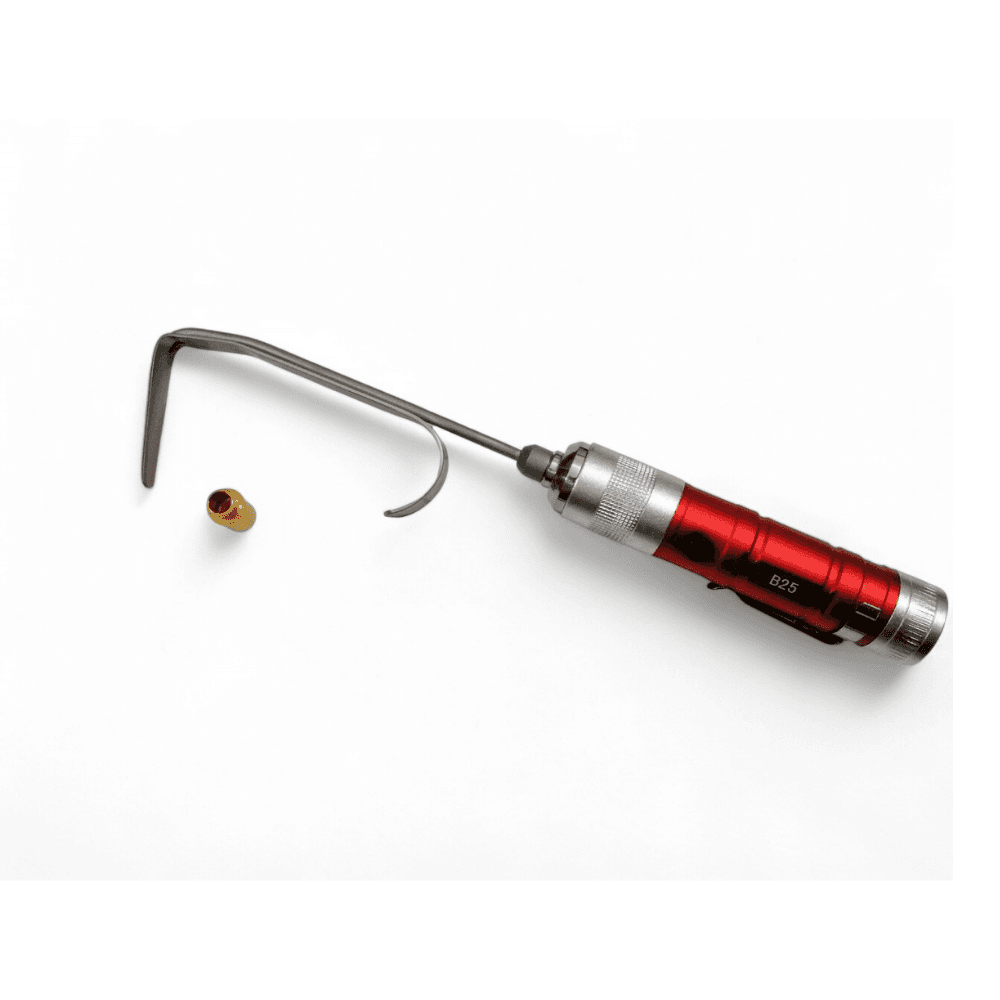
Maliniac Nasal Retractors Fiber Optic,plastic surgery
Direct Manufacturer Pricing • Tax Exclusive
Maliniac Nasal Retractors with Fiber Optic illumination are designed to provide controlled nasal tissue retraction and improved visualization during plastic surgery procedures. The integrated illumination helps direct light toward the operative field for enhanced visibility.
All import duties, tariffs & taxes are 100% pre-paid for USA, UK, Canada, EUROPE & Australia (AUS). Zero surprise customs bills at delivery.
Hospital & Volume Procurement Pricing
The Maliniac Nasal Retractors Fiber Optic are specialized surgical instruments designed for controlled tissue retraction and improved access during nasal and facial plastic surgery procedures. Their integrated fiber optic illumination provides focused light near the working area, helping surgical teams maintain better visualization in confined anatomical spaces.
The Maliniac design is intended to provide practical retraction of nasal tissues while supporting access to the operative site. Nasal surgery often involves relatively narrow working areas where adequate exposure and illumination are important. Combining the retractor with a fiber optic light carrier can help reduce shadows and provide direct illumination closer to the surgical field.
These retractors can be used as part of rhinoplasty, nasal reconstruction, and other plastic surgery instrument sets, depending on the specific configuration and requirements of the procedure. The retraction function is designed to support controlled displacement of soft tissue, helping expose the surgical area without relying solely on external illumination.
The fiber optic system requires connection to a compatible surgical light source. Before use, the optical components and connector should be inspected for cleanliness, damage, and proper condition. Careful handling is recommended to preserve the performance of the illumination system during repeated clinical use.
The instrument's working profile is intended for precise surgical access rather than broad tissue retraction. This makes it a useful addition to specialized nasal surgery sets where controlled exposure and localized illumination are desired. The exact working dimensions and configuration should be verified against the manufacturer's specifications before selecting the instrument for a particular procedure.
Proper instrument processing is essential. Cleaning, disinfection, and sterilization should be carried out according to the manufacturer's instructions and the healthcare facility's validated protocols. Fiber optic components should receive appropriate care to avoid damage that could affect illumination performance.
The Maliniac Nasal Retractors Fiber Optic offer a practical combination of nasal tissue retraction and integrated illumination for plastic surgery applications. Their specialized design can support improved operative visibility and controlled access during nasal surgical procedures.
5. Key Features
- Maliniac nasal retractor design
- Integrated fiber optic illumination
- Designed for controlled nasal tissue retraction
- Suitable for plastic and nasal surgery
- Supports improved visualization of the operative field
- Useful for rhinoplasty and related nasal procedures
- Provides localized illumination near the working area
- Designed for confined surgical fields
- Can be incorporated into specialized plastic surgery instrument sets
- Requires a compatible fiber optic light source
- Optical components should be inspected before use
- Follow validated cleaning and sterilization procedures
6. Product Specifications
| Specification | Details |
|---|---|
| Product Name | Maliniac Nasal Retractors |
| Instrument Type | Nasal Retractor |
| Design | Maliniac |
| Application | Plastic Surgery / Nasal Surgery |
| Illumination | Fiber Optic |
| Working Function | Nasal Tissue Retraction |
| Light Source | Compatible Fiber Optic System Required |
| Blade Dimensions | Not Specified |
| Material | Not Specified |
| Reusable | Not Specified |
| Sterilization | Follow Manufacturer's Instructions |
| Category | Plastic Surgery Instruments |
7. FAQs
What are Maliniac Nasal Retractors used for?
Maliniac Nasal Retractors are used for controlled retraction and exposure of nasal tissues during nasal and plastic surgery procedures.
What is the benefit of fiber optic illumination?
Fiber optic illumination provides focused light near the operative field, helping improve visualization in confined nasal surgical areas.
Can Maliniac Nasal Retractors be used for rhinoplasty?
Yes. They can be incorporated into rhinoplasty and other nasal plastic surgery procedures when their configuration is appropriate for the intended application.
Does the retractor require a fiber optic light source?
Yes. The integrated fiber optic system requires a compatible surgical light source and appropriate connection.
Are the exact dimensions specified?
The product information provided does not specify the blade or overall dimensions. Exact measurements should be confirmed from the applicable manufacturer specification.
How should the instrument be sterilized?
The instrument should be cleaned and sterilized according to the manufacturer's instructions and the healthcare facility's validated sterilization protocol.
What should be checked before using a fiber optic nasal retractor?
Inspect the retractor, working end, fiber optic components, and connector for cleanliness, damage, and proper condition before use.