
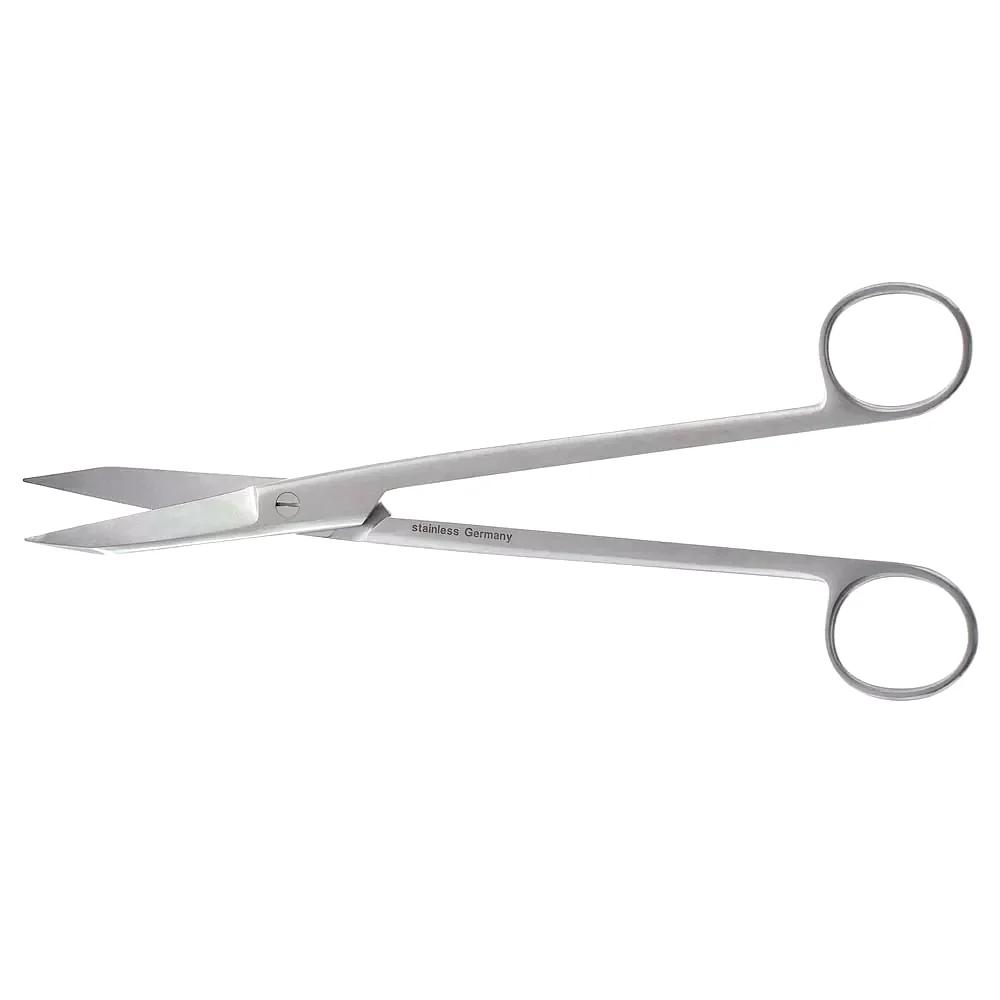
Martin Cartilage Scissors for Surgical Procedures
Direct Manufacturer Pricing • Tax Exclusive
Martin Cartilage Scissors are surgical instruments designed for cutting and trimming cartilage during appropriate surgical procedures. Their scissor-style design supports controlled handling and precise cutting, depending on the instrument's blade configuration.
All import duties, tariffs & taxes are 100% pre-paid for USA, UK, Canada, EUROPE & Australia (AUS). Zero surprise customs bills at delivery.
Hospital & Volume Procurement Pricing
Martin Cartilage Scissors are specialized surgical scissors intended for cutting and trimming cartilage in procedures where controlled tissue division is required. Cartilage scissors are designed to help surgical professionals perform deliberate cuts while maintaining control of the instrument near the operative site. Their suitability for a particular procedure depends on the blade shape, tip design, cutting edge, and overall dimensions of the specific model.
Surgical Applications
Cartilage scissors may be used in selected surgical procedures involving cartilage preparation, shaping, or trimming. Depending on the specific pattern, they may be appropriate for applications in specialties such as otolaryngology, plastic surgery, and reconstructive surgery. The exact clinical application should be determined by the instrument's design and the manufacturer's intended-use information.
A suitable pair of cartilage scissors can help the surgical professional make controlled cuts while preparing tissue for the next stage of a procedure. The instrument should be selected according to the tissue characteristics, required cutting precision, surgical approach, and available access to the operative site. It should not be used for applications beyond its intended purpose.
Design and Handling
Martin Cartilage Scissors feature a scissor-style design that allows the user to open and close the blades through controlled hand movement. The blade geometry and cutting edges determine how the instrument engages cartilage and how easily the user can guide the cut. Different patterns may feature straight or curved blades, pointed or blunt tips, and variations in blade length or overall size.
Because the product title does not specify the exact pattern, these details should be confirmed before purchase. Choosing the appropriate blade configuration is important for visibility, access, and the type of cutting required. The handles should provide a secure, comfortable grip that supports controlled operation during the procedure.
Functional Benefits
When matched to the intended application, cartilage scissors can help with precise tissue trimming and preparation. Their manually operated design allows the user to control blade movement and cutting direction. This can be useful when careful shaping is required within the limits of the instrument's design.
The performance of the scissors depends on blade sharpness, alignment, joint condition, and appropriate handling. Regular inspection helps identify dull edges, looseness, corrosion, or damage that could affect cutting performance. An instrument with compromised blades or a faulty joint should be removed from service and assessed according to facility procedures.
Material and Construction
The material and grade of these Martin Cartilage Scissors are not specified in the product title. Surgical scissors are commonly manufactured from medical-grade stainless steel, but the exact composition, finish, and construction of this model must be confirmed with the supplier. Specific material claims should not be assumed without product documentation.
Cleaning, Sterilization, and Maintenance
Cleaning and sterilization requirements depend on the manufacturer's instructions and whether the instrument is designated for reuse. If the scissors are reusable, they should be cleaned, inspected, and processed using validated procedures appropriate for the exact model. Particular attention should be paid to the blades, pivot joint, and areas where tissue residue may accumulate.
Before each use, qualified personnel should check the cutting edges, blade alignment, joint movement, and overall condition. Proper storage and routine maintenance help preserve instrument function and support reliable performance throughout its intended service life.
Martin Cartilage Scissors are intended for professional use where controlled cartilage cutting is required. Confirming the blade pattern, length, material, and processing instructions will help ensure that the instrument is appropriate for the intended surgical application.
Key Features
Designed for cartilage cutting and trimming
Scissor-style mechanism for controlled manual operation
Suitable for selected surgical tissue-preparation tasks
Blade design supports directed cutting
Available patterns may vary by tip and blade configuration
Intended for use by qualified surgical professionals
Requires appropriate selection for the procedure
Blade sharpness and alignment affect cutting performance
Material and dimensions should be verified with the supplier
Cleaning and sterilization must follow manufacturer instructions
Product Specifications
Specification | Details |
|---|---|
Product Name | Martin Cartilage Scissors |
Instrument Type | Surgical scissors |
Primary Function | Cartilage cutting and trimming |
Blade Pattern | Not specified |
Blade Shape | Not specified |
Tip Style | Not specified |
Overall Length | Not specified |
Material | Not specified |
Material Grade | Not specified |
Handle Design | Scissor-style handles |
Specialty | Depends on the specific model and intended use |
Reusability | Confirm with supplier |
Sterilization Method | Follow manufacturer instructions |
Intended Users | Qualified surgical professionals |
Frequently Asked Questions
1. What are Martin Cartilage Scissors used for?
They are designed for cutting and trimming cartilage during appropriate surgical procedures. The precise application depends on the instrument's pattern and intended use.
2. Can these scissors be used in ENT surgery?
Cartilage scissors may be used in selected ENT procedures when their design is appropriate. Confirm the specific model's intended application before use.
3. Are Martin Cartilage Scissors straight or curved?
The product title does not specify whether the blades are straight or curved. Check the product listing or supplier documentation for the exact pattern.
4. What material are Martin Cartilage Scissors made from?
The material is not specified. Contact the supplier to confirm whether the instrument is made from surgical-grade stainless steel and to obtain its material grade.
5. What length are these cartilage scissors?
The overall length is not provided in the product title. Confirm the dimensions before ordering if a particular length is required.
6. Are Martin Cartilage Scissors reusable?
Reusability is not confirmed by the title alone. Follow the manufacturer's labeling and instructions to determine whether the instrument is reusable and how it should be processed.
7. How should cartilage scissors be maintained?
Inspect the blades, cutting edges, alignment, and pivot joint regularly. Clean and process the instrument according to the manufacturer's instructions, and remove damaged or poorly functioning scissors from service.
8. What should I check before purchasing Martin Cartilage Scissors?
Confirm the blade pattern, tip design, overall length, material, intended application, and cleaning or sterilization requirements to ensure the instrument meets your needs.