
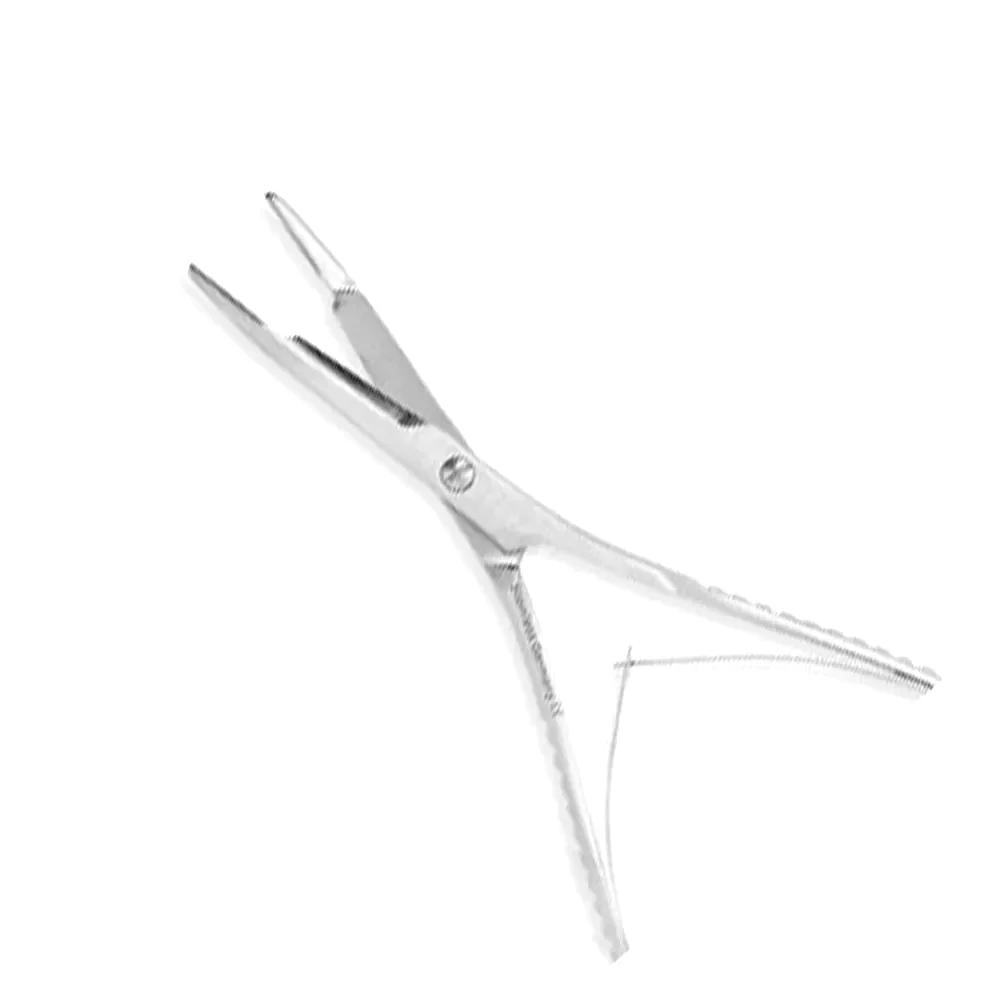
Mathieu Needle Holders for Surgical Suturing
Direct Manufacturer Pricing • Tax Exclusive
Mathieu Needle Holders are surgical instruments designed to hold and guide suture needles during wound closure and other suturing procedures. Their characteristic handle design supports controlled needle manipulation, making them a useful option for surgical professionals who require reliable instrument handling.
All import duties, tariffs & taxes are 100% pre-paid for USA, UK, Canada, EUROPE & Australia (AUS). Zero surprise customs bills at delivery.
Hospital & Volume Procurement Pricing
Mathieu Needle Holders are specialized surgical instruments used to grip and control suture needles during suturing. Commonly recognized by their distinctive spring-action handle design, Mathieu-pattern needle holders help clinicians position and guide needles through tissue during selected surgical and clinical procedures.
Suture needle holders play an important role in wound closure by providing a controlled grip on the needle. The appropriate instrument depends on the size and shape of the needle, the tissue being sutured, the surgical technique, and the operator's preference. Mathieu needle holders are available in different sizes and configurations, so the exact specifications should be checked before selecting a model.
Mathieu Handle Design
The Mathieu pattern is commonly associated with a spring-action handle that allows the user to close the jaws by applying pressure to the handles. Many models also incorporate a ratchet locking mechanism to maintain the grip on the needle. However, handle construction and locking features may differ between designs and should be verified with the manufacturer.
A properly functioning needle holder should provide stable needle engagement and smooth release. Correct gripping pressure is important for maintaining control while helping prevent damage to the needle during suturing.
Jaw Design and Needle Control
The working jaws are designed to hold suture needles securely during needle placement and passage through tissue. Jaw shape, surface texture, and dimensions influence grip and compatibility with different needle types. These characteristics vary between models, making it important to choose an instrument that matches the intended suturing application.
Before use, inspect the jaws for alignment, wear, or damage. A needle holder with worn or misaligned jaws may not grip the needle consistently and should be assessed according to the facility's instrument inspection procedures.
Surgical Applications
Mathieu needle holders may be used in selected general surgical, minor surgical, and other clinical suturing applications, depending on the instrument's size and design. They support needle handling during wound closure and related procedures where a suitable needle holder is required.
The correct model should be selected by a qualified professional according to the operative requirements, needle dimensions, and manufacturer's intended use. Not every Mathieu needle holder is appropriate for every surgical specialty or needle size.
Material and Construction
The material depends on the specific model. Many reusable surgical needle holders are manufactured from stainless steel, while other versions may use specialized materials or coatings. The exact material grade, surface finish, and construction details should be confirmed through the product documentation.
Durability and corrosion resistance depend on the material, manufacturing quality, use, and maintenance. Regular inspection can help identify damage that could affect instrument performance.
Cleaning, Sterilization, and Maintenance
Reusable Mathieu needle holders must be cleaned, inspected, and sterilized according to the manufacturer's validated instructions and the healthcare facility's infection prevention protocols. Particular attention should be paid to the handle mechanism, joints, and locking components where applicable.
Do not assume that a specific model is supplied sterile or is compatible with every sterilization method. Follow the manufacturer's reprocessing instructions and store the instrument appropriately after processing to help maintain its condition.
Selecting the Right Mathieu Needle Holder
When choosing a Mathieu needle holder, consider the overall length, jaw dimensions, handle mechanism, locking system, material, and compatibility with the required suture needles. Confirm the exact specifications with the supplier, particularly when selecting instruments for a standardized surgical tray.
Mathieu Needle Holders provide a dedicated option for professionals seeking controlled suture needle handling. Selecting a model with suitable dimensions and clearly documented specifications helps support the requirements of the intended clinical workflow.
Key Features
Mathieu-pattern surgical needle holder
Designed for gripping and controlling suture needles
Commonly associated with a spring-action handle
Some models include a ratchet locking mechanism
Supports controlled needle positioning during suturing
Suitable for selected surgical and clinical procedures
Available specifications depend on the model
Material and finish require manufacturer confirmation
Jaw dimensions and needle compatibility should be verified
Reprocessing must follow manufacturer instructions
Product Specifications
| Specification | Details |
|---|---|
| Product Name | Mathieu Needle Holder |
| Instrument Category | Surgical Suturing Instrument |
| Pattern | Mathieu |
| Primary Function | Suture needle holding and control |
| Handle Design | Typically spring-action; confirm model |
| Locking Mechanism | Model-dependent |
| Jaw Design | Confirm with manufacturer |
| Material | Not specified |
| Overall Length | Not specified |
| Surface Finish | Not specified |
| Compatible Needle Sizes | Confirm with manufacturer |
| Sterility Status | Confirm with supplier |
| Reusability | Confirm for the specific model |
| Cleaning and Sterilization | Follow manufacturer instructions |
| Intended Users | Qualified medical professionals |
Frequently Asked Questions
1. What are Mathieu needle holders used for?
Mathieu needle holders are used to grip and guide suture needles during wound closure and selected surgical suturing procedures.
2. How does a Mathieu needle holder work?
Mathieu-pattern instruments commonly use a spring-action handle to operate the jaws. Some models also include a locking mechanism that helps maintain the grip on the needle.
3. Are Mathieu needle holders available in different sizes?
Yes, Mathieu needle holders are available in different lengths and configurations. Confirm the dimensions of the specific model before purchasing.
4. What material are Mathieu needle holders made from?
Many reusable models are made from stainless steel, but the exact material depends on the product. Check the manufacturer's specifications for confirmation.
5. Can Mathieu needle holders be used with all suture needles?
No. Compatibility depends on the jaw dimensions, needle size, and intended procedure. Select an instrument appropriate for the required needle.
6. Are Mathieu needle holders reusable?
Reusability depends on the specific model and its instructions for use. Confirm whether the instrument is reusable or intended for single use.
7. Can Mathieu needle holders be autoclaved?
Autoclave compatibility depends on the instrument's material and construction. Follow the validated cleaning and sterilization instructions provided by the manufacturer.
8. How should Mathieu needle holders be maintained?
Inspect the jaws and handle mechanism for wear, misalignment, or damage. Clean, sterilize, and store the instrument according to the manufacturer's instructions.
9. What should I consider when buying a Mathieu needle holder?
Review the overall length, jaw design, locking mechanism, material, compatible needle sizes, and reprocessing requirements to ensure the instrument meets the intended clinical needs.