
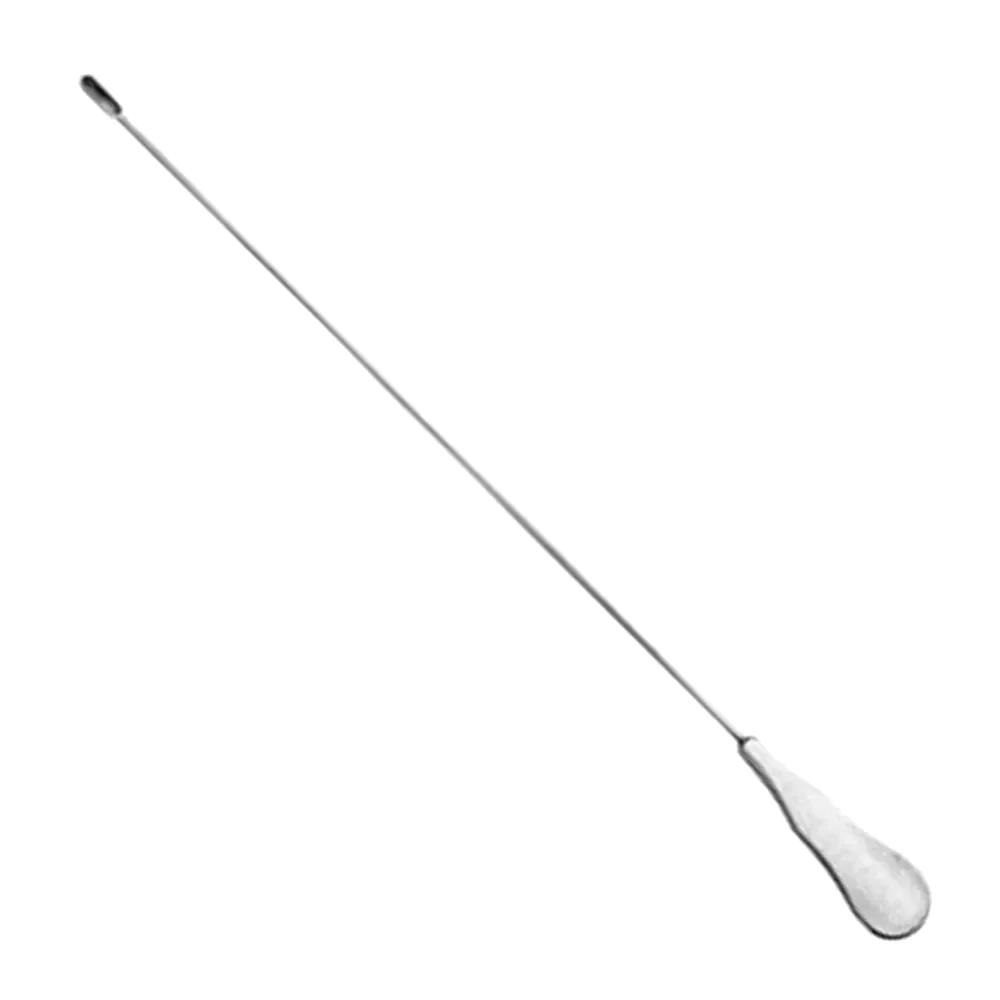
Mayo Common Duct Scoop Surgical Instrument
Direct Manufacturer Pricing • Tax Exclusive
The Mayo Common Duct Scoop is a specialized surgical instrument intended for use in selected biliary procedures involving the common bile duct. Its scoop-shaped working end is designed to support controlled handling within the duct, subject to the instrument's specific design and intended use.
All import duties, tariffs & taxes are 100% pre-paid for USA, UK, Canada, EUROPE & Australia (AUS). Zero surprise customs bills at delivery.
Hospital & Volume Procurement Pricing
The Mayo Common Duct Scoop is a specialized instrument associated with hepatobiliary surgery, where access to and management of the common bile duct may be required. The common bile duct carries bile from the liver and gallbladder toward the small intestine. Instruments designed for duct-related procedures must be selected carefully to suit the anatomical structure, surgical technique, and clinical objective.
Surgical Applications
Common duct instruments may be used during selected biliary procedures in which the surgical team needs to examine, manipulate, or manage material within the bile duct. A scoop-style instrument may be intended to assist with controlled handling in accordance with its specific design. The exact indications for this Mayo-pattern instrument should be confirmed using the manufacturer's documentation.
The instrument should only be used by qualified surgical professionals familiar with biliary anatomy and the relevant procedure. Selection depends on the intended application, the dimensions of the working end, and the approach being used. It should not be used for purposes beyond its intended design.
Scoop-Shaped Working End
The defining feature suggested by the product name is a scoop-shaped distal end. This type of working profile may be designed to engage or handle material within a confined surgical area. The precise shape, curvature, width, depth, and edge characteristics of this model are not specified in the title and should be verified with the supplier.
The working end must be appropriate for the intended biliary application. Smooth surfaces and suitable dimensions are important considerations when selecting an instrument intended for use around delicate anatomical structures. The instrument should be inspected for deformation, rough edges, or surface defects before use.
Handling and Surgical Control
Manual surgical instruments allow the operator to guide the working end through controlled hand movements. The handle and shaft design influence access, positioning, and tactile control. The specific handle style, shaft length, and overall dimensions of the Mayo Common Duct Scoop are not provided in the product title.
Before use, the surgical team should confirm that the instrument's design and dimensions are appropriate for the procedure. Careful handling and adherence to established surgical technique are essential when working with biliary structures.
Material and Construction
The material and material grade of this Mayo Common Duct Scoop are not specified. Surgical instruments of this type may be manufactured from medical-grade stainless steel, but the exact construction should be confirmed with the supplier. Buyers should verify material composition, surface finish, corrosion resistance, and compatibility with the required reprocessing procedures.
Cleaning, Sterilization, and Maintenance
Cleaning and sterilization requirements depend on the manufacturer's instructions and whether the instrument is designated for reuse. Reusable instruments should be cleaned, inspected, and processed using validated procedures appropriate to the specific model. Pay particular attention to the scoop-shaped working end and any areas where residue could collect.
Before each use, inspect the working end, shaft, handle, and connections for damage or deterioration. Follow the manufacturer's instructions for cleaning, sterilization, storage, and maintenance. Do not assume that the instrument is reusable or compatible with a particular sterilization method without supporting documentation.
The Mayo Common Duct Scoop is intended for professional surgical settings where a specialized instrument may be required for biliary procedures. Confirming the exact working-end design, dimensions, material, and intended use helps ensure appropriate instrument selection.
Key Features
Mayo-pattern common duct surgical instrument
Scoop-shaped working end, subject to model confirmation
Intended for selected biliary surgical applications
Designed for controlled handling in a confined operative area
Requires appropriate selection for the intended procedure
Working-end dimensions should be verified with the supplier
Material and material grade are not specified
Requires inspection before clinical use
Intended for use by qualified surgical professionals
Cleaning and sterilization must follow manufacturer instructions
Product Specifications
Specification | Details |
|---|---|
Product Name | Mayo Common Duct Scoop |
Instrument Type | Specialized biliary surgical instrument |
Pattern | Mayo |
Working-End Design | Scoop-shaped; confirm exact profile |
Primary Application | Selected common bile duct procedures |
Overall Length | Not specified |
Scoop Width and Depth | Not specified |
Shaft Design | Not specified |
Material | Not specified |
Material Grade | Not specified |
Surface Finish | Not specified |
Reusability | Confirm with supplier |
Sterilization Method | Follow manufacturer instructions |
Intended Users | Qualified surgical professionals |
Frequently Asked Questions
1. What is a Mayo Common Duct Scoop used for?
It is a specialized instrument associated with selected procedures involving the common bile duct. Its exact function should be confirmed from the manufacturer's intended-use information.
2. What is the common bile duct?
The common bile duct is part of the biliary system and carries bile toward the small intestine. Instruments used in this area must be appropriate for the anatomy and the intended surgical procedure.
3. What does scoop mean in the product name?
It suggests a working end shaped to engage or handle material in a confined area. The exact profile and intended function of this model should be verified with the supplier.
4. What material is the Mayo Common Duct Scoop made from?
The material is not specified in the product title. Ask the supplier to confirm the material and grade, including whether the instrument is made from surgical stainless steel.
5. What is the length of this instrument?
The overall length is not provided. Confirm the dimensions with the supplier before purchasing if a specific working length is required.
6. Is the Mayo Common Duct Scoop reusable?
Reusability is not confirmed by the title alone. Check the manufacturer's labeling and validated reprocessing instructions before reuse.
7. How should this instrument be cleaned and sterilized?
Follow the manufacturer's validated instructions for cleaning, inspection, sterilization, and storage. Ensure that the scoop-shaped working end is thoroughly inspected during reprocessing.
8. What should I verify before purchasing this instrument?
Confirm the working-end profile, dimensions, shaft length, material, intended clinical use, reusability, and sterilization requirements with the supplier.