
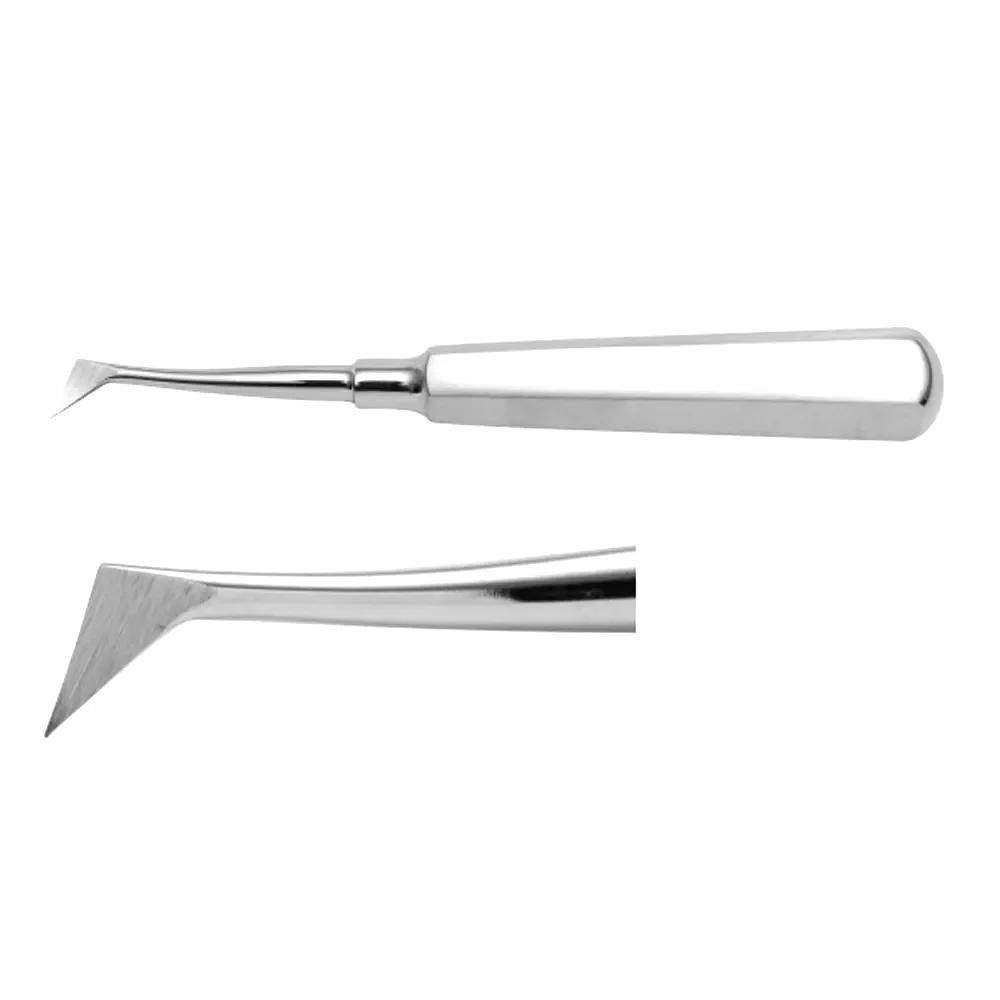
Molar Roots Cryer Elevators
Direct Manufacturer Pricing • Tax Exclusive
Molar Roots Cryer Elevators are specialized dental instruments designed to assist with the elevation and removal of retained molar roots during extraction procedures. Their angled working ends help dental professionals access root areas where controlled leverage is required.
All import duties, tariffs & taxes are 100% pre-paid for USA, UK, Canada, EUROPE & Australia (AUS). Zero surprise customs bills at delivery.
Hospital & Volume Procurement Pricing
Molar Roots Cryer Elevators are specialized dental extraction instruments used to assist with the elevation and removal of retained tooth roots, particularly in molar extraction procedures. Their design supports controlled leverage when a root fragment remains after the crown has been removed or when access to the root area is limited. These elevators are commonly associated with oral surgery and surgical dentistry, where careful instrument placement and controlled force are important.
Purpose and Dental Applications
Cryer elevators are designed to help dental professionals mobilize retained roots and root fragments during selected extraction procedures. Their working-end design allows the instrument to engage an appropriate root surface or supporting area, helping the operator apply controlled leverage. Depending on the specific pattern, a Cryer elevator may be used when treating molar roots that are difficult to access with conventional straight elevators or forceps.
These instruments may be used in routine dental extraction settings and oral surgery procedures when indicated by the tooth anatomy and clinical situation. The appropriate elevator pattern and technique depend on the root configuration, surrounding bone, access, and the clinician's assessment.
Design and Instrument Handling
Cryer elevators are recognized for their angled or triangular working-end design, which distinguishes them from many straight dental elevators. This configuration can help provide access to selected root surfaces and support controlled engagement during root elevation. The handle is designed to provide a practical gripping surface for the dental professional, allowing the instrument to be positioned and manipulated carefully.
The exact working-end shape, angle, handle design, and overall dimensions can vary by model and manufacturer. Users should confirm the specific pattern before purchasing to ensure that it meets their procedural requirements.
Material and Construction
The material grade for this particular product is not specified in the supplied title. Dental elevators are commonly manufactured from medical-grade stainless steel, but the material, finish, and manufacturing specifications should be verified with the supplier before purchase. Instrument quality should be assessed according to working-end integrity, handle construction, surface finish, and suitability for the intended clinical environment.
Benefits for Dental Professionals
Molar Roots Cryer Elevators provide a dedicated option for dental professionals who require an instrument designed for selected root-elevation tasks. Their angled working ends can assist access to difficult root areas, while the handle supports controlled positioning and manipulation. Choosing the correct elevator pattern can help improve instrument access and workflow during appropriately selected extraction procedures.
As with all dental extraction instruments, proper technique is essential. Excessive or incorrectly directed force can damage surrounding structures or cause instrument slippage. The elevator should be selected and used by a trained dental professional according to clinical judgment and established procedures.
Cleaning, Sterilization, and Maintenance
Reusable dental elevators must be cleaned, inspected, and sterilized according to the manufacturer's validated instructions and applicable dental infection-control protocols. Before each use, inspect the working end and handle for damage, corrosion, deformation, or other defects that could affect performance. Do not use a damaged instrument. Confirm whether the specific product is reusable and review its approved reprocessing instructions before clinical use.
Key Features
Designed for selected molar root elevation and removal procedures
Suitable for use in dental extraction and oral surgery settings when indicated
Angled working-end design supports access to selected root areas
Helps provide controlled leverage during root mobilization
Dedicated instrument pattern for retained molar roots and root fragments
Handle designed for practical gripping and instrument manipulation
Working-end geometry may vary according to the selected pattern
Material grade should be confirmed with the supplier
Cleaning and sterilization requirements depend on manufacturer instructions
Intended for use by trained dental professionals
Product Specifications
| Specification | Details |
|---|---|
| Product Name | Molar Roots Cryer Elevators |
| Instrument Type | Dental elevator |
| Instrument Category | Dental and oral surgery instruments |
| Primary Application | Selected molar root elevation and removal |
| Working-End Design | Cryer-style angled working end; exact pattern to be confirmed |
| Handle Type | Not specified |
| Material | Not specified; confirm with supplier |
| Overall Length | Not specified |
| Available Patterns | Confirm available options with supplier |
| Reusable or Disposable | Not specified; verify product labeling |
| Sterilization | Follow manufacturer-approved instructions |
| Intended Users | Trained dental professionals |
Frequently Asked Questions
1. What are Molar Roots Cryer Elevators used for?
They are dental instruments designed to assist with the elevation and removal of retained molar roots or root fragments during selected extraction procedures.
2. How does a Cryer elevator differ from a straight dental elevator?
A Cryer elevator typically has an angled or triangular working end that can help access selected root surfaces. A straight elevator has a different working-end geometry and may be more suitable for other extraction situations.
3. Can Cryer elevators be used for retained molar roots?
Yes, Cryer elevators are commonly associated with selected retained-root extraction procedures. The appropriate pattern and technique depend on the root anatomy and clinical assessment.
4. Are Molar Roots Cryer Elevators suitable for all tooth extractions?
No. Instrument selection depends on the tooth, root configuration, surrounding structures, and procedure. A trained dental professional should determine whether a Cryer elevator is appropriate.
5. What material are these elevators made from?
The material for this specific product has not been confirmed. Check the supplier's specifications to verify whether the instrument is made from medical-grade stainless steel or another material.
6. Are Molar Roots Cryer Elevators reusable?
Reusability has not been confirmed for this particular product. Check the product labeling and manufacturer's instructions before cleaning, sterilizing, or reusing the instrument.
7. How should Cryer elevators be cleaned and sterilized?
Follow the manufacturer's validated cleaning, inspection, packaging, and sterilization instructions, together with the applicable dental infection-control protocols.
8. What should I check before purchasing a Cryer elevator?
Confirm the working-end pattern, overall length, material, handle design, intended application, reusability, and compatibility with your clinical requirements before ordering.