
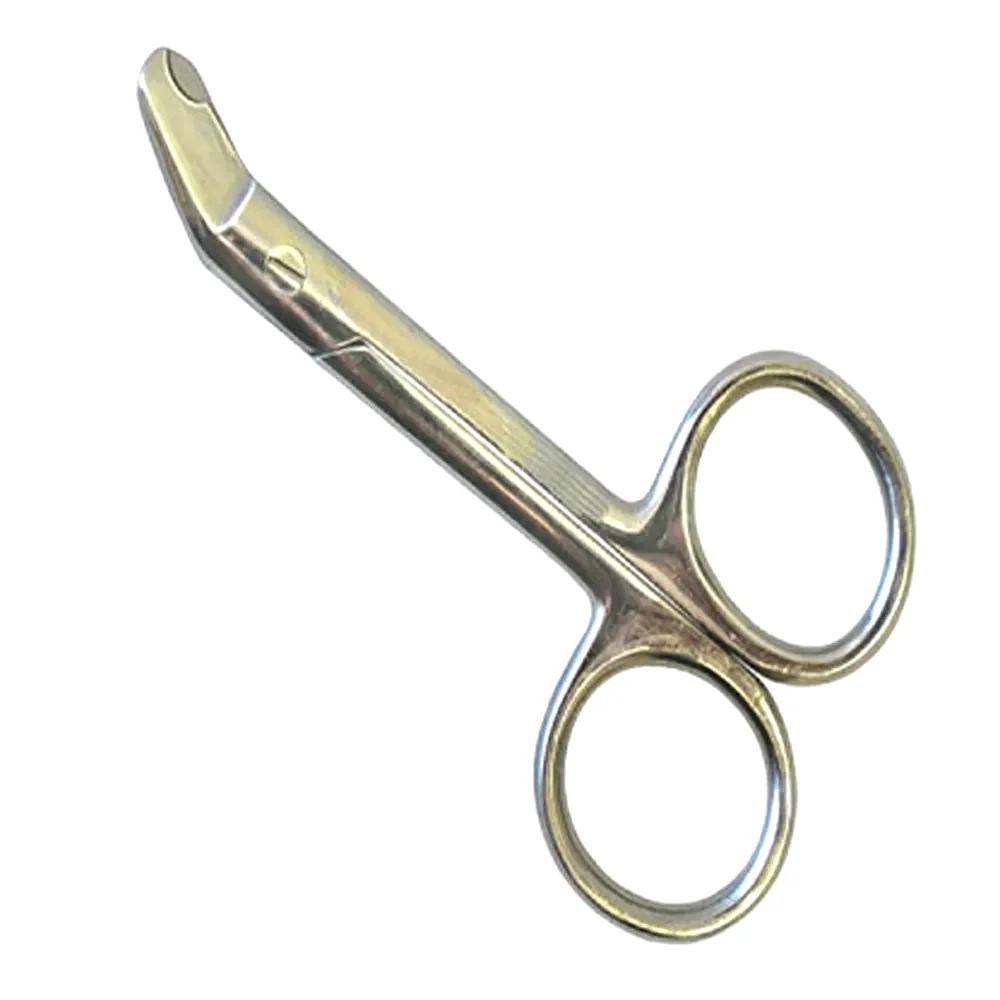
Nail Clipper Stainless Steel Nail Care Instrument
Direct Manufacturer Pricing • Tax Exclusive
The Nail Clipper is a compact cutting instrument designed for trimming and maintaining fingernails and toenails. Its practical design supports controlled nail care in personal grooming, podiatry, and other suitable care settings, depending on the model and intended use.
All import duties, tariffs & taxes are 100% pre-paid for USA, UK, Canada, EUROPE & Australia (AUS). Zero surprise customs bills at delivery.
Hospital & Volume Procurement Pricing
A Nail Clipper is a cutting instrument designed to trim fingernails and toenails to a manageable length. It is commonly used for routine personal grooming and may also be included in suitable nail care or foot care kits. Its compact design allows convenient handling and storage, making it a practical tool for regular nail maintenance.
Cutting Design and Function
Nail clippers typically use opposing cutting edges that meet when the handles are pressed together. This mechanism helps trim the nail with controlled pressure. The shape and size of the cutting edges vary between models, with some designed primarily for fingernails and others suited to thicker toenails.
The appropriate clipper should be selected according to the user's nail type and intended application. The cutting edges should be sharp, aligned, and free from damage to support clean trimming. Avoid applying excessive force, as this can affect cutting performance or cause the nail to split.
Handling and Ease of Use
The Nail Clipper is intended to provide straightforward handling during routine nail care. Depending on the model, it may feature a lever-operated mechanism, a curved cutting edge, or another configuration suited to trimming. The exact handle design, cutting profile, and overall dimensions are not specified in the product title and should be confirmed with the supplier.
For safer nail care, trim small sections at a time and avoid cutting too close to the surrounding skin. Individuals with foot-care concerns or reduced sensation should seek appropriate professional guidance before trimming their own nails.
Material and Construction
The product title does not specify the material. Nail clippers may be manufactured from stainless steel or other metals, depending on the model. Confirm the material grade, corrosion resistance, and finish with the supplier if these details are important for purchasing.
The cutting edges and pivot mechanism should be inspected regularly for corrosion, looseness, misalignment, or wear. A damaged clipper may not trim evenly and should be replaced or assessed as appropriate.
Applications in Personal and Professional Care
Nail clippers are widely used for routine fingernail and toenail trimming. Depending on the design and intended use, they may be included in personal grooming kits, travel kits, nail care supplies, and selected podiatry or foot care settings. A standard nail clipper should not automatically be considered suitable for specialized clinical procedures or for trimming unusually thick or affected nails.
For shared care environments, follow appropriate cleaning and infection-control procedures. Do not share personal nail care instruments without proper processing suitable for the instrument and its intended use.
Cleaning and Maintenance
Clean the clipper according to the manufacturer's care instructions. If the model is made from a corrosion-resistant material, routine cleaning and thorough drying can help maintain its condition. Do not assume that every nail clipper can be sterilized using clinical sterilization equipment; compatibility depends on its materials and construction.
Store the instrument in a clean, dry place and protect the cutting edges from impact or damage. Regular inspection helps maintain reliable cutting performance and extends the useful life of the instrument.
The Nail Clipper provides a practical solution for routine nail trimming. Before purchasing, confirm its size, cutting-edge design, material, and intended use to ensure it is appropriate for the required nail care application.
Key Features
Designed for routine fingernail and toenail trimming
Compact nail care instrument
Opposing cutting edges for controlled trimming
Suitable for personal grooming and appropriate care settings
Cutting-edge shape varies by model
Handle and lever design should be confirmed
Material is not specified in the product title
Inspect cutting edges and pivot before use
Clean and store according to manufacturer instructions
Not automatically suitable for specialized clinical procedures
Product Specifications
| Specification | Details |
|---|---|
| Product Name | Nail Clipper |
| Instrument Type | Nail Cutting Instrument |
| Primary Function | Fingernail and toenail trimming |
| Application | Personal Nail Care and Grooming |
| Cutting Edge Design | Not specified |
| Handle Mechanism | Not specified |
| Overall Length | Not specified |
| Material | Not specified |
| Finish | Not specified |
| Reusable Status | Confirm with supplier |
| Cleaning Instructions | Follow manufacturer guidance |
| Sterilization Compatibility | Confirm with supplier |
| Packaging | Not specified |
Frequently Asked Questions
1. What is a nail clipper used for?
A nail clipper is used to trim fingernails and toenails during routine nail care and grooming.
2. Can this nail clipper be used for both fingernails and toenails?
That depends on its size and cutting-edge design. Confirm the intended use with the supplier.
3. What material is the nail clipper made from?
The product title does not specify the material. Ask the supplier to confirm the material and grade.
4. Is this nail clipper suitable for professional foot care?
It may be suitable for certain foot-care tasks if its design matches the intended application. Specialized or clinical use should be confirmed with the manufacturer.
5. How should a nail clipper be cleaned?
Follow the manufacturer's cleaning instructions and dry the instrument thoroughly before storage.
6. Can a nail clipper be sterilized?
Sterilization compatibility depends on the material and construction. Do not use clinical sterilization methods unless the manufacturer confirms compatibility.
7. How can cutting performance be maintained?
Keep the instrument clean and dry, avoid damaging the cutting edges, and inspect the pivot mechanism regularly.
8. What should be checked before purchasing a nail clipper?
Confirm the size, cutting-edge shape, intended use, material, and cleaning requirements to ensure the model meets your needs.