
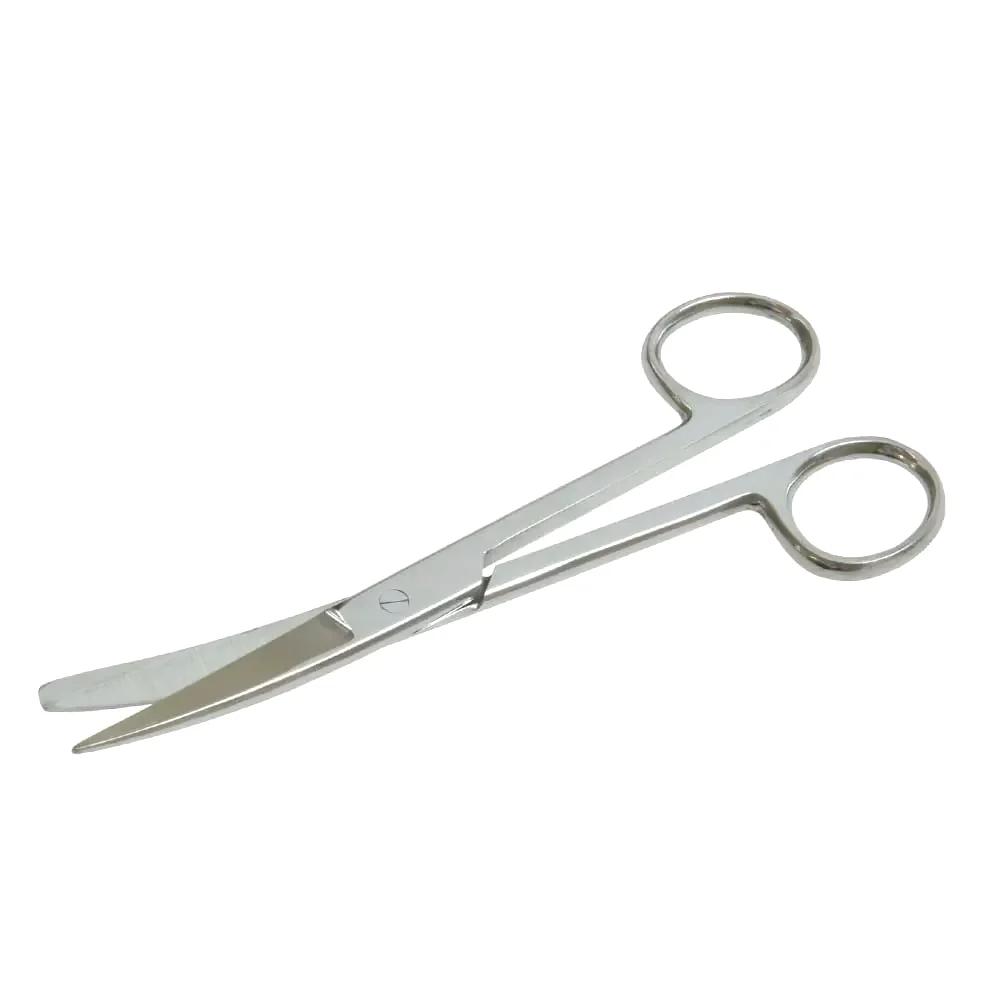
Operating Scissors Surgical Cutting Instrument
Direct Manufacturer Pricing • Tax Exclusive
Operating Scissors are general-purpose surgical instruments designed for cutting and dissecting tissue or other appropriate materials during medical procedures. Available in different lengths and blade configurations, they support controlled cutting based on the requirements of the intended application.
All import duties, tariffs & taxes are 100% pre-paid for USA, UK, Canada, EUROPE & Australia (AUS). Zero surprise customs bills at delivery.
Hospital & Volume Procurement Pricing
Operating Scissors are versatile cutting instruments used in surgical and clinical settings for a range of cutting and dissection tasks. Their design allows trained healthcare professionals to cut suitable tissue, sutures, dressings, and other materials according to the instrument's specific configuration and intended use.
The term "operating scissors" can refer to several patterns, including straight or curved designs and sharp or blunt blade combinations. Because the product title does not specify a particular pattern, the exact blade shape, tip configuration, length, and material should be confirmed before purchase.
Blade Design and Function
Operating scissors are manufactured in different blade configurations to accommodate different cutting requirements. Straight blades are generally suited to direct cutting where a straight approach is practical, while curved blades can provide a different cutting angle or access to a particular working area.
Blade tips may be sharp, blunt, or a combination of both. Sharp tips can support precise entry and cutting, while blunt tips may help reduce unintended penetration in suitable applications. The appropriate design depends on the intended procedure, the material being cut, and the user's requirements.
The quality of the cutting edges, blade alignment, hinge construction, and handle movement influences performance. Scissors should open and close smoothly, with the blades meeting correctly throughout the cutting area.
Surgical and Clinical Applications
Operating Scissors may be used for appropriate tissue cutting, dissection, suture trimming, dressing preparation, or other clinical tasks, depending on their specific design. Not every operating scissor pattern is suitable for all these applications, so users should select an instrument based on its intended function.
In surgical environments, choosing the correct blade pattern and length can help support access, visibility, and control. These instruments should be used only by trained professionals who understand the instrument's limitations and the requirements of the procedure.
Handling and Usability
The handle design supports opening and closing the blades while allowing controlled cutting movements. Proper handling helps maintain accuracy and reduces unnecessary stress on the instrument. Users should avoid twisting the blades, forcing the scissors through materials that exceed their intended capacity, or using the instrument as a gripping or prying tool.
Before use, inspect the blade edges, tips, joint, and overall alignment. Instruments with loose joints, damaged tips, corrosion, or poor cutting performance should be removed from service for evaluation.
Material and Construction
The product title does not specify the construction material or material grade. Operating scissors may be manufactured from different materials depending on the model, manufacturer, and intended application. Confirm the material and finish with the supplier rather than assuming a particular stainless steel grade.
Construction quality affects durability, cutting performance, and resistance to wear. Selecting an instrument with verified specifications helps ensure that it meets the requirements of the intended clinical or laboratory setting.
Cleaning, Sterilization, and Maintenance
Cleaning and processing requirements depend on whether the specific scissors are reusable or intended for single use. For reusable models, follow the manufacturer's validated instructions for cleaning, inspection, drying, and sterilization. Do not assume that every model is compatible with steam sterilization or other processing methods.
Regular inspection helps identify dull edges, misaligned blades, loose joints, or other defects that may affect safe operation. Proper storage also helps protect the cutting edges from damage and supports long-term instrument maintenance.
Selecting the Right Operating Scissors
When purchasing Operating Scissors, consider the overall length, blade length, straight or curved configuration, tip style, material, and intended use. Confirming these details with the supplier helps ensure that the selected instrument is appropriate for the required task. The general product name alone does not establish a specific surgical application or technical specification.
Key Features
General-purpose surgical cutting instrument
Designed for controlled cutting and dissection
Available in different blade configurations
Straight or curved patterns may be available
Sharp, blunt, or combination tips depending on the model
Suitable applications depend on the specific design
Blade alignment supports consistent cutting performance
Material and grade require supplier confirmation
Reusable status and sterilization compatibility must be verified
Requires appropriate inspection, cleaning, and maintenance
Product Specifications
| Specification | Details |
|---|---|
| Product Name | Operating Scissors |
| Instrument Type | Surgical cutting scissors |
| Blade Configuration | Not specified |
| Blade Tip | Not specified |
| Primary Function | Cutting and dissection |
| Applications | Surgical and clinical tasks, depending on design |
| Material | Not specified |
| Material Grade | Not specified |
| Overall Length | Not specified |
| Blade Length | Not specified |
| Handle Design | Not specified |
| Reusable or Single-Use | Confirm with supplier |
| Sterilization Compatibility | Follow manufacturer instructions |
| Packaging | Confirm with supplier |
Frequently Asked Questions
1. What are operating scissors used for?
Operating scissors are used for cutting and dissection tasks in surgical and clinical settings. Their specific application depends on the blade pattern, tip design, and intended use.
2. What types of operating scissors are available?
Common variations include straight and curved blades, different overall lengths, and sharp, blunt, or combination tips.
3. What is the difference between straight and curved operating scissors?
Straight scissors provide a direct cutting approach, while curved scissors can offer a different angle for access and visibility. The appropriate choice depends on the task and working area.
4. Are operating scissors suitable for cutting tissue?
Some patterns are designed for tissue cutting and dissection. Confirm the specific instrument's intended use before selecting it for a clinical procedure.
5. Can operating scissors be used to cut sutures?
Certain scissors are suitable for cutting suture material, but suitability depends on the blade design and intended function. Use an appropriate pattern for the material being cut.
6. What material are operating scissors made from?
The material depends on the manufacturer and model. Check the supplier's specifications for the construction material and grade.
7. Are operating scissors reusable?
Some models are reusable, while others may be designed for single use. Verify the product's designation and follow the manufacturer's instructions.
8. How should operating scissors be maintained?
Inspect the blades, tips, hinge, and alignment regularly. Clean, dry, and process reusable instruments according to the manufacturer's instructions, and store them to protect the cutting edges.
9. What should I consider when buying operating scissors?
Consider blade configuration, tip style, overall length, material, intended application, and processing requirements.
10. How do operating scissors differ from dissecting scissors?
The terms can overlap, and usage varies by manufacturer and catalog. The exact blade configuration and intended application are more useful for distinguishing specific models than the name alone.