
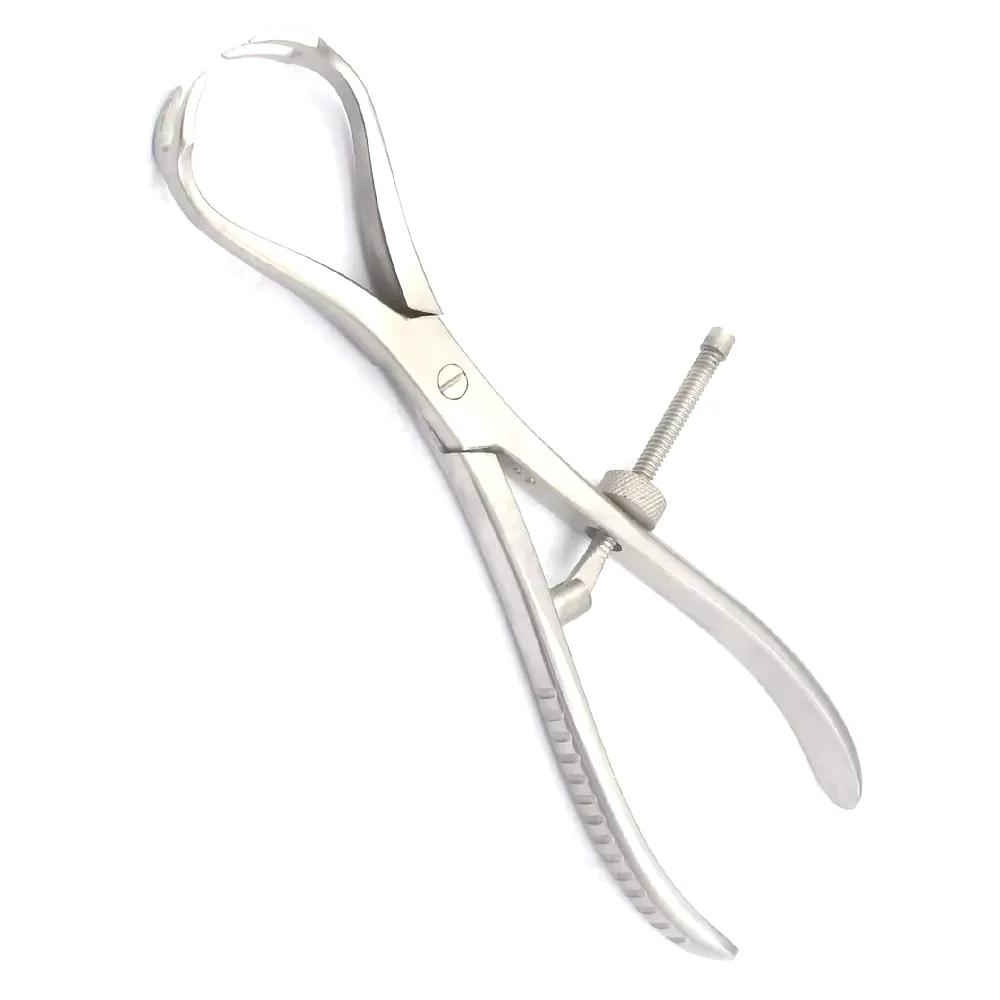
Patella Speed Lock Forceps
Direct Manufacturer Pricing • Tax Exclusive
Patella Speed Lock Forceps are specialized orthopedic instruments designed to assist with controlled handling and stabilization of the patella during appropriate surgical procedures. The speed-lock mechanism is intended to help maintain a selected position during use, supporting instrument control and workflow efficiency.
All import duties, tariffs & taxes are 100% pre-paid for USA, UK, Canada, EUROPE & Australia (AUS). Zero surprise customs bills at delivery.
Hospital & Volume Procurement Pricing
Patella Speed Lock Forceps are specialized orthopedic surgical instruments designed for use in procedures involving the patella, commonly known as the kneecap. Patellar surgery may require controlled positioning and stabilization of bone during fracture management, reduction, or other orthopedic interventions. The forceps are intended to support the handling of the patella when their design and working mechanism are suitable for the procedure being performed.
Design and Functional Characteristics
The defining feature indicated by the product name is the speed-lock mechanism. Locking forceps are designed to maintain a selected jaw position, which can help reduce the need for continuous manual pressure while the instrument is engaged. The specific locking arrangement, adjustment method, and release mechanism should be confirmed from the manufacturer's product information, as these details can vary between instrument designs.
The forceps are intended to provide controlled engagement with the target structure. Their suitability for a particular patellar procedure depends on the jaw configuration, opening range, contact surfaces, and overall dimensions. These characteristics should be evaluated by qualified surgical professionals before selecting the instrument for clinical use.
Applications in Orthopedic Surgery
Patella Speed Lock Forceps may be considered for orthopedic procedures involving patellar handling, positioning, or stabilization when the instrument's design is appropriate. The patella plays an important role in knee-joint movement and the extensor mechanism, so precise management of the bone is an important consideration during relevant surgical interventions.
The exact applications depend on the instrument's verified design and the surgeon's technique. The product name alone does not establish compatibility with a particular fracture pattern, fixation system, or surgical approach. Users should consult the manufacturer's instructions and confirm the instrument's intended use before incorporating it into a surgical set.
Handling and Instrument Control
A locking mechanism can support consistent positioning by holding the jaws at a selected setting. Correct engagement and release are important for maintaining control during use. The instrument should be inspected before each procedure to ensure that its jaws align properly, the locking mechanism functions as intended, and no visible damage or excessive wear is present.
The appropriate application of force depends on the instrument design and the clinical situation. Forceps should be used only by trained healthcare professionals and in accordance with established surgical protocols.
Material, Cleaning, and Maintenance
The material composition of this specific Patella Speed Lock Forceps model is not confirmed by the product title. Stainless steel is commonly used for reusable surgical instruments, but the exact alloy, surface finish, and corrosion-resistance properties should be verified with the manufacturer or supplier.
Cleaning, disinfection, inspection, and sterilization must follow the manufacturer's validated instructions and the instrument's designated reusable or single-use status. If the forceps are reusable, the locking mechanism and jaw surfaces require particular attention during cleaning and inspection. Damaged or malfunctioning instruments should be removed from service according to facility procedures.
Patella Speed Lock Forceps can be a useful addition to an orthopedic instrument inventory when their specifications match the intended procedure. Confirming the jaw design, dimensions, locking function, material, and reprocessing requirements helps ensure appropriate instrument selection.
Key Features
Specialized forceps for orthopedic procedures involving the patella
Speed-lock feature indicated by the product name
Designed to assist with controlled positioning and stabilization
Locking function may help maintain a selected jaw position
Intended for use by trained surgical professionals
Suitable applications depend on the verified instrument design
Jaw configuration should be confirmed before purchase
Material composition requires manufacturer verification
Cleaning and sterilization must follow applicable instructions
Dimensions and technical specifications should be confirmed before ordering
Product Specifications
| Specification | Details |
|---|---|
| Product Name | Patella Speed Lock Forceps |
| Instrument Type | Orthopedic surgical forceps |
| Primary Area | Patellar and knee-related orthopedic procedures |
| Mechanism | Speed-lock mechanism, as indicated by the product name |
| Intended Function | Handling, positioning, or stabilization when appropriate to the design |
| Material | Not specified; confirm with supplier |
| Overall Length | Not specified |
| Jaw Design | Not specified |
| Locking System | Exact mechanism not specified |
| Reusable or Single-Use | Confirm with manufacturer |
| Sterilization Compatibility | Follow manufacturer instructions |
| Packaging | Confirm with supplier |
Frequently Asked Questions
1. What are Patella Speed Lock Forceps?
Patella Speed Lock Forceps are orthopedic instruments intended to assist with handling, positioning, or stabilization of the patella, depending on their specific design.
2. What is the purpose of the speed-lock mechanism?
A locking mechanism is generally designed to maintain a selected jaw position and reduce the need for continuous manual pressure. The exact operation depends on the instrument model.
3. Are these forceps used in patellar fracture surgery?
They may be appropriate for selected procedures involving the patella if their jaw design and intended use match the surgical requirements. Confirm suitability with the manufacturer and the responsible surgical team.
4. What material are Patella Speed Lock Forceps made from?
The material is not specified in the product title. Confirm the alloy and material specifications with the supplier before purchasing.
5. Are Patella Speed Lock Forceps reusable?
Their reusable or single-use status must be confirmed with the manufacturer. Reusable instruments must be processed according to validated cleaning and sterilization instructions.
6. How do I choose the correct Patella Speed Lock Forceps?
Review the overall length, jaw configuration, opening range, locking mechanism, material, and intended applications. Compare these details with the requirements of the procedure and the manufacturer's guidance.
7. How should these forceps be cleaned and sterilized?
Follow the manufacturer's validated reprocessing instructions and your facility's protocols. Do not assume a sterilization method is suitable without confirming the instrument's material and reusable status.
8. What specifications should I confirm before ordering?
Confirm the dimensions, jaw design, locking mechanism, material, reusable or single-use designation, packaging, and manufacturer instructions before placing an order.