
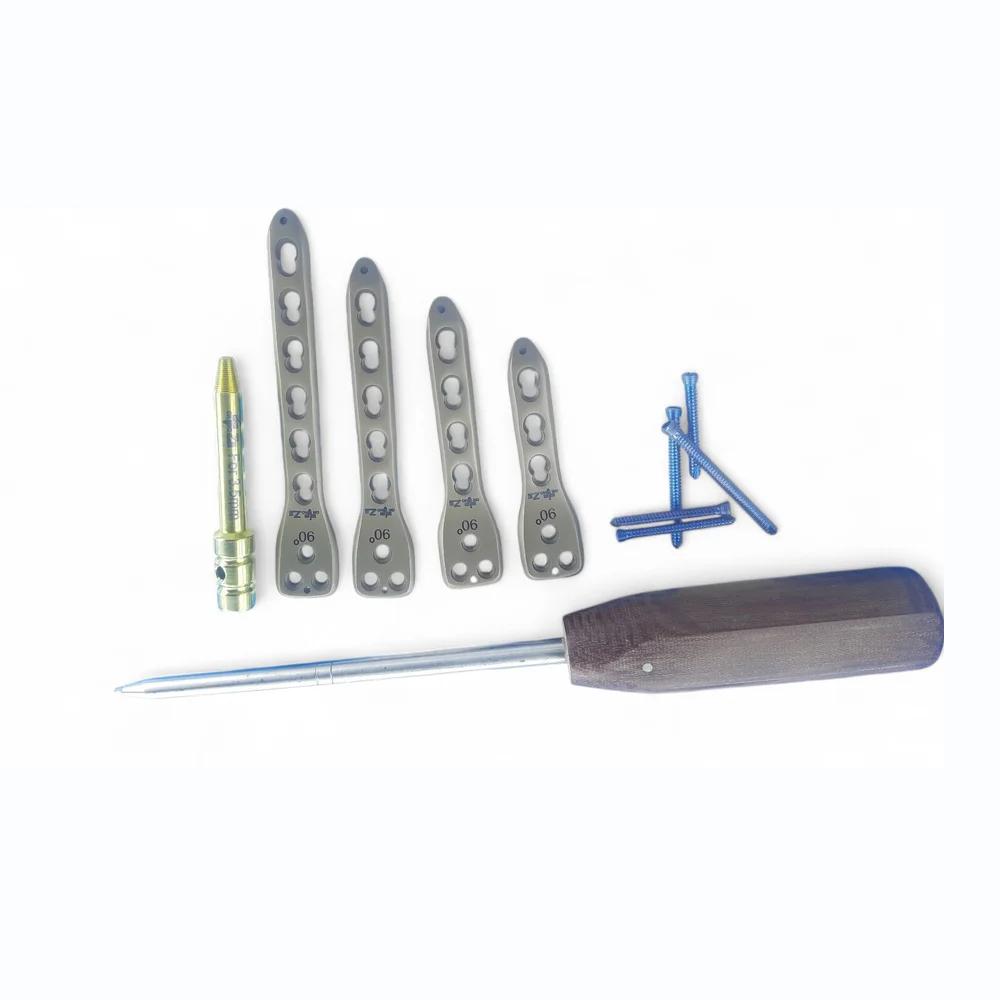
Pediatric LCP Plates 90° with 3.5mm Titanium Screws
Direct Manufacturer Pricing • Tax Exclusive
Pediatric LCP Plates 90° with 3.5mm Titanium Grade 5 Screws are designed for selected orthopedic fixation applications involving pediatric bone. This 36-piece set includes plates in 3–6 hole configurations, with a 90-degree design and locking compression plate (LCP) system.
All import duties, tariffs & taxes are 100% pre-paid for USA, UK, Canada, EUROPE & Australia (AUS). Zero surprise customs bills at delivery.
Hospital & Volume Procurement Pricing
Pediatric LCP Plates 90° with 3.5mm Screws are specialized orthopedic fixation components intended for selected surgical applications involving the developing skeleton. The locking compression plate (LCP) design uses compatible screws and plate holes to create a fixation construct according to the system's intended configuration. The 90-degree designation identifies an important geometric feature of this plate design, while the available 3–6 hole options provide different plate lengths for consideration during surgical planning.
This set contains 36 pieces, as specified in the product title, and is manufactured from Titanium Grade 5 according to the supplied product information. The exact distribution of plates and screws within the set should be confirmed with the supplier before ordering.
Locking Compression Plate Design
Locking compression plates are designed to accept compatible locking screws, allowing screw heads to engage with corresponding plate holes when the system is engineered for that purpose. The resulting construct differs from conventional plate fixation and must be assembled according to the implant manufacturer's instructions.
The 90-degree plate configuration is a defining feature of this product. Its exact anatomical contour, intended bone location, and available left- or right-sided options are not specified in the title. These details should be verified to ensure that the selected implant matches the surgical requirements.
Pediatric Orthopedic Applications
Pediatric orthopedic implants are selected with consideration for the patient's anatomy, bone dimensions, skeletal maturity, and the type of fracture or reconstructive procedure. Plate length, hole count, screw diameter, and implant geometry are important factors when evaluating a fixation system.
These plates may be considered for appropriate pediatric fixation procedures when their verified design and indications match the treatment plan. They should not be assumed suitable for every pediatric fracture or anatomical location. Implant selection and placement must be determined by a qualified orthopedic surgeon using the manufacturer's documentation and established clinical judgment.
3.5mm Screws and Hole Configurations
The set specifies 3.5mm screws and plates available in 3-, 4-, 5-, and 6-hole configurations within the stated range. Different hole counts offer options for constructing fixation assemblies with different overall plate lengths and screw-placement possibilities. The precise number of screws, plate variants, and quantities supplied for each configuration must be confirmed against the manufacturer's packing list.
Screw length, thread design, locking compatibility, and intended placement are essential technical details. The product title does not specify these characteristics, so they should be checked before the components are used together.
Titanium Grade 5 Construction
Titanium Grade 5, commonly designated Ti-6Al-4V, is a titanium alloy used in various engineered medical applications. The product is identified as Titanium Grade 5, but the supplier should provide documentation confirming the alloy specification, implant quality, applicable standards, and intended clinical use.
Titanium alloy construction can offer a useful combination of strength and relatively low density. However, material designation alone does not establish implant certification, biocompatibility, or suitability for a specific patient or procedure.
Handling, Compatibility, and Storage
Before use, qualified personnel should verify the implant dimensions, plate contour, screw compatibility, packaging integrity, and product traceability. Plates and screws should be used only with compatible components and according to the manufacturer's surgical technique.
Storage and handling must follow the manufacturer's instructions. Sterility status, single-use designation, and any restrictions on reprocessing should be confirmed before clinical use. Implants supplied as sterile should not be used if their packaging is damaged or their sterility assurance is uncertain.
Pediatric LCP Plates 90° with 3.5mm Titanium Grade 5 Screws provide a defined combination of plate configurations and screw diameter for selected orthopedic fixation applications. Reviewing the complete set inventory, anatomical design, and technical documentation helps ensure appropriate selection for the intended procedure.
Key Features
Pediatric locking compression plate system
90-degree plate design, as specified in the product title
Plate configurations ranging from 3 to 6 holes
Includes 3.5mm screws
Titanium Grade 5 material designation
36-piece set according to the supplied product title
Intended for selected pediatric orthopedic fixation applications
Different hole counts offer plate-length options
Screw and plate compatibility must be verified
Exact component quantities should be confirmed with the supplier
Implant selection should follow manufacturer guidance and surgical planning
Product Specifications
| Specification | Details |
|---|---|
| Product Name | Pediatric LCP Plates 90° with Screws |
| Product Category | Pediatric Orthopedic Implants |
| Implant Type | Locking Compression Plates |
| Plate Angle | 90° |
| Plate Hole Configurations | 3, 4, 5, and 6 holes |
| Screw Diameter | 3.5mm |
| Material | Titanium Grade 5, as specified |
| Alloy Designation | Commonly Ti-6Al-4V; confirm documentation |
| Total Set Quantity | 36 pieces |
| Screw Lengths | Not specified |
| Plate Dimensions | Not specified |
| Anatomical Location | Confirm with supplier |
| Left/Right Variants | Not specified |
| Sterility Status | Confirm with supplier |
| Single-Use Status | Confirm with manufacturer |
| Packaging and Traceability | Confirm with supplier |
Frequently Asked Questions
1. What are Pediatric LCP Plates 90° used for?
They are orthopedic fixation implants intended for selected pediatric procedures when the plate design, dimensions, and approved indications match the treatment requirements.
2. What does LCP mean in orthopedic implants?
LCP stands for locking compression plate. It describes a plate system designed to accommodate compatible screws, including locking screws where supported by the specific system.
3. What does the 90-degree designation mean?
It identifies the stated angular design of the plate. The exact geometry and anatomical application should be confirmed using the manufacturer's product documentation.
4. What hole sizes are available in this set?
The product title specifies plate configurations with 3, 4, 5, and 6 holes. The exact dimensions and distribution of each plate type should be confirmed with the supplier.
5. What is the screw diameter?
The set is specified with 3.5mm screws. Screw lengths, thread details, and compatibility should be verified before use.
6. What material are the plates and screws made from?
The product title identifies Titanium Grade 5. Request material documentation from the supplier to confirm the alloy and its suitability for the intended implant application.
7. How many pieces are included in the set?
The stated total is 36 pieces. Confirm the exact number of plates, screws, and other included components using the supplier's packing list.
8. Are these plates suitable for all pediatric fractures?
No. Suitability depends on the patient's anatomy, fracture pattern, implant dimensions, approved indications, and the treating orthopedic surgeon's assessment.
9. Are the implants supplied sterile?
The title does not specify sterility status. Confirm whether the implants are supplied sterile or require processing according to the manufacturer's validated instructions.
10. What should be checked before purchasing?
Confirm the anatomical plate design, hole configurations, plate dimensions, screw lengths, locking compatibility, material documentation, total component inventory, sterility status, and applicable regulatory documentation.