
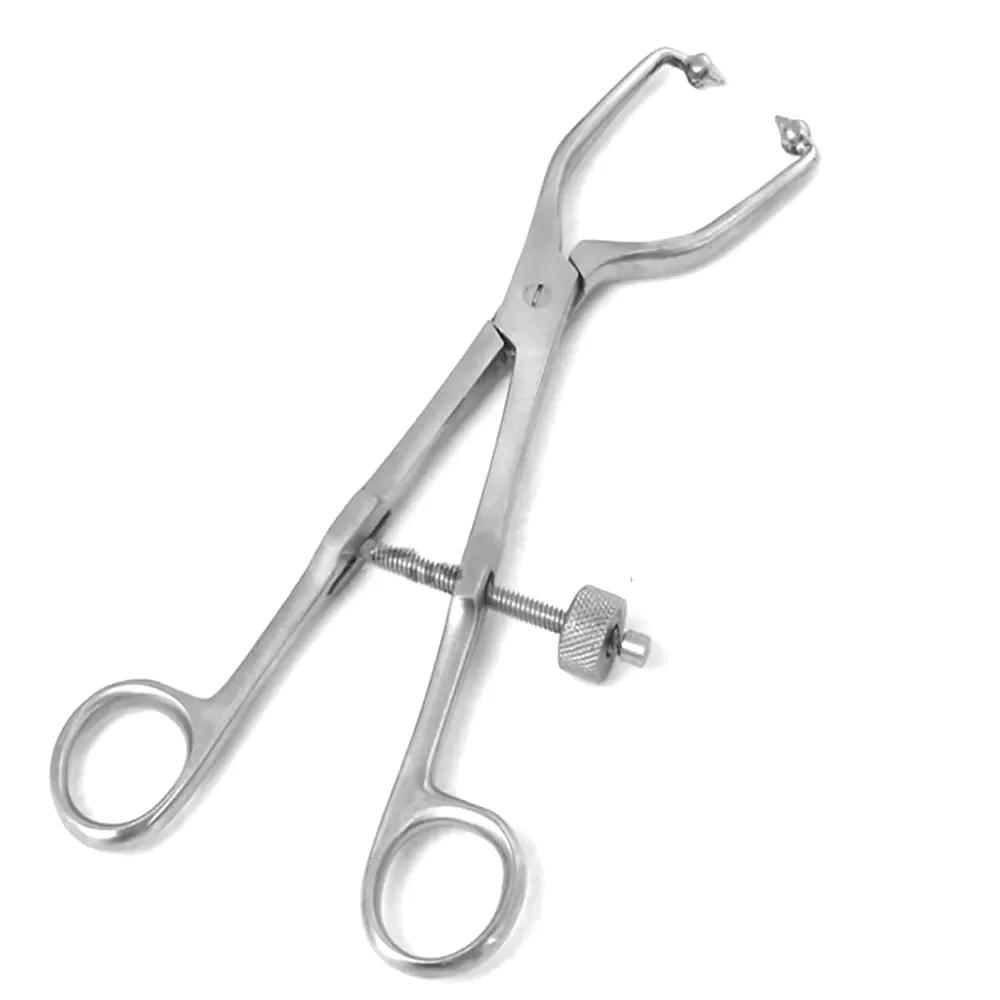
Pelvic Reduction Forceps
Direct Manufacturer Pricing • Tax Exclusive
Pelvic Reduction Forceps are orthopedic surgical instruments designed to assist surgeons in grasping and manipulating bone fragments during pelvic fracture reduction. Their specialized gripping design supports controlled handling and alignment during orthopedic and trauma procedures. Jaw configuration, dimensions, and material should be confirmed for the specific model.
All import duties, tariffs & taxes are 100% pre-paid for USA, UK, Canada, EUROPE & Australia (AUS). Zero surprise customs bills at delivery.
Hospital & Volume Procurement Pricing
Pelvic Reduction Forceps are specialized orthopedic instruments used to assist with the reduction and alignment of bone fragments during pelvic fracture management. Pelvic fractures can involve complex bone structures and may require precise manipulation to restore appropriate anatomical alignment. These forceps provide a means of grasping and controlling selected bone fragments during surgical procedures, helping the surgical team perform reduction maneuvers according to the patient's anatomy and the operative plan.
Design and Functional Characteristics
Pelvic reduction forceps are designed to provide a secure grip on bone during fracture reduction. Depending on the specific model, the instrument may feature curved or angled jaws, pointed gripping tips, or another configuration intended to engage bone surfaces. The exact jaw design influences how the forceps access the operative site and engage the targeted bone fragments.
The handles are designed to support controlled application of force during manipulation. Depending on the model, a ratchet or locking mechanism may help maintain the selected grip while the surgeon assesses alignment or performs the next step of the procedure. Not all pelvic reduction forceps use the same locking design, so the mechanism should be verified before ordering.
Surgical Applications
Pelvic Reduction Forceps are primarily associated with orthopedic trauma surgery and pelvic fracture reduction. They may be used by trained surgical professionals when temporary grasping and manipulation of bone fragments are required during fixation procedures. Instrument selection depends on the fracture pattern, surgical approach, available access, and the reduction technique chosen by the surgeon.
These forceps may form part of a broader orthopedic instrument inventory alongside suitable reduction clamps, bone-holding instruments, and fracture fixation tools. The appropriate instrument should be selected based on the intended procedure and compatibility with the surgical team's established technique.
Material and Construction
The material used for this instrument depends on the manufacturer and model. Surgical-grade stainless steel is commonly used for reusable orthopedic instruments because of its strength, corrosion resistance, and suitability for repeated processing when manufactured and maintained according to applicable instructions. However, the exact steel grade, surface finish, and manufacturing specifications for this particular product should be confirmed with the supplier.
Jaw alignment, handle movement, joint performance, and any locking components should be inspected before use. Proper construction and maintenance help support consistent instrument function throughout its intended service life.
Handling, Cleaning, and Maintenance
Before use, qualified personnel should inspect the forceps for visible damage, corrosion, loose joints, jaw misalignment, or impaired locking action where applicable. The instrument should be handled by trained professionals and used only for its intended purpose.
Cleaning and sterilization requirements depend on whether the specific model is reusable or intended for single use, as well as the manufacturer's validated instructions. Reusable instruments should be cleaned, inspected, and sterilized according to the supplied instructions and the healthcare facility's approved protocols. Do not assume that a product is reusable or compatible with a particular sterilization method unless the manufacturer confirms it.
Pelvic Reduction Forceps are an important instrument option for orthopedic teams managing pelvic fractures. Confirming the jaw style, overall length, material specification, and locking configuration helps ensure that the selected model meets the requirements of the intended surgical application.
Key Features
Designed for orthopedic pelvic fracture reduction procedures
Assists with grasping and manipulating bone fragments
Supports controlled handling during reduction maneuvers
Specialized jaw design for engagement with bone
Suitable for consideration in orthopedic trauma instrument sets
Handle configuration designed for instrument control
Locking mechanism availability depends on the model
Material and surface finish should be verified with the supplier
Requires inspection before each use
Cleaning and sterilization must follow manufacturer instructions
Product Specifications
| Specification | Details |
|---|---|
| Product Name | Pelvic Reduction Forceps |
| Instrument Category | Orthopedic Surgical Instrument |
| Primary Application | Pelvic fracture reduction and bone fragment manipulation |
| Jaw Design | Model-dependent; confirm before ordering |
| Locking Mechanism | Not specified |
| Overall Length | Not specified |
| Material | Not specified; confirm with supplier |
| Finish | Not specified |
| Reusability | Confirm manufacturer designation |
| Cleaning and Sterilization | Follow manufacturer instructions |
| Package Contents | One instrument unless otherwise specified by the supplier |
Frequently Asked Questions
1. What are Pelvic Reduction Forceps used for?
Pelvic Reduction Forceps are orthopedic instruments used to grasp and manipulate bone fragments during pelvic fracture reduction procedures.
2. Are Pelvic Reduction Forceps used in orthopedic trauma surgery?
Yes. They are associated with orthopedic trauma procedures in which pelvic bone fragments need to be positioned or aligned by trained surgical professionals.
3. How do Pelvic Reduction Forceps assist with fracture reduction?
Their gripping jaws allow the surgeon to engage selected bone fragments and apply controlled manipulation as part of the planned reduction technique.
4. Are all Pelvic Reduction Forceps designed the same way?
No. Jaw shape, tip configuration, overall length, handle design, and locking mechanisms can vary by model and manufacturer.
5. What material are Pelvic Reduction Forceps made from?
The material depends on the specific product. Surgical-grade stainless steel is common for reusable orthopedic instruments, but the actual material and grade should be confirmed with the supplier.
6. Do Pelvic Reduction Forceps have a locking mechanism?
Some models may include a locking or ratchet mechanism, while others may differ in design. Check the product specifications for the exact configuration.
7. Can Pelvic Reduction Forceps be sterilized and reused?
This depends on the manufacturer's designation and validated instructions. Reusable models must be cleaned, inspected, and sterilized according to the manufacturer's guidance.
8. What should be checked before purchasing Pelvic Reduction Forceps?
Confirm the jaw configuration, instrument length, material, locking design, intended application, and reusable or single-use status.
9. Can Pelvic Reduction Forceps be included in an orthopedic instrument set?
They may be included in an orthopedic trauma or pelvic fracture instrument inventory, depending on the procedures performed and the surgical team's requirements.