
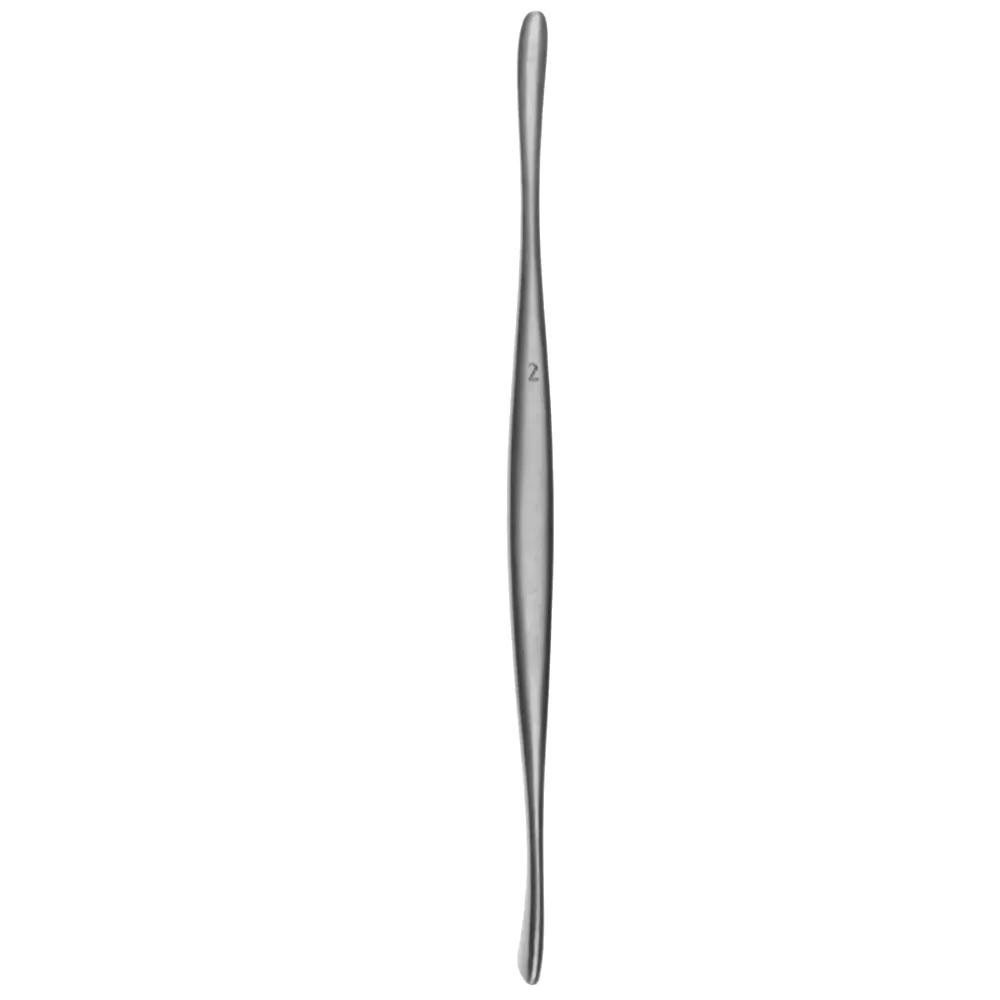
Penfield Diss #2
Direct Manufacturer Pricing • Tax Exclusive
The Penfield Dissector #2 is a neurosurgical instrument used for delicate tissue dissection and manipulation during selected surgical procedures. Its specialized working end supports controlled handling in confined operative areas. Confirm the exact tip configuration, overall length, and material specifications for the selected model.
All import duties, tariffs & taxes are 100% pre-paid for USA, UK, Canada, EUROPE & Australia (AUS). Zero surprise customs bills at delivery.
Hospital & Volume Procurement Pricing
The Penfield Dissector #2 is a specialized surgical instrument associated with neurosurgery and other procedures requiring careful tissue dissection. Penfield dissectors are designed to help surgeons separate, mobilize, and manipulate tissue using a controlled manual technique. The number designation identifies a particular pattern within the Penfield instrument family, although the precise working-end shape and dimensions should be verified against the manufacturer's specifications.
Design and Working Characteristics
Penfield dissectors are generally characterized by a slim shaft and a shaped working end designed for controlled manipulation. The design of the No. 2 pattern depends on the specific manufacturer and instrument series. Its working end may be intended for gentle tissue separation or manipulation, but the exact shape should be confirmed before purchasing to ensure it matches the intended surgical technique.
The shaft provides access to the operative field while allowing the user to guide the tip with precision. The handle and shaft configuration are intended to support controlled movement and tactile feedback during delicate procedures. These characteristics are particularly important when working around sensitive anatomical structures.
Surgical Applications
Penfield Dissector #2 may be selected for neurosurgical procedures that require careful tissue handling and dissection. Penfield-style instruments are used by trained surgical professionals to assist with separating tissue planes and manipulating structures under direct surgical visualization. Specific applications depend on the instrument's verified tip design and the requirements of the procedure.
The instrument may be included in neurosurgical instrument trays alongside other dissectors, elevators, probes, and tissue-handling instruments. Choosing the correct pattern helps the surgical team maintain a consistent instrument setup for the planned procedure.
Material and Construction
The material is manufacturer-dependent. Reusable surgical dissectors are commonly produced from surgical-grade stainless steel, but the precise alloy, finish, and manufacturing specifications of this Penfield Dissector #2 should be confirmed with the supplier. Do not assume a particular steel grade or coating without product documentation.
A well-maintained instrument should have a smooth working surface, an intact shaft, and a tip free from visible deformation or damage. Inspection helps identify wear that could affect handling or compromise the intended function.
Handling and Maintenance
Before use, trained personnel should inspect the instrument for damage, corrosion, bending, rough surfaces, or changes to the working-end profile. The instrument should be handled carefully to preserve the shape of its tip and should only be used for its intended purpose.
Cleaning and sterilization requirements depend on the manufacturer's instructions and whether the specific instrument is designated for reusable or single-use use. Reusable models should be processed using the manufacturer's validated cleaning and sterilization procedures and the healthcare facility's approved protocols. The instrument should be dried, inspected, and stored appropriately after processing.
The Penfield Dissector #2 is a useful option for surgical teams assembling or maintaining a neurosurgical instrument inventory. Confirming the pattern, tip design, length, material, and reuse designation before ordering helps ensure that the instrument matches clinical and departmental requirements.
Key Features
Penfield pattern No. 2 neurosurgical instrument
Designed for controlled tissue dissection and manipulation
Suitable for consideration in neurosurgical instrument trays
Slim instrument profile for access to selected operative areas
Working-end configuration specific to the manufacturer
Supports controlled manual handling by trained professionals
Material specifications should be confirmed before purchase
Tip should be inspected for wear or deformation before use
Cleaning and sterilization must follow manufacturer instructions
Overall dimensions and exact tip design are model-dependent
Product Specifications
| Specification | Details |
|---|---|
| Product Name | Penfield Dissector #2 |
| Instrument Type | Surgical Dissector |
| Category | Neurosurgical Instruments |
| Pattern | No. 2 |
| Primary Function | Tissue dissection and manipulation |
| Working-End Design | Confirm with manufacturer |
| Overall Length | Not specified |
| Material | Not specified; confirm with supplier |
| Surface Finish | Not specified |
| Reusability | Confirm manufacturer designation |
| Cleaning and Sterilization | Follow manufacturer instructions |
| Package Contents | One instrument unless otherwise specified by the supplier |
Frequently Asked Questions
1. What is a Penfield Dissector #2 used for?
It is a surgical instrument used for controlled tissue dissection and manipulation in procedures where the verified instrument design is appropriate.
2. Is Penfield Dissector #2 a neurosurgical instrument?
Yes. Penfield-pattern dissectors are commonly associated with neurosurgical instrument sets and delicate tissue-handling tasks.
3. What is the difference between Penfield Dissector patterns?
Different Penfield numbers identify different instrument patterns. Working-end shapes and dimensions vary, so the manufacturer's pattern illustrations or specifications should be checked when selecting a model.
4. What material is Penfield Dissector #2 made from?
The material depends on the manufacturer. Surgical-grade stainless steel is commonly used for reusable surgical instruments, but the exact alloy should be confirmed.
5. Is Penfield Dissector #2 suitable for delicate tissue handling?
It may be suitable for selected delicate tissue-handling tasks when its specific design matches the procedure and it is used by a trained professional.
6. How long is a Penfield Dissector #2?
The overall length is not specified in the product title. Confirm the exact measurement with the supplier before ordering.
7. Can Penfield Dissector #2 be sterilized and reused?
Only if the specific model is designated as reusable. Follow the manufacturer's validated cleaning, inspection, and sterilization instructions.
8. How should Penfield Dissector #2 be maintained?
Inspect it for damage, corrosion, bending, and tip deformation. Clean and process it according to the manufacturer's instructions and store it appropriately.
9. What should buyers confirm before ordering?
Verify the No. 2 pattern, working-end shape, overall length, material, reuse designation, and any applicable manufacturer specifications.