
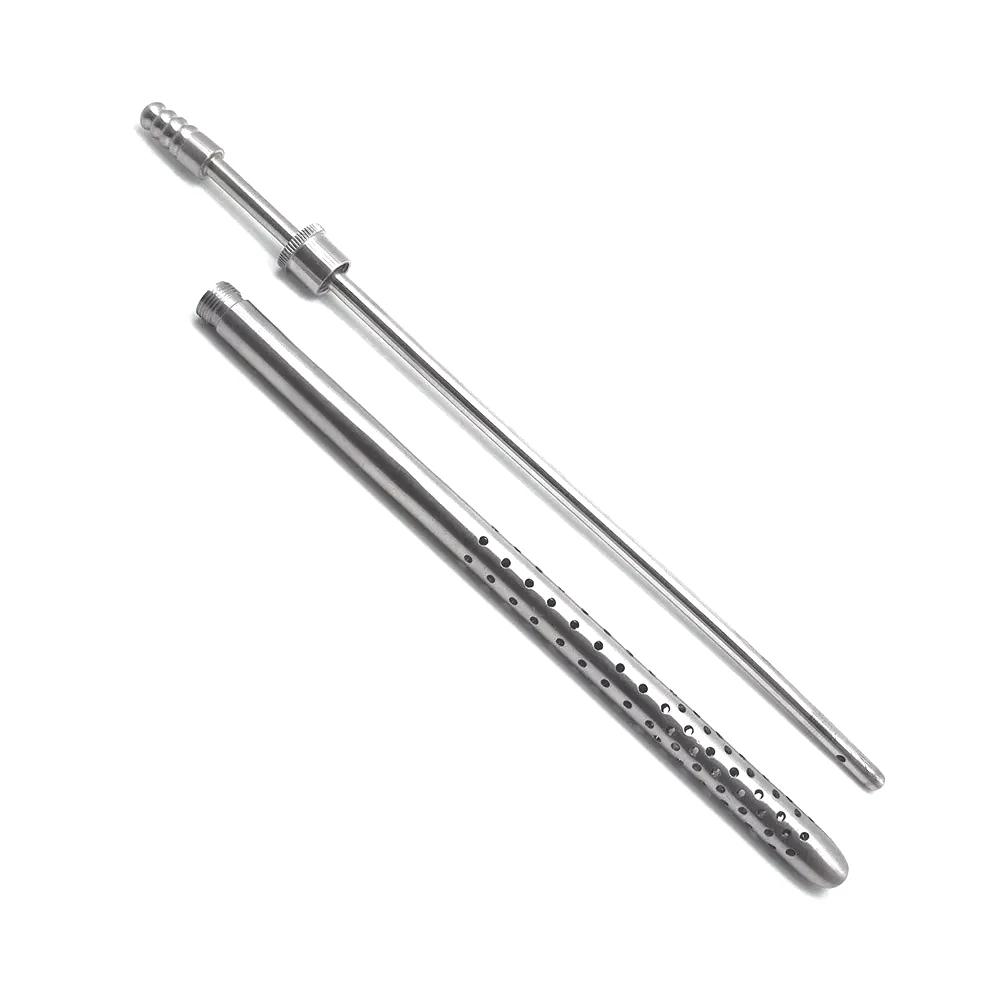
Poole Suction Tube
Direct Manufacturer Pricing • Tax Exclusive
The Poole Suction Tube is a surgical suction instrument designed to remove blood, irrigation fluids, and other liquids from the operative field during appropriate surgical procedures. Its specialized suction design supports fluid evacuation while helping maintain visibility in the surgical area.
All import duties, tariffs & taxes are 100% pre-paid for USA, UK, Canada, EUROPE & Australia (AUS). Zero surprise customs bills at delivery.
Hospital & Volume Procurement Pricing
The Poole Suction Tube is a surgical instrument commonly used for fluid evacuation during general surgical procedures, particularly when larger volumes of blood or irrigation fluid need to be removed. It connects to a compatible suction system to help clear fluids from the operative field and support visibility during surgery.
The instrument is frequently associated with abdominal surgery, where fluid accumulation may interfere with the surgeon's view of the working area. Its suitability depends on the procedure, the required suction performance, and the specific design of the instrument.
Suction Tip Design
A characteristic feature of a conventional Poole Suction Tube is its outer perforated sleeve surrounding an inner suction tube. The outer sleeve helps distribute suction across multiple openings, reducing the likelihood of a single opening becoming completely obstructed by adjacent soft tissue. The inner tube provides the pathway for fluid removal.
Exact tip construction, hole arrangement, dimensions, and sleeve configuration can vary by model. These details should be checked against the supplier's product specifications before purchase.
Fluid Evacuation During Surgical Procedures
Poole Suction Tubes are commonly used to evacuate blood and irrigation fluids from suitable operative areas. By helping remove accumulated fluid, the instrument can support a clearer view of the surgical field and assist the surgical team during procedures requiring fluid management.
The instrument must be used with a compatible suction source and appropriate connecting tubing. Suction pressure should be managed according to the clinical requirements of the procedure and the manufacturer's instructions. It should not be assumed that every model is suitable for every surgical application.
Construction and Handling
The product title does not specify the instrument's material, overall length, diameter, or connection type. These characteristics can influence compatibility, handling, and maintenance. Confirm the exact specifications with the supplier, especially when matching the suction tube to existing surgical equipment.
During use, the suction openings and connecting pathway should remain clear enough to permit the intended fluid flow. The instrument should be handled carefully to avoid unnecessary contact pressure against tissue. Inspect the tip, sleeve, shaft, and connector for visible damage, deformation, or blockage before use.
Cleaning, Sterilization, and Maintenance
Reusable Poole Suction Tubes require appropriate cleaning and reprocessing according to the manufacturer's validated instructions and the healthcare facility's infection-control procedures. If the design includes a removable outer sleeve, verify the correct method for disassembly, cleaning, and reassembly. Internal channels and perforations require particular attention because retained debris may interfere with performance or compromise effective cleaning.
Do not assume that the instrument is supplied sterile or is compatible with every sterilization method. Confirm its reusable status, material, and sterilization requirements before clinical use. Instruments that are damaged, obstructed, or difficult to clean should be assessed according to facility procedures.
The Poole Suction Tube is a practical fluid-evacuation instrument for appropriate surgical settings. Verifying its dimensions, tip configuration, connector compatibility, and reprocessing requirements helps ensure it meets the needs of the intended application.
Key Features
Designed for surgical fluid evacuation
Commonly used in general surgery
Helps remove blood and irrigation fluids from the operative field
Conventional design may include an outer perforated sleeve
Inner suction tube provides a fluid-removal pathway
Supports visibility by clearing accumulated fluids
Requires a compatible suction source and tubing
Material and dimensions should be confirmed with the supplier
Tip openings and internal channels require inspection
Cleaning and sterilization must follow manufacturer instructions
Product Specifications
| Specification | Details |
|---|---|
| Product Name | Poole Suction Tube |
| Instrument Type | Surgical Suction Instrument |
| Primary Function | Removal of blood and irrigation fluids |
| Common Application | General Surgery |
| Tip Design | Conventional models may feature a perforated outer sleeve |
| Overall Length | Not specified |
| Tube Diameter | Not specified |
| Connector Type | Not specified |
| Material | Not specified |
| Suction Compatibility | Confirm with supplier |
| Outer Sleeve | Confirm for the specific model |
| Reusable Status | Confirm with manufacturer |
| Sterilization Compatibility | Follow manufacturer instructions |
| Packaging | Not specified |
Frequently Asked Questions
1. What is a Poole Suction Tube used for?
A Poole Suction Tube is used to remove blood, irrigation fluids, and other liquids from the operative field during appropriate surgical procedures.
2. What is distinctive about the Poole Suction Tube design?
Conventional Poole Suction Tubes feature an outer sleeve with multiple perforations surrounding an inner suction tube. This arrangement helps distribute suction across several openings.
3. In which surgical specialty is a Poole Suction Tube commonly used?
It is commonly associated with general surgery, including procedures where fluid accumulation needs to be evacuated from the operative field.
4. Does a Poole Suction Tube require a suction machine?
It generally connects to a compatible suction source through suitable tubing. Confirm the connector type and equipment compatibility for the specific model.
5. Is the outer sleeve removable?
Some designs feature a removable outer sleeve, but the configuration depends on the model. Check the manufacturer's specifications and disassembly instructions.
6. What material is a Poole Suction Tube made from?
The material is not specified in the product title. Confirm the construction material and surface finish with the supplier.
7. Can a Poole Suction Tube be reused?
Reusable status depends on the specific product. Follow the manufacturer's instructions for cleaning, inspection, sterilization, and reuse.
8. How should a Poole Suction Tube be cleaned?
Clean it according to the manufacturer's validated instructions, paying particular attention to internal channels, perforations, and any removable components.
9. What should be inspected before use?
Inspect the tip, perforations, shaft, connector, and internal pathway for blockage, deformation, corrosion, or other damage that could affect function.
10. What should be confirmed before purchasing?
Verify the overall length, tube diameter, tip configuration, connector type, material, suction-system compatibility, and reprocessing requirements.