
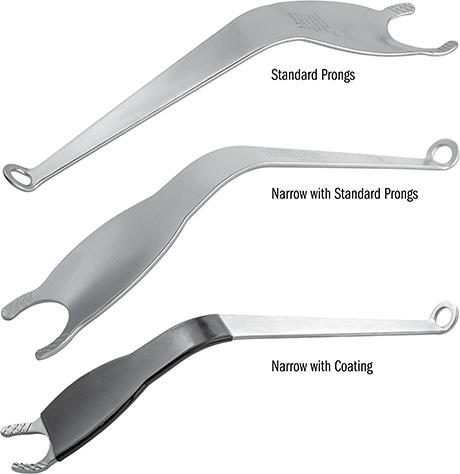
Proximal Femoral Elevators
Direct Manufacturer Pricing • Tax Exclusive
All import duties, tariffs & taxes are 100% pre-paid for USA, UK, Canada, EUROPE & Australia (AUS). Zero surprise customs bills at delivery.
Hospital & Volume Procurement Pricing
Proximal Femoral Elevators are specialized orthopedic surgical instruments designed to assist surgeons with controlled elevation, positioning, and exposure of the proximal femur during orthopedic procedures. Their dedicated working profiles provide a practical means of engaging the femur and applying controlled elevation when improved access to the surgical field is required.
The proximal femur is involved in numerous orthopedic procedures, including total hip arthroplasty, fracture fixation, revision hip surgery, and reconstructive procedures. During these operations, controlled positioning of the femur can be important for visualization and access to the femoral neck, greater trochanter, and femoral canal. Proximal Femoral Elevators are designed to support these requirements by providing controlled contact with the appropriate bony structure.
Depending on the specific configuration, these elevators may feature curved, angled, broad, narrow, toothed, or blunt working ends. Different profiles allow surgeons to select an instrument according to the anatomy, surgical approach, required exposure, and desired contact area. The appropriate configuration can help provide stable engagement while maintaining control during femoral manipulation.
During total hip arthroplasty, a proximal femoral elevator may assist with bringing the proximal femur into an accessible position for preparation of the femoral canal. It can be used alongside retractors, broaches, rasps, osteotomes, femoral preparation instruments, and other hip surgery tools. The instrument may also support exposure during revision procedures or trauma surgery where controlled manipulation of the proximal femur is required.
The working end is designed to contact the bone while the shaft and handle provide the surgeon with manual control. Depending on the instrument design, the working surface may distribute contact over a broader area or provide more focused engagement. Proper positioning and controlled application of force are essential to support the selected surgical technique and protect surrounding anatomical structures.
Proximal Femoral Elevators are typically manufactured from surgical-grade stainless steel for professional clinical use. This material provides the mechanical strength and durability needed for controlled orthopedic manipulation while offering corrosion resistance when the instrument is appropriately cleaned, dried, sterilized, and maintained. A smooth surface also facilitates routine cleaning and inspection.
These elevators can be incorporated into orthopedic instrument sets used in hospitals, ambulatory surgical centers, trauma facilities, and specialized hip surgery environments. Their applications may include total hip replacement, proximal femoral exposure, fracture management, revision arthroplasty, and other procedures where controlled femoral elevation is required.
As reusable surgical instruments, Proximal Femoral Elevators require appropriate cleaning and processing after every procedure. The working end should be inspected carefully for deformation, damage, corrosion, or wear. The shaft, handle, and other surfaces should also be examined before sterilization to ensure the instrument remains suitable for clinical use.
Sterilization should be performed using a validated method compatible with the instrument and in accordance with the manufacturer's instructions and healthcare-facility protocols. Proper cleaning, sterilization, handling, and storage help preserve the working profile, structural integrity, and long-term durability of the instrument.
Key Features
- Designed for proximal femoral elevation and exposure
- Supports controlled femoral positioning during surgery
- Suitable for hip arthroplasty and orthopedic procedures
- Useful for proximal femoral preparation
- Supports access to the femoral neck and proximal femur
- Available in different working profiles for surgical requirements
- Provides controlled manual manipulation
- Suitable for trauma and reconstructive orthopedic procedures
- Durable surgical-grade stainless steel construction
- Corrosion-resistant surface
- Suitable for professional orthopedic instrument sets
- Reusable when properly cleaned and sterilized
Product Specifications
| Specification | Details |
|---|---|
| Product Name | Proximal Femoral Elevators |
| Instrument Type | Femoral Elevator |
| Primary Function | Femoral Elevation & Exposure |
| Anatomical Area | Proximal Femur |
| Surgical Specialty | Orthopedic Surgery |
| Primary Applications | Hip Surgery, Arthroplasty & Trauma |
| Working Profile | Varies by Model |
| Material | Surgical-Grade Stainless Steel |
| Reusable | Yes, when supplied as reusable |
| Sterilization | According to validated sterilization protocols |
| Intended Use | Professional Surgical Procedures |
FAQs
What are Proximal Femoral Elevators used for?
They are used to assist with controlled elevation, positioning, and exposure of the proximal femur during orthopedic and hip procedures.
Can Proximal Femoral Elevators be used during total hip arthroplasty?
Yes. They can assist with proximal femoral exposure and positioning during appropriate total hip arthroplasty procedures.
What is the purpose of a proximal femoral elevator?
The instrument helps provide controlled access to the proximal femur by elevating or positioning the femur during appropriate surgical procedures.
Are Proximal Femoral Elevators used in fracture surgery?
They may be incorporated into appropriate orthopedic and trauma procedures where controlled manipulation or exposure of the proximal femur is required.
What types of working ends are available?
Depending on the model, proximal femoral elevators may have different blade widths, curves, angles, or toothed and blunt working profiles.
What are Proximal Femoral Elevators made from?
Reusable orthopedic elevators are commonly manufactured from surgical-grade stainless steel for strength, durability, and corrosion resistance.
Are Proximal Femoral Elevators reusable?
When supplied as reusable instruments, they can be cleaned, inspected, sterilized, and reused according to validated processing instructions.
How should Proximal Femoral Elevators be maintained?
They should be cleaned promptly after use, inspected for damage or deformation, sterilized using a validated method, and stored according to applicable instrument-processing protocols.