
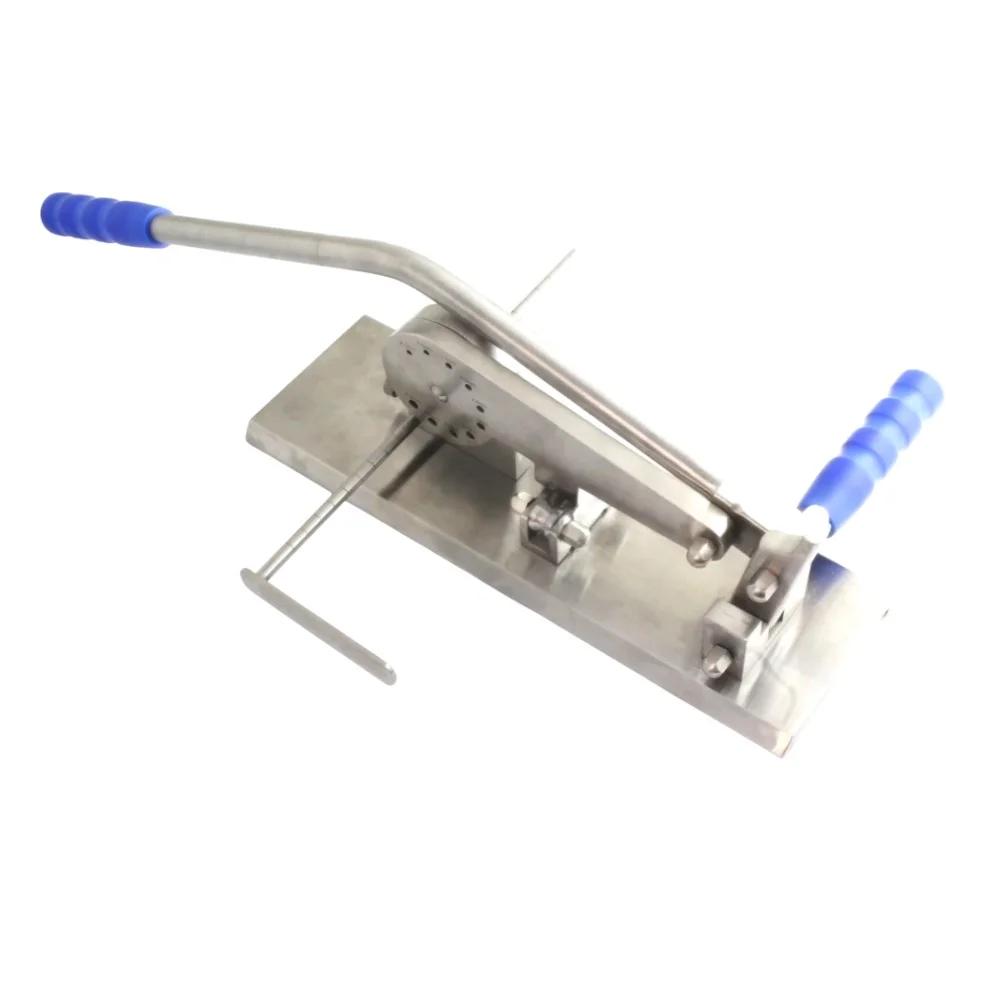
Table Top Rod Cutter & Rod Bender – High Grade Spine Instrument
Direct Manufacturer Pricing • Tax Exclusive
All import duties, tariffs & taxes are 100% pre-paid for USA, UK, Canada, EUROPE & Australia (AUS). Zero surprise customs bills at delivery.
Hospital & Volume Procurement Pricing
The Tabletop Rod Cutter and Rod Bender is a specialized instrument for preparing spinal fixation rods used in compatible orthopedic spinal instrumentation systems. The rod cutter is designed to cut supported rods to the required length, while the rod bender is intended to shape compatible rods according to the requirements of the fixation system.
The product title describes a tabletop configuration and a high-grade instrument, but it does not establish whether the cutter and bender are integrated into one unit or supplied as separate components. Buyers should confirm the exact configuration and supported rod specifications with the supplier.
Key Features
Tabletop Configuration: Identified as a tabletop rod preparation instrument.
Rod Cutting Function: Designed for cutting compatible spinal fixation rods.
Rod Bending Function: Intended for shaping compatible rods.
Spinal Instrumentation Category: Marketed for orthopedic spine surgery settings.
Specialized Rod Compatibility: Supported rod diameters and materials require confirmation.
Quality Verification: Material grade and manufacturing specifications should be verified with the supplier.
Design and Function
Spinal rod cutters and benders are designed to work with specific rod dimensions and fixation systems. Their construction, cutting mechanism, bending capacity, and supported materials vary by model.
The product title does not specify the supported rod diameter range, rod material, cutting capacity, bending radius, or operating mechanism. These details should be confirmed before purchasing to ensure compatibility with the intended spinal fixation system.
Intended Applications
The instrument is marketed for orthopedic spine surgery and spinal fixation rod preparation. Its suitability depends on the rod material, diameter, fixation system, and manufacturer's stated intended use.
Selection and use should be determined by qualified surgical professionals in accordance with the implant manufacturer's instructions. Compatibility with every spinal rod system should not be assumed.
Handling and Instrument Care
Follow the manufacturer's instructions for operation, inspection, cleaning, maintenance, and storage.
Inspect cutting components and bending surfaces for wear, damage, or deformation.
Confirm that the instrument supports the intended rod diameter and material.
Verify the manufacturer's maintenance requirements for moving or mechanical components.
Follow the approved reprocessing method if the instrument is intended for clinical use.
Store the instrument securely to protect its working components.
Technical Specifications
Product Category: Orthopedic Spine Surgical Instruments
Instrument Name: Tabletop Rod Cutter and Rod Bender
Instrument Type: Spinal Rod Cutting and Bending Instrument
Configuration: Tabletop
Cutting Function: Supported spinal rod cutting
Bending Function: Spinal rod shaping
Supported Rod Diameters: Not specified
Compatible Rod Materials: Not specified
Cutting Capacity: Not specified
Bending Range: Not specified
Construction Material: Not specified
Mounting Requirements: Not specified
Fixation System Compatibility: Confirm with the manufacturer
Manufacturer / Brand: Not specified
Frequently Asked Questions
1. What is a tabletop rod cutter and rod bender?
It is an orthopedic instrument designed to cut and bend compatible spinal fixation rods.
2. Is the cutter and bender supplied as one unit?
The product title does not confirm whether both functions are integrated into one unit or supplied separately. Verify the configuration with the supplier.
3. Which rod diameters can it support?
The supported rod diameters have not been specified. Request the manufacturer's technical specifications.
4. Which rod materials are compatible?
The compatible materials have not been identified. Confirm suitability for the intended rod material and fixation system.
5. What does “high grade” mean for this product?
It is a quality description in the supplied product name, not a verified material grade or certification. Request supporting manufacturer documentation.
6. Is the instrument compatible with every spinal fixation system?
No universal compatibility should be assumed. Verify rod dimensions, material compatibility, and system requirements with the manufacturer.
7. How should the instrument be maintained?
Follow the manufacturer's instructions for operation, inspection, cleaning, maintenance, and storage. Confirm the approved reprocessing method if the instrument is intended for clinical use.