
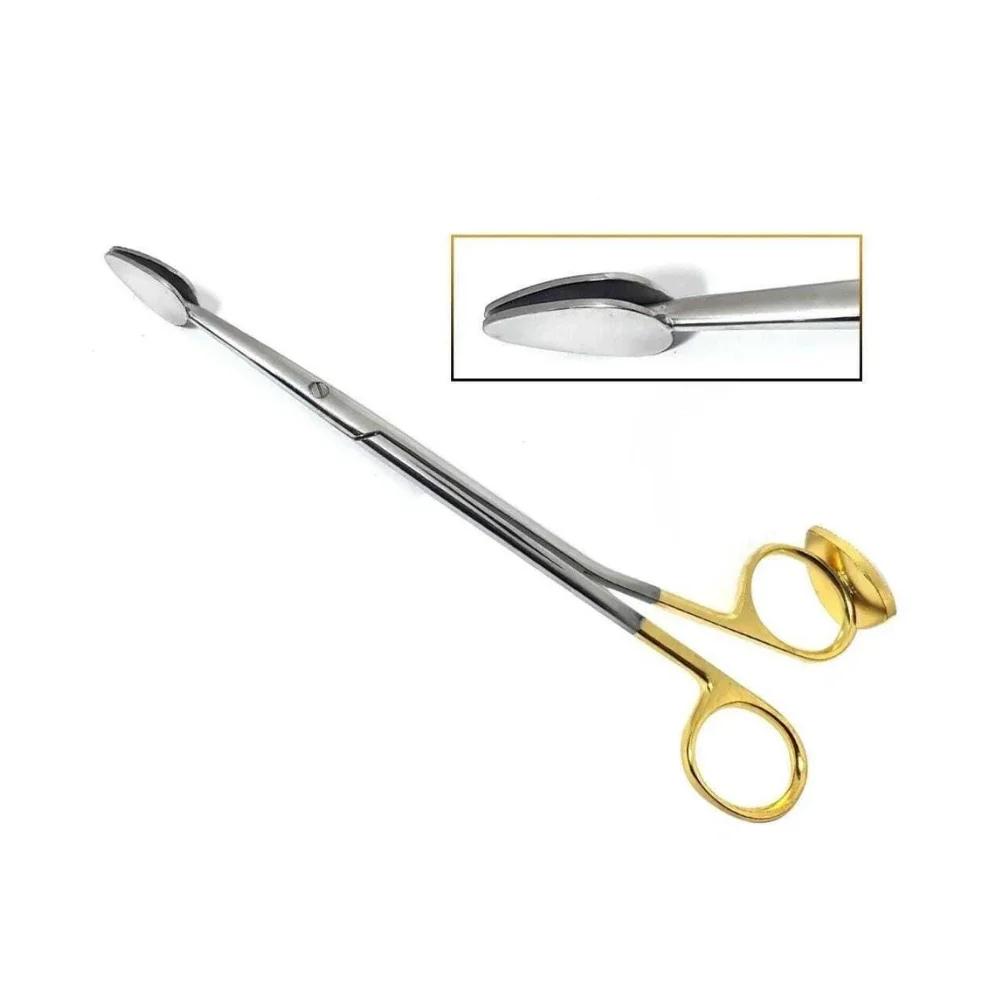
Trepsat Facelift Dissection Scissors
Direct Manufacturer Pricing • Tax Exclusive
Trepsat Facelift Dissection Scissors are specialized surgical scissors intended for tissue dissection in appropriate facial plastic and reconstructive procedures. Their specific design should be confirmed with the manufacturer to ensure suitability for the intended surgical technique.
All import duties, tariffs & taxes are 100% pre-paid for USA, UK, Canada, EUROPE & Australia (AUS). Zero surprise customs bills at delivery.
Hospital & Volume Procurement Pricing
Trepsat Facelift Dissection Scissors are surgical instruments intended for dissection during appropriate facial plastic surgery procedures, including facelift operations. Dissection scissors help surgeons separate and release tissue planes using controlled cutting movements. Instrument selection depends on the procedure, the tissue being handled, and the surgeon's preferred technique.
Designed for Facial Dissection
Facelift procedures may involve the careful separation of soft tissues to achieve the planned surgical access and tissue mobilization. Dissection scissors are selected according to the required cutting characteristics, tip configuration, blade profile, and degree of control. The Trepsat pattern identifies this instrument within a specialized range of surgical scissors, but the exact blade design and intended dissection plane should be confirmed with the manufacturer.
Using an appropriately selected instrument can support controlled tissue handling during surgery. The scissors should be operated by trained surgical professionals following established clinical protocols and the requirements of the procedure.
Precision and Instrument Handling
The performance of dissection scissors depends on factors such as blade alignment, cutting-edge condition, handle ergonomics, and the fit of the instrument's working components. The product title does not specify whether this model has straight or curved blades, blunt or sharp tips, or a particular overall length. These characteristics should be verified before purchasing to ensure that the scissors match the intended surgical application.
Before use, the user should check that the blades open and close smoothly and meet correctly along their cutting edges. Any looseness, misalignment, visible damage, or impaired cutting action should be evaluated according to the facility's instrument inspection procedures.
Facelift and Plastic Surgery Applications
Facelift dissection scissors are associated with facial plastic surgery, where controlled separation of tissue is important. Depending on the exact design, dissection scissors may be selected for suitable soft-tissue dissection tasks during facial procedures. The precise application of this Trepsat model should be determined from the manufacturer's specifications rather than assumed from the name alone.
The instrument should be chosen according to the tissue characteristics, surgical approach, required access, and the surgeon's technique. Proper handling helps support controlled movements and reduces the risk of unintended tissue damage.
Material and Construction
The material, finish, blade length, overall length, and handle configuration are not specified in the product title. These details should be confirmed with the supplier. Material information is important for evaluating instrument durability, corrosion resistance, and compatibility with approved cleaning and sterilization processes.
Cleaning, Sterilization, and Maintenance
Clean and reprocess the scissors according to the manufacturer's instructions and the healthcare facility's validated procedures. Scissor blades and any joints should receive particular attention during cleaning to remove residual soil. The instrument should be rinsed, dried, and inspected as directed before sterilization.
After processing, examine the blades for damage, corrosion, and alignment issues. Store the scissors in a suitable instrument tray with protection for the cutting edges. Follow the manufacturer's guidance for maintenance and any required servicing to help preserve cutting performance.
Before ordering Trepsat Facelift Dissection Scissors, confirm the blade shape, tip style, overall length, material, and intended use with the supplier. These specifications help ensure that the instrument meets the needs of the intended facial plastic surgery application.
Key Features
Trepsat-pattern facelift dissection scissors
Intended for appropriate facial plastic surgery procedures
Designed for controlled tissue dissection
Suitable for evaluation for facelift instrument sets
Blade shape and tip configuration require confirmation
Overall length and blade length not specified
Material and surface finish require supplier confirmation
Inspect blade alignment and cutting action before use
Follow manufacturer instructions for cleaning and sterilization
Intended for use by trained surgical professionals
Product Specifications
Specification | Details |
|---|---|
Product Name | Trepsat Facelift Dissection Scissors |
Instrument Type | Surgical dissection scissors |
Pattern | Trepsat |
Specialty | Facial plastic and reconstructive surgery |
Primary Application | Appropriate facelift tissue dissection |
Blade Shape | Not specified |
Tip Configuration | Not specified |
Overall Length | Not specified |
Blade Length | Not specified |
Material | Not specified |
Handle Design | Not specified |
Reusable Status | Confirm with manufacturer |
Sterilization Method | Follow manufacturer instructions |
Packaging | Not specified |
Frequently Asked Questions
1. What are Trepsat Facelift Dissection Scissors used for?
They are intended for tissue dissection during appropriate facial plastic surgery procedures. The exact applications depend on the instrument's design and manufacturer guidance.
2. Can these scissors be used during facelift surgery?
They are identified for facelift dissection. The surgeon should confirm that the specific blade and tip configuration is appropriate for the planned technique.
3. Are the blades straight or curved?
The product title does not specify the blade shape. Confirm whether the model has straight or curved blades before ordering.
4. What material are the Trepsat scissors made from?
The material is not specified in the product title. Contact the supplier for details about construction and finish.
5. What length are these dissection scissors?
The overall length and blade length are not provided. Verify both measurements with the supplier.
6. How should Trepsat Facelift Dissection Scissors be sterilized?
Follow the manufacturer's validated cleaning and sterilization instructions and the healthcare facility's approved reprocessing procedures.
7. What should be checked before purchasing these scissors?
Confirm blade shape, tip style, dimensions, material, intended application, and reprocessing requirements to ensure suitability for the intended surgical setting.