
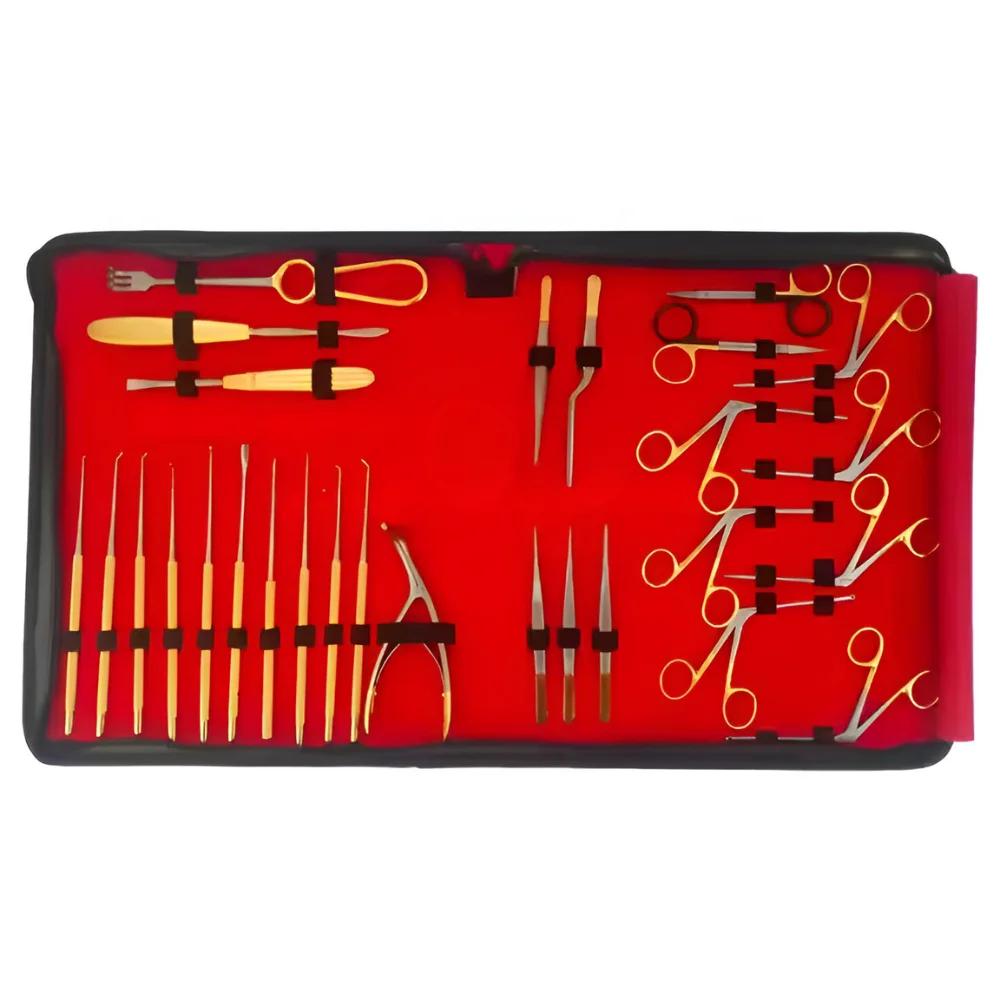
Tympanoplasty and Tympanostomy Instrument Set
Direct Manufacturer Pricing • Tax Exclusive
The Tympanoplasty / Tympanostomy Tube Reconstruction Surgery Instrument Set is designed for specialized ear surgery and selected otologic procedures. It supports surgical tasks associated with tympanic membrane repair, middle ear access, and tympanostomy tube placement when the included instruments are appropriate. Confirm the complete instrument list, dimensions, and material specifications before purchase.
All import duties, tariffs & taxes are 100% pre-paid for USA, UK, Canada, EUROPE & Australia (AUS). Zero surprise customs bills at delivery.
Hospital & Volume Procurement Pricing
The Tympanoplasty / Tympanostomy Tube Reconstruction Surgery Instrument Set is intended for use in ear, nose, and throat (ENT) surgical settings. Tympanoplasty and tympanostomy are distinct procedures involving the tympanic membrane and middle ear region. The instruments required for each procedure can differ, so the suitability of this combined set depends on its actual contents and the intended surgical applications.
Tympanoplasty generally involves repairing the tympanic membrane and may include work involving the middle ear. Tympanostomy involves creating an opening in the tympanic membrane, often to place a ventilation tube when clinically indicated. Instrument selection depends on the patient's anatomy, the procedure being performed, and the surgeon's preferred technique.
Applications in Otologic Surgery
A tympanoplasty instrument set may include tools used for delicate tissue handling, visualization, dissection, and other tasks associated with tympanic membrane repair. Depending on the surgical technique, additional instruments may be required to access or manage structures in the middle ear.
Instruments for tympanostomy tube placement are selected according to the intended tube type, patient anatomy, and procedure. The product title does not provide an itemized inventory, so it cannot confirm whether ventilation tube insertion instruments, microsurgical tools, or other accessories are included.
Before ordering, review the complete set contents to establish whether the instruments meet the requirements of the planned procedure. Do not assume that every instrument needed for both tympanoplasty and tympanostomy is included simply because both procedures appear in the product name.
Instrument Design and Precision
Otologic procedures often involve a small operative field and delicate anatomical structures. Instruments used in these settings must provide appropriate control and access for the intended surgical task. The required dimensions, working-end shapes, and handle designs vary according to the instrument type.
The individual instrument designs in this set have not been specified. Buyers should verify the included instruments, their overall lengths, working-end dimensions, and any compatibility requirements with the supplier. These details help determine whether the set is appropriate for the surgical technique and clinical environment.
Material and Construction
The material composition is not identified in the product title. ENT surgical instruments may be manufactured from medical-grade stainless steel or other materials selected for particular functions. The exact material, grade, finish, and construction of this set should be confirmed with the manufacturer.
Material documentation is important for evaluating durability, corrosion resistance, and compatibility with the required cleaning and sterilization processes. Do not assume that all components share the same material or processing requirements.
Cleaning, Sterilization, and Instrument Maintenance
Before clinical use, confirm whether the set is supplied sterile or non-sterile and whether its components are intended for reuse. Reusable instruments must be cleaned, inspected, packaged, and sterilized according to the manufacturer's validated instructions.
Delicate working ends require careful inspection for damage, deformation, residue, or corrosion. Follow the approved processing instructions for each component, particularly where narrow openings, joints, or fine tips may require specialized cleaning. The storage container, if supplied, should be processed only according to its own validated instructions.
Selecting the Appropriate ENT Instrument Set
When choosing a tympanoplasty and tympanostomy instrument set, consider the intended procedures, the complete inventory, instrument dimensions, working-end designs, material specifications, and reprocessing requirements. Confirm whether the set includes the instruments needed for tympanic membrane repair, ventilation tube placement, or both.
The Tympanoplasty / Tympanostomy Tube Reconstruction Surgery Instrument Set may be considered for professional ENT environments when its verified configuration matches the intended procedures. The operating surgeon and clinical team should determine its suitability based on the instrument specifications and procedural requirements.
Key Features
- Specialized ENT surgical instrument set
- Intended for selected tympanoplasty procedures
- May support tympanostomy-related tasks if appropriate instruments are included
- Designed for professional otologic surgical environments
- Individual instrument inventory requires confirmation
- Instrument lengths and working-end dimensions not specified
- Material composition and grade not specified
- Sterile status not specified
- Reusability must be confirmed with the manufacturer
- Cleaning and sterilization must follow validated instructions
Product Specifications
| Specification | Details |
|---|---|
| Product Name | Tympanoplasty / Tympanostomy Tube Reconstruction Surgery Instrument Set |
| Instrument Category | ENT / otologic surgical set |
| Surgical Specialty | Ear, Nose, and Throat (ENT) |
| Intended Procedures | Tympanoplasty and selected tympanostomy procedures |
| Primary Surgical Area | Tympanic membrane and middle ear region |
| Set Contents | Not specified; request complete inventory |
| Instrument Quantity | Not specified |
| Material | Not specified |
| Instrument Dimensions | Not specified |
| Storage Case | Not specified |
| Sterile Status | Not specified |
| Reusability | Confirm with manufacturer |
| Cleaning and Sterilization | Follow manufacturer instructions |
| Packaging | Not specified |
Frequently Asked Questions
1. What is a tympanoplasty instrument set used for?
A tympanoplasty instrument set is intended to support surgical procedures that repair the tympanic membrane and may involve the middle ear. The instruments required depend on the surgical technique.
2. What is the difference between tympanoplasty and tympanostomy?
Tympanoplasty generally involves repairing the tympanic membrane, while tympanostomy involves creating an opening in the membrane, often to place a ventilation tube. They are different procedures and may require different instruments.
3. Does this set include tympanostomy tube insertion instruments?
The product title does not provide a detailed inventory. Confirm with the supplier whether the set includes the specific instruments required for ventilation tube placement.
4. What instruments are included in this ENT surgery set?
The individual instruments and total quantity are not specified. Request an itemized list with photographs, dimensions, and product specifications before ordering.
5. What materials are used to manufacture the instruments?
The material is not specified in the product title. Confirm the material and grade of the individual instruments with the manufacturer or supplier.
6. Is the Tympanoplasty / Tympanostomy Instrument Set reusable?
Reusability depends on the construction and intended use of the included instruments. Follow the manufacturer's instructions for each component.
7. How should this ENT instrument set be sterilized?
Use the validated cleaning and sterilization procedures specified by the manufacturer. Confirm that every component is compatible with the intended processing method.
8. What should I verify before purchasing this instrument set?
Confirm the complete instrument inventory, intended procedures, instrument dimensions, material specifications, sterile status, reusability, and processing requirements. Ensure the configuration meets the needs of the intended ENT surgical team.