

Choosing the right orthopedic mallet is an important part of selecting surgical instruments for bone procedures. An orthopedic mallet is designed to deliver impact to compatible instruments, such as osteotomes and bone chisels, when specified for the intended surgical application. Its weight, head material, dimensions, handle design, and compatibility all influence its suitability for a particular instrument system.
For surgeons, hospitals, procurement teams, and medical instrument buyers, selecting a mallet requires more than comparing appearance and price. Understanding product specifications, manufacturer instructions, reprocessing requirements, and construction quality helps buyers make informed purchasing decisions.
This guide explains the main types of orthopedic mallets, how to compare their specifications, which features to prioritize, and what to check before purchasing a surgical mallet for bone surgery.
What Is an Orthopedic Mallet?
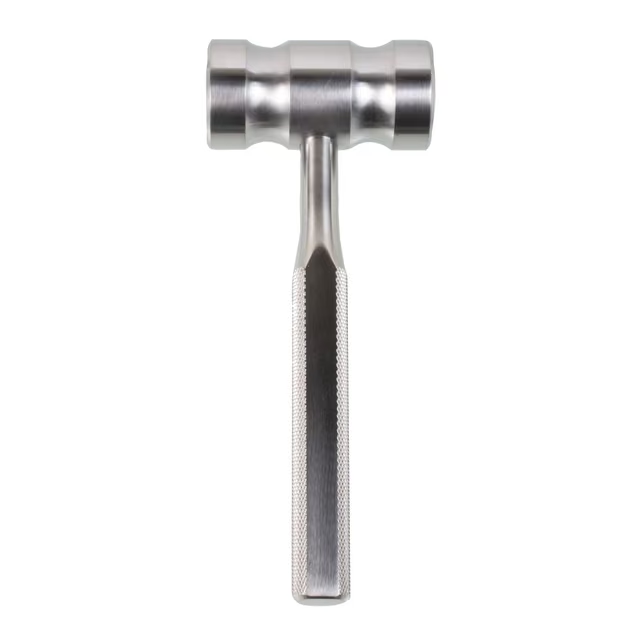
An orthopedic mallet is a surgical instrument used to deliver impact to compatible surgical tools during selected orthopedic procedures. It generally consists of a head and handle, with designs varying according to the intended application and manufacturer.
Orthopedic mallets may be used with compatible osteotomes, bone chisels, and other instruments designed to receive impact. The appropriate combination depends on the instrument system, surgical technique, and manufacturer’s instructions.
Unlike a general-purpose hammer, a surgical mallet must be evaluated for its intended medical application, construction, handling characteristics, and reprocessing requirements. Not every mallet is suitable for every orthopedic instrument.
Why Is Choosing the Right Orthopedic Mallet Important?
The appropriate mallet should match the intended application and the instruments used alongside it. Selecting a suitable design helps support consistent instrument handling and appropriate instrument use.
Several factors influence this decision:
Weight and balance: Affect the instrument's handling characteristics.
Head material: Determines the type of striking surface and its suitability for the receiving instrument.
Handle design: Influences grip, comfort, and maneuverability.
Instrument compatibility: Helps ensure that the mallet is appropriate for the intended instrument system.
Construction quality: Supports durability when the instrument is used and maintained as specified.
Reprocessing requirements: Determine whether the instrument can be cleaned and sterilized according to the manufacturer's validated instructions.
The most suitable orthopedic mallet is not necessarily the heaviest, largest, or most expensive model. Selection should be based on documented specifications and the requirements of the intended application.
Types of Orthopedic Mallets
Orthopedic mallets are available in different configurations. Understanding their construction and intended use helps buyers compare available options.
1. Stainless Steel Orthopedic Mallets
Stainless steel orthopedic mallets feature a metal head and are commonly considered when selecting reusable surgical instruments designed for impact applications.
When evaluating a stainless steel mallet, review its specified steel grade, total weight, head dimensions, handle construction, and surface finish. These characteristics can vary between manufacturers and models.
Buyers should also confirm corrosion-resistance information, approved cleaning methods, and sterilization instructions. Stainless steel instruments are not all identical, and the material designation alone does not establish overall product quality.
2. Nylon and Polymer-Head Mallets
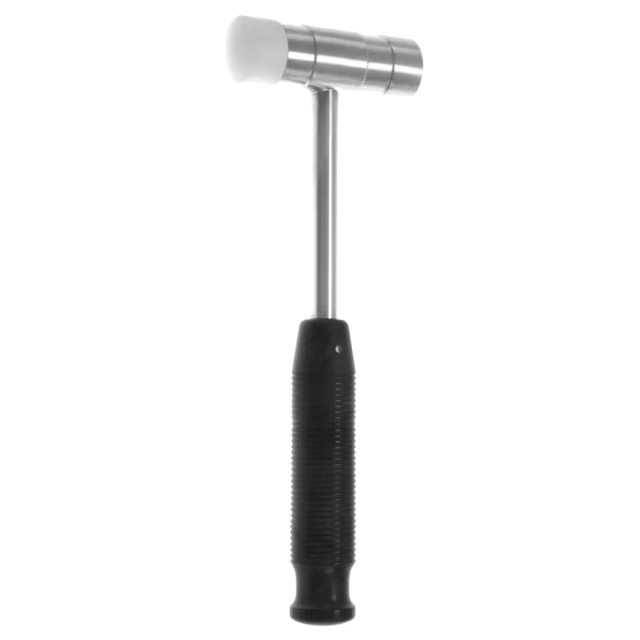
Nylon and other polymer-head mallets feature a nonmetallic striking surface. Certain designs may be intended for applications where a polymer contact surface is specified.
Important considerations include the type of polymer, head hardness where documented, impact resistance, attachment design, and wear characteristics.
A polymer head should not automatically be considered suitable for every osteotome, chisel, or orthopedic instrument. Confirm the manufacturer's intended application and compatibility recommendations before selecting a model.
3. Fixed-Head and Replaceable-Head Mallets
Mallets may feature fixed heads or replaceable heads, depending on their design.
Fixed-head mallets have a head that is not intended to be routinely replaced by the user. Their suitability depends on construction quality, the condition of the head, and the manufacturer's maintenance instructions.
Replaceable-head mallets are designed to accept compatible replacement heads when specified by the manufacturer. These models may require additional checks concerning head attachment, replacement-part availability, and approved disassembly procedures.
Before purchasing a replaceable-head model, confirm that replacement components are available for the exact product and that the manufacturer provides appropriate instructions for replacement and reprocessing.
4. Specialized Orthopedic Mallets
Some mallets are designed for particular surgical instrument systems or applications. Differences may include head geometry, overall length, weight, handle configuration, and striking-surface material.
When considering a specialized mallet, prioritize the intended application and compatibility information rather than assuming a general-purpose model can serve the same function.
Product documentation should clearly identify the model, its specifications, and any restrictions on use with other instruments.
How to Choose the Right Orthopedic Mallet
1. Identify the Intended Surgical Application
Begin by identifying the surgical application and the instruments that will be used with the mallet. Different instrument systems may have specific requirements for the type of mallet and striking surface.
Review the manufacturer's instructions and confirm the intended application before comparing individual models. This step helps narrow the available options and reduces the risk of purchasing an unsuitable instrument.
2. Compare Weight and Head Dimensions
Weight is an important specification, but it should not be considered in isolation. Different mallet designs may have different handling characteristics depending on their head mass, overall dimensions, and balance.
When comparing models, check:
Total instrument weight.
Head weight, if separately specified.
Head width, diameter, and profile.
Overall instrument length.
Intended application stated by the manufacturer.
Do not assume that a heavier mallet is automatically more effective or appropriate. Select a model according to the requirements of the compatible instrument system and the manufacturer's guidance.
3. Evaluate the Head Material
The head material affects the contact surface and may influence wear, maintenance, and compatibility.
Stainless steel, nylon, and other polymers have different mechanical properties. The correct material depends on the intended application and the instrument receiving the impact.
Before purchasing, verify the specified material, inspect the manufacturer's compatibility guidance, and review any limitations on use or replacement.
4. Assess Handle Design and Ergonomics
The handle affects how the mallet is held and maneuvered. Important characteristics include its length, diameter, surface texture, material, and connection to the head.
A suitable design should support a secure grip and appropriate handling within the intended surgical application.
Review product photographs and technical drawings alongside the written specifications. Inspect reusable instruments for cracks, loose connections, deformation, sharp edges, or other visible damage before use, following facility procedures.
5. Confirm Compatibility with Osteotomes and Bone Chisels
Orthopedic mallets are often selected alongside osteotomes and bone chisels, but compatibility should never be assumed based on appearance alone.
Confirm that the mallet is intended for use with the specific instrument or instrument system. Review the striking surface, dimensions, material, and the manufacturer's instructions.
If purchasing instruments from different manufacturers, obtain confirmation of compatibility where necessary. Incompatible combinations may cause instrument damage or create avoidable safety risks.
6. Review Material Quality and Manufacturing Documentation
Reliable product documentation helps buyers evaluate whether a mallet meets their requirements.
For stainless steel models, review the specified material grade, corrosion-resistance information, and surface finish. For polymer-head models, verify the specified polymer and any documented replacement or wear requirements.
Additional purchasing checks include:
Manufacturer and model identification.
Clear technical specifications.
Material documentation.
Product traceability.
Applicable quality-management documentation.
Instructions for use and reprocessing.
Warranty and service information.
Terms such as “premium quality” or “medical grade” should be supported by verifiable documentation. Do not assume a product has a particular certification, manufacturing origin, or regulatory status unless evidence is available.
7. Check Cleaning, Sterilization, and Maintenance Requirements
Reusable surgical mallets must be cleaned, inspected, and sterilized according to the manufacturer's validated instructions and the healthcare facility's approved reprocessing procedures.
The design can affect how an instrument is cleaned and maintained. Replaceable heads, detachable components, textured surfaces, and connections may require specific handling.
Before purchasing, confirm:
Whether the instrument is reusable.
Approved cleaning methods and agents.
Whether disassembly is required or permitted.
Validated sterilization parameters.
Drying and storage instructions.
Inspection and maintenance requirements.
Restrictions on automated or ultrasonic cleaning, if applicable.
Do not assume that every mallet can withstand the same cleaning agents or sterilization cycle. Follow the instructions supplied for the exact model.
8. Consider Replacement Parts and Long-Term Value
The initial purchase price is only one part of the total cost of owning a surgical instrument.
For replaceable-head models, check the availability and compatibility of replacement heads. For all models, consider maintenance requirements, product documentation, expected service support, and warranty conditions.
A useful purchasing comparison should consider overall suitability, quality documentation, and ongoing support rather than price alone.
Orthopedic Mallet Comparison: What Should Buyers Evaluate?
The following table summarizes the main considerations when comparing different mallet configurations. The actual characteristics of each product depend on its documented design.
| Feature | Stainless steel head | Nylon or polymer head | Replaceable-head design |
|---|---|---|---|
| Striking surface | Metal | Nonmetallic | Depends on the installed head |
| Main consideration | Material grade, dimensions, and compatibility | Polymer specification, wear, and compatibility | Head attachment and replacement requirements |
| Maintenance focus | Surface condition, corrosion, and connections | Wear, cracking, and deformation | Head condition and attachment security |
| Replacement needs | Model dependent | Model dependent | Compatible replacement head may be required |
| Selection priority | Manufacturer-approved application | Manufacturer-approved application | Approved head and handle combination |
This table is a general purchasing guide, not a claim that one design is superior or suitable for every procedure.
Step-by-Step Orthopedic Mallet Selection Guide
Use the following process when evaluating surgical mallets for a hospital, clinic, or surgical instrument inventory.
Step 1: Define the application. Identify the intended procedure and the instruments that will be used with the mallet.
Step 2: Verify compatibility. Check the manufacturer’s instructions for the receiving instrument and the proposed mallet.
Step 3: Compare specifications. Review weight, head dimensions, overall length, material, and handle design.
Step 4: Assess reprocessing requirements. Confirm that the facility can follow the specified cleaning, sterilization, inspection, and storage instructions.
Step 5: Review documentation. Verify the product identity, material information, traceability, and applicable quality documentation.
Step 6: Evaluate ongoing support. Check replacement-part availability, maintenance requirements, warranty terms, and supplier support.
Step 7: Document the purchasing decision. Compare the shortlisted models against the intended application and the facility's procurement requirements.
This process provides a structured way to compare available products without relying on price, appearance, or weight alone.
Common Mistakes to Avoid When Buying an Orthopedic Mallet
Choosing by Weight Alone
A heavier model is not automatically the right choice. Weight must be evaluated alongside the intended application, head dimensions, and instrument compatibility.
Assuming All Head Materials Are Interchangeable
Metal and polymer striking surfaces have different properties. Use only combinations permitted by the manufacturer.
Ignoring Instrument Compatibility
A mallet that looks suitable may not be appropriate for a particular osteotome or bone chisel. Confirm compatibility before purchase and use.
Overlooking Reprocessing Requirements
Cleaning and sterilization requirements vary by product design. Check the exact manufacturer's instructions before adding an instrument to an existing inventory.
Failing to Verify Quality Claims
Check material specifications, traceability, and applicable documentation rather than relying on unsupported claims about quality, origin, or certification.
Neglecting Inspection and Maintenance
Reusable mallets should be inspected according to manufacturer guidance and facility procedures. Damaged instruments should be removed from service and assessed appropriately.
Orthopedic Mallet Buying Checklist
Before placing an order, verify the following:
Intended surgical application identified.
Compatibility with the receiving instrument confirmed.
Total weight and head dimensions reviewed.
Overall length and handle design checked.
Head and handle materials verified.
Manufacturer and model information available.
Cleaning and sterilization instructions reviewed.
Inspection and maintenance requirements understood.
Replacement components checked, if applicable.
Quality documentation and traceability reviewed.
Warranty and supplier support assessed.
Product specifications compared against purchasing requirements.
Frequently Asked Questions About Orthopedic Mallets
1. What is an orthopedic mallet used for?
An orthopedic mallet delivers impact to compatible surgical instruments, such as osteotomes and bone chisels, during selected procedures. Its use depends on the instrument system and the manufacturer's instructions.
2. How do I choose the right orthopedic mallet for bone surgery?
Start with the intended application and compatible instruments. Then compare the mallet's weight, head dimensions, material, handle design, reprocessing requirements, and manufacturer documentation.
3. What is the difference between stainless steel and nylon surgical mallets?
Stainless steel mallets have a metal striking surface, while nylon or polymer-head models have a nonmetallic surface. Their suitability depends on the intended application, instrument compatibility, and manufacturer specifications.
4. What weight should an orthopedic mallet be?
There is no single weight suitable for every orthopedic application. Compare documented weights and dimensions against the requirements of the intended instrument system and the manufacturer's guidance.
5. Can an orthopedic mallet be used with any osteotome or bone chisel?
No. Compatibility must be confirmed using the manufacturer's instructions. Similar appearance does not establish that two instruments are designed to work together.
6. Are orthopedic mallets reusable?
Some orthopedic mallets are designed for repeated use. Verify the reusable status of the exact model and follow its cleaning, sterilization, inspection, and maintenance instructions.
7. How should an orthopedic mallet be cleaned and sterilized?
Follow the manufacturer's validated reprocessing instructions for the specific instrument. These may cover cleaning agents, disassembly, sterilization parameters, drying, inspection, and storage.
8. What should I inspect before using a reusable surgical mallet?
Follow the manufacturer's inspection guidance and facility procedures. Checks may include head wear, cracks, deformation, loose connections, handle damage, and other visible defects that could affect safe handling.
9. Are replaceable-head orthopedic mallets worth considering?
They may be appropriate when the design supports replacement and compatible heads are available. Evaluate replacement-part availability, attachment security, maintenance requirements, and manufacturer instructions.
10. What should hospitals consider when purchasing orthopedic mallets in bulk?
Hospitals should evaluate intended applications, standardized specifications, compatibility, quantities, material documentation, reprocessing requirements, product traceability, supplier reliability, and ongoing service support.
Conclusion
Choosing the right orthopedic mallet requires a structured evaluation of its intended application, weight, head material, dimensions, handle design, compatibility, and reprocessing requirements.
For healthcare facilities and medical instrument buyers, the most reliable approach is to compare documented specifications, verify compatibility with the intended instruments, and review the manufacturer's instructions before purchasing.
By prioritizing suitability, traceability, maintenance requirements, and documented quality, buyers can make better-informed decisions when selecting orthopedic mallets for their surgical instrument inventory.
When comparing available models, review the technical specifications and intended applications carefully to identify an instrument that meets your facility's requirements.